Two Miners Went to Detroit to Ask Henry Ford. They Were Fired When They Got Back.
In September 1938 a Farm Security Administration photographer named Marion Post Wolcott photographed an empty coal town in McDowell County, West Virginia, and typed a claim onto the caption sheet: that Twin Branch had once been very nice, that it was owned by Ford, and that about four years earlier, when the men tried to organize it,…
Transcript
A town with nobody in it
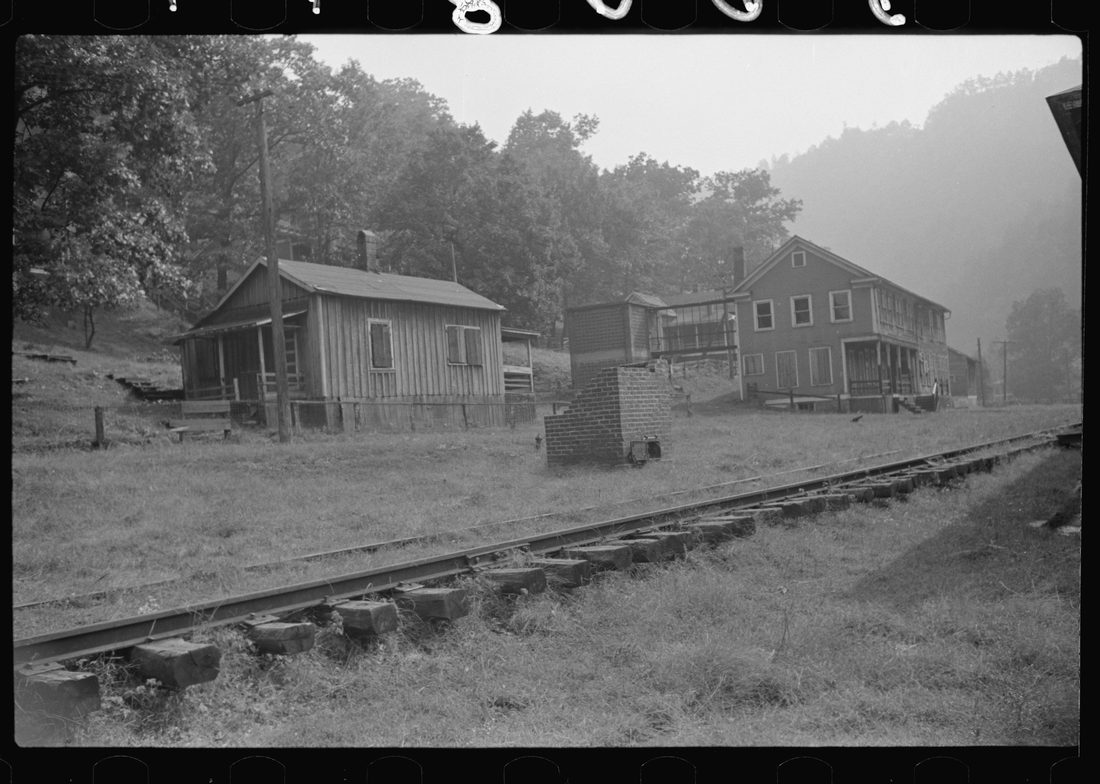
W01 Deserted mining town, completely boarded up, owned by Ford who closed it down rather than have it unionized. Twin Branch, West Virginia
Marion Post Wolcott · September 1938 · Library of Congress · FSA/OWI. View the original.
This is a mining town in McDowell County, West Virginia, photographed by a government photographer in September of nineteen thirty-eight.
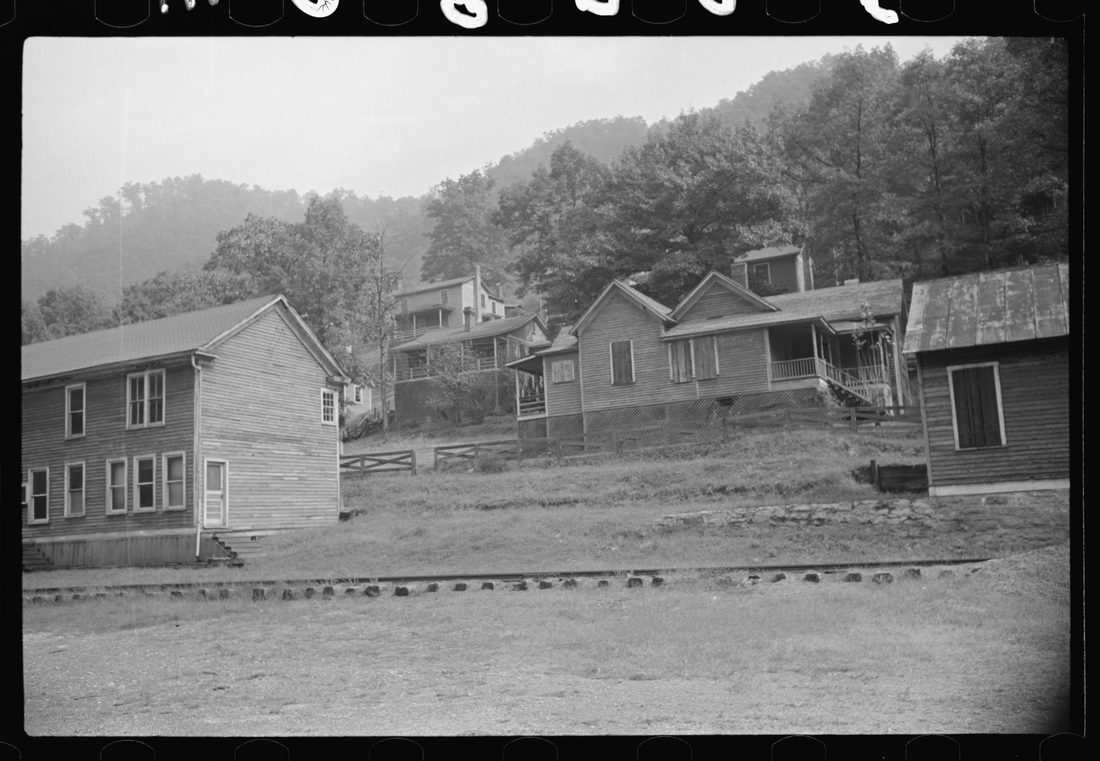
W03 Abandoned mining town, Twin Branch, West Virginia
Marion Post Wolcott · September 1938 · Library of Congress · FSA/OWI. View the original.
There is nobody in it.
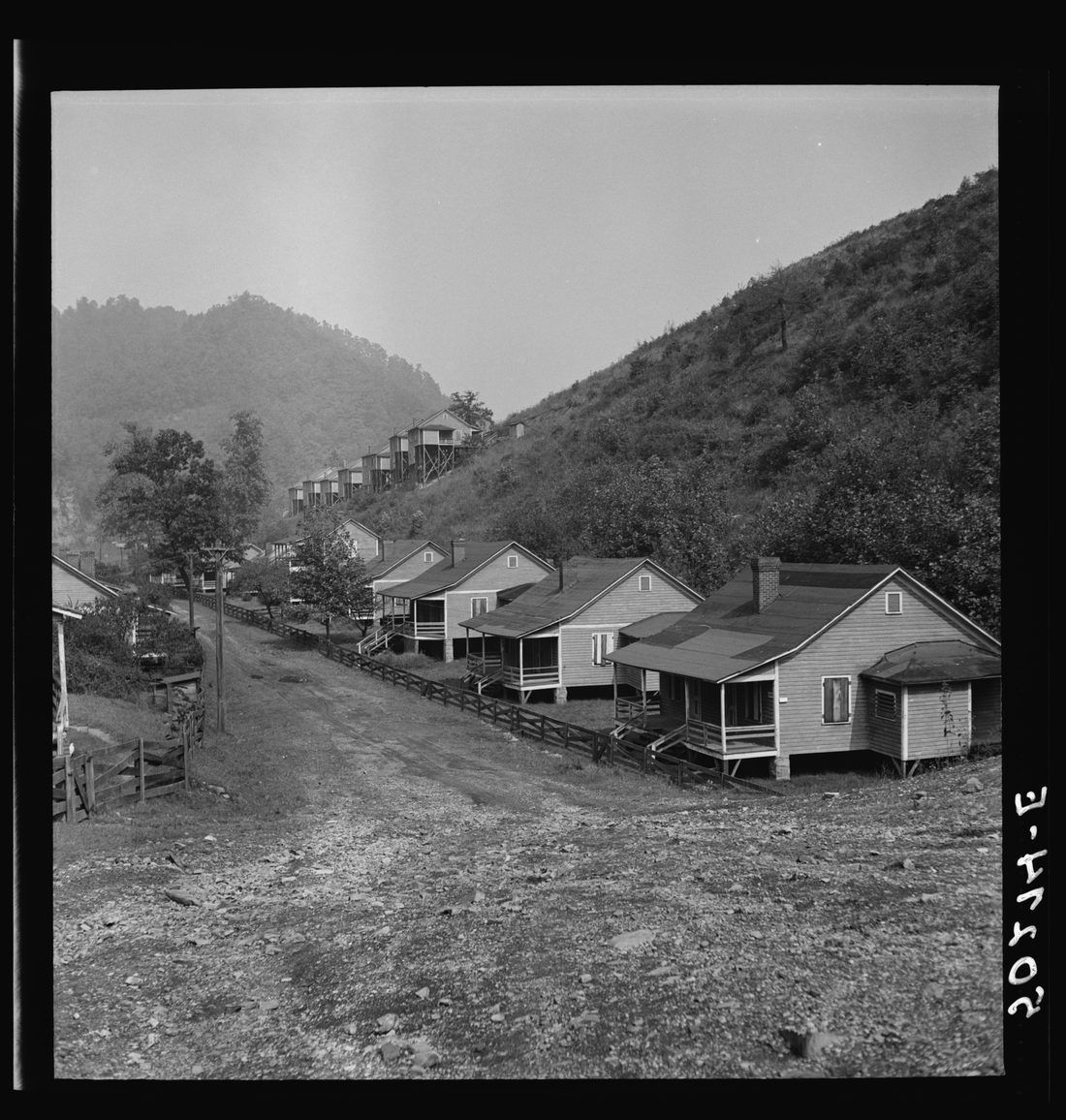
W02 Boarded-up homes in abandoned mining town. Twin Branch, West Virginia. Once very nice, owned by Ford. About four years ago when an attempt to organize it was made, Ford closed it down completely rather than have it unionized. Around 1000 men used to work there. They won't sell it, rent or let "squatters" live in the deserted homes that are rotting away. Twin Branch, West Virginia. See 30098-M1, 30084-M1
Marion Post Wolcott · September 1938 · Library of Congress · FSA/OWI. View the original.
Her caption says the town was once very nice. That it was owned by Ford. And that about four years earlier, when the men tried to organise it, Ford closed it down completely rather than have it unionised.
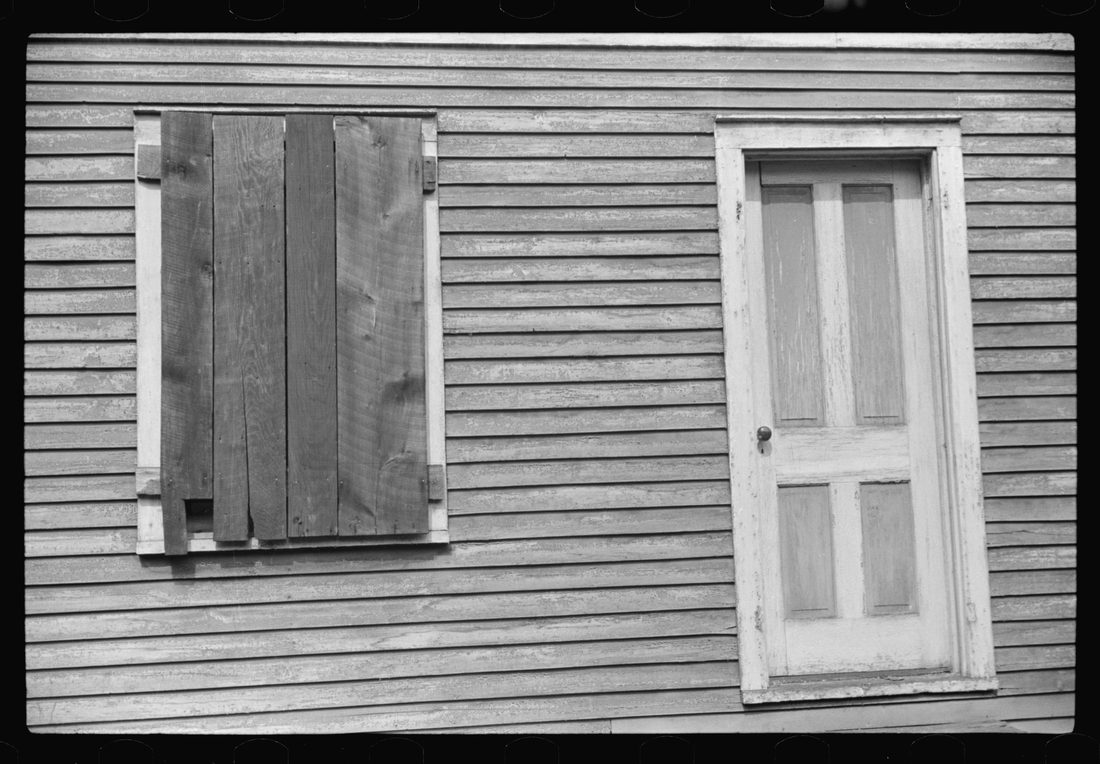
W06 Abandoned house, mining town, Twin Branch, West Virginia
Marion Post Wolcott · September 1938 · Library of Congress · FSA/OWI. View the original.
That is a large claim to find on the back of a photograph. This is what the record says about it.
Ford's own camera
Fourteen years earlier, Ford sent a film crew to the same place.
The Ford Motor Company made a promotional picture called The Ford Way of Mining Coal. It survives in the National Archives, and the titles are Ford's own words.
Cleanliness and cheerfulness, it says, mark these Fordson mining towns from all others.
It gives the numbers too. Eighteen million tons of low volatile coal. Fifteen hundred tons a day.
And eight hundred employees. Which is worth holding onto, because the caption in nineteen thirty-eight says about a thousand men, and Ford's own figure is the better one.
There is one more title card, and in nineteen twenty-four it was meant as reassurance. When any of the Fordson mines are shut down, the men are given work at cleaning and repairing the houses, and also building roads.
Two men go to Detroit
By the end of nineteen thirty-three the men at Twin Branch had joined the United Mine Workers of America. All of them.
We know what happened next because the local union wrote it down and sent it to the newspaper in Bluefield, which printed it.
The miners had organised one hundred percent as United Mine Workers of America, it says, and after organising, working conditions at the mines were made so intolerable and unbearable by the mine officials —
— that in December, nineteen thirty-three, the local union sent two representatives to Detroit to ask Henry Ford for an investigation of conditions that prevailed at the Twin Branch mines.
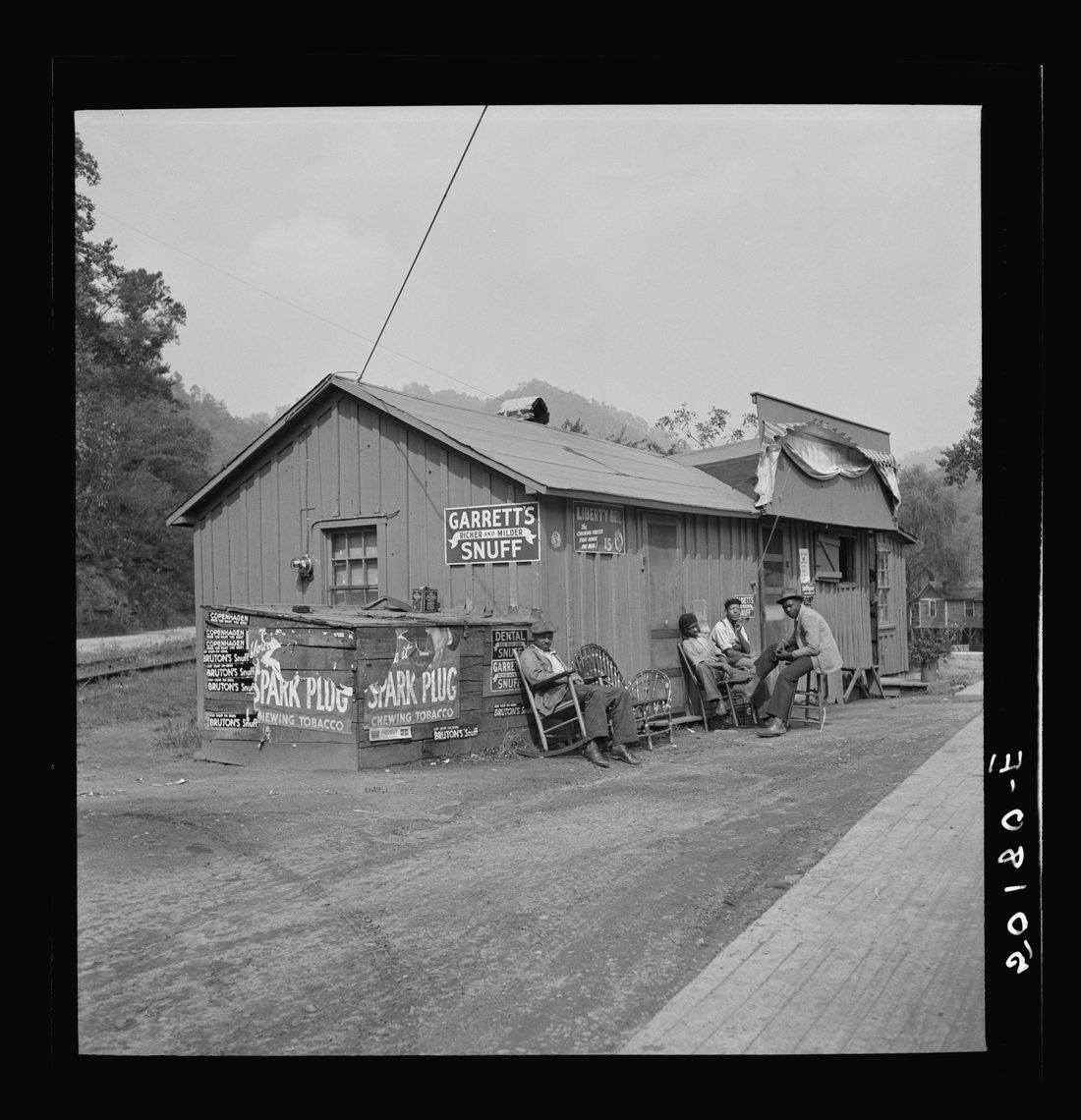
W13 Shack in "Marytown." Negro section of Twin Branch, West Virginia
Marion Post Wolcott · September 1938 · Library of Congress · FSA/OWI. View the original.
Two coal miners from a hollow in southern West Virginia got themselves to Detroit, Michigan, to ask Henry Ford to look at how his own mine was being run.
The representatives were told that their case would be investigated. And when they returned and reported for work, they were discharged.
The men struck over it. The union's word for a strike here is a holiday, in quotation marks. The two representatives got their jobs back.
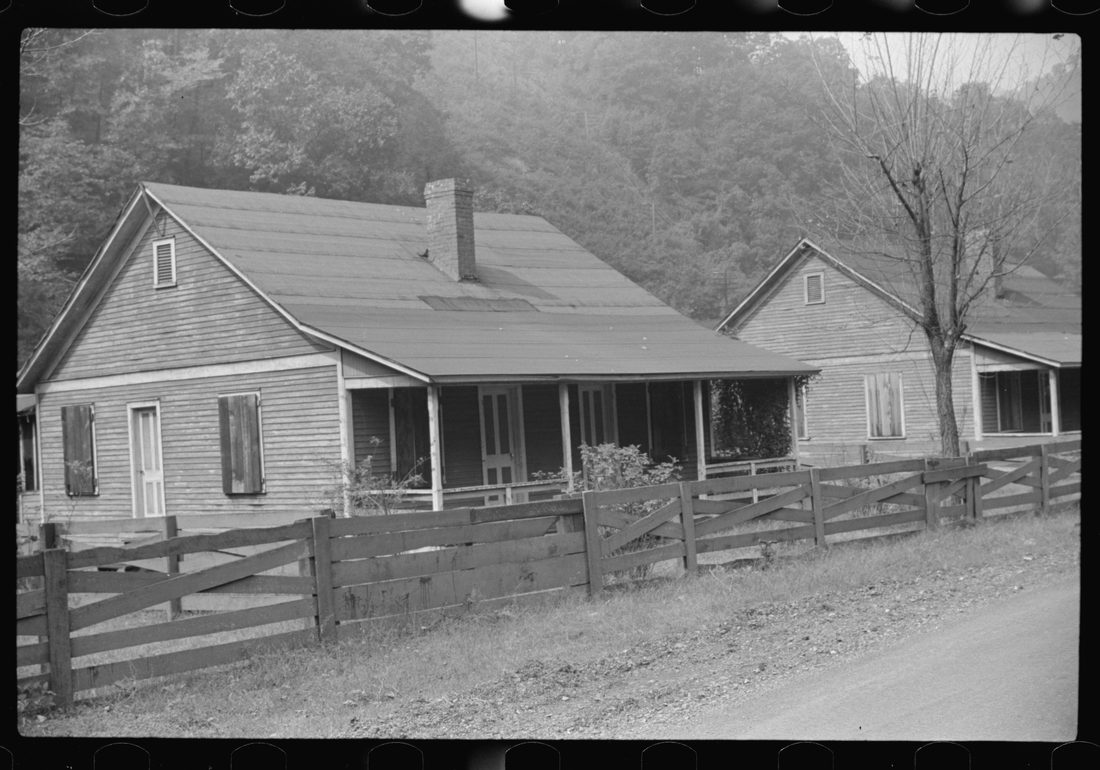
W05 Deserted homes, mining town, Twin Branch, West Virginia
Marion Post Wolcott · September 1938 · Library of Congress · FSA/OWI. View the original.
That was December. In January the company answered.
The sixteenth of January
On the sixteenth day of January, nineteen thirty-four, the general superintendent of the Fordson Coal company came to the mine committee with a position.
That organised labour did not come before the Fordson Coal company. That the company would not meet them in future as representatives of organised labour, but would deal with the miners as individuals only.
And if they didn't like it, the mine foremen would make them like it.
A strike was called by the local union until the intolerable conditions at the Twin Branch mines were remedied. They also asked that their union be recognised.
Two days later the company closed down the mine, thereby turning the strike into a lockout.
Nothing to say
On the twenty-fifth of January the Bluefield Daily Telegraph carried the announcement.
Twin Branch mine of Fordson will close. Closed down for an indefinite period. With the exception of a watchman or two, no one will be kept on the property, and none of the employees are being transferred to other operations of the company.
The superintendent confirmed it to the paper. And then this sentence. Mister Skeen said he had, in quotation marks, nothing to say, about a reason for the action.
The paper supplied the reason itself. According to reports reaching Welch, the action followed differences between the employees and the company, and the declaring of a number of holidays by the local union.
The same article says much of the equipment is being shipped away, and that it is reported the mine will be boarded up and the store closed.
It also gives a number that tells you the town was already in trouble. About three hundred men had been employed there, working two to four days a week for a considerable period.
Eight hundred in Ford's film. Three hundred by the January the mine shut.
Eight months
Eight months later the local union was still there.
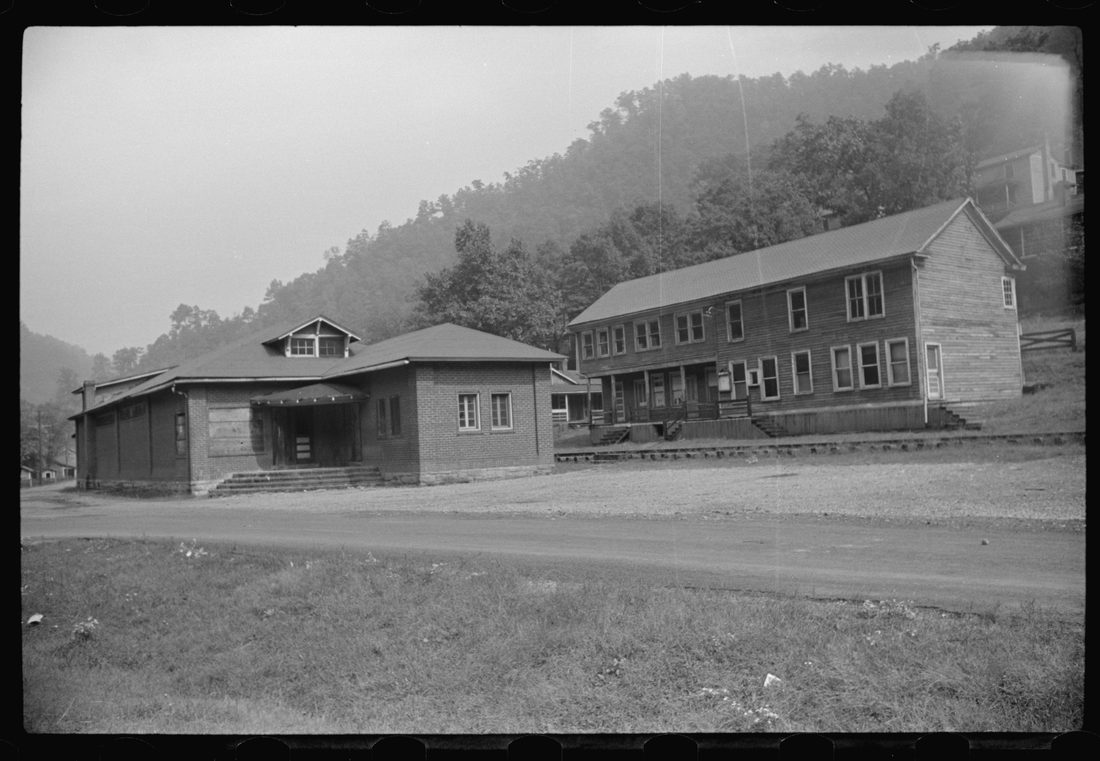
W09 Community building and company store in abandoned mining town, Twin Branch, West Virginia
Marion Post Wolcott · September 1938 · Library of Congress · FSA/OWI. View the original.
The company store's stock had been carted away. The union says the mine equipment had not been moved, which is not what the company told the paper in January.
W02 Boarded-up homes in abandoned mining town. Twin Branch, West Virginia. Once very nice, owned by Ford. About four years ago when an attempt to organize it was made, Ford closed it down completely rather than have it unionized. Around 1000 men used to work there. They won't sell it, rent or let "squatters" live in the deserted homes that are rotting away. Twin Branch, West Virginia. See 30098-M1, 30084-M1
Marion Post Wolcott · September 1938 · Library of Congress · FSA/OWI. View the original.
About a hundred families were still living in the company houses. A number of them had been notified to vacate within thirty days or face eviction proceedings.
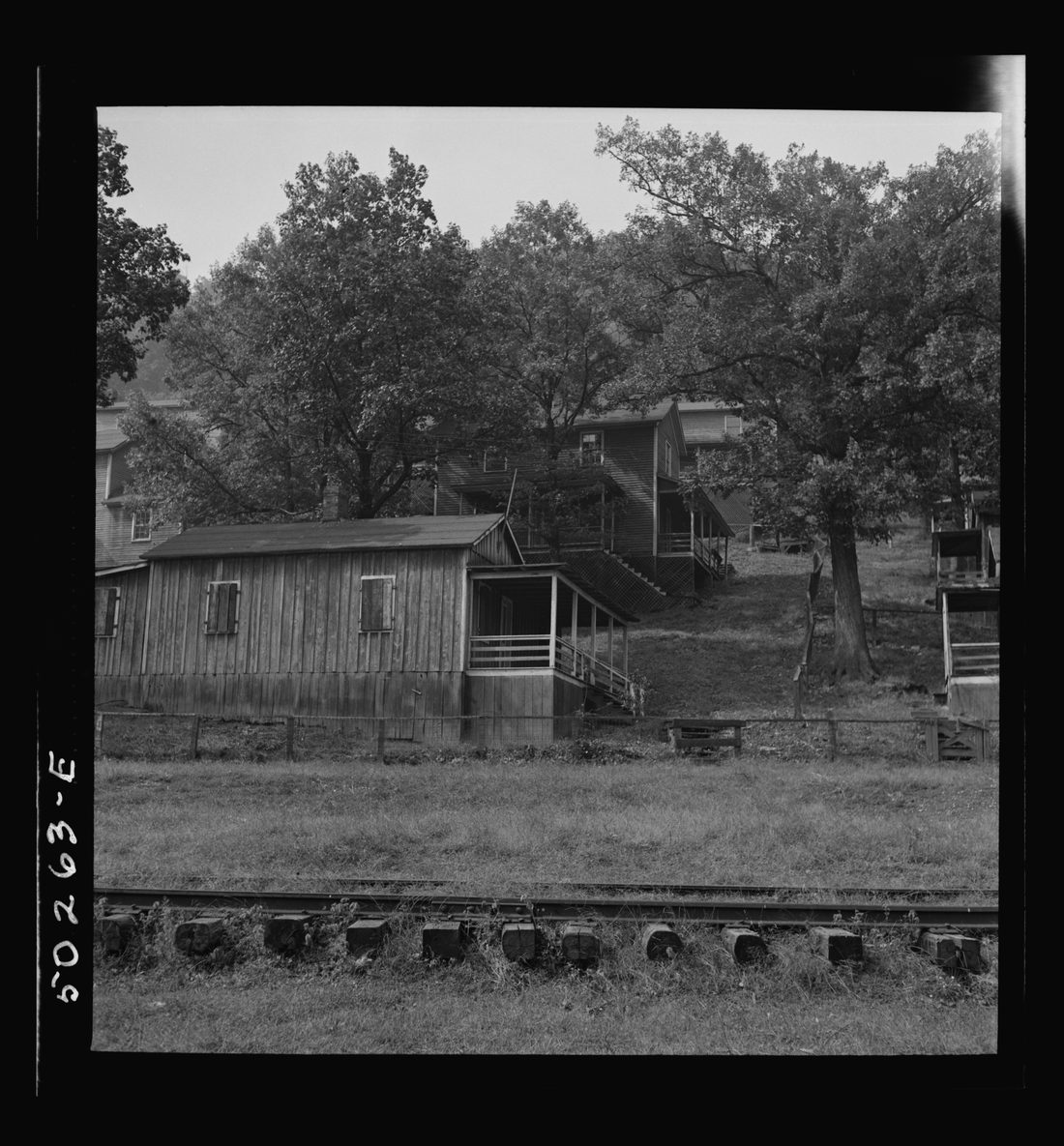
W04 Boarded-up houses in abandoned mining town of Twin Branch, West Virginia
Marion Post Wolcott · September 1938 · Library of Congress · FSA/OWI. View the original.
And one line that does not read like a labour dispute at all. We were not allowed to plant gardens on company property.
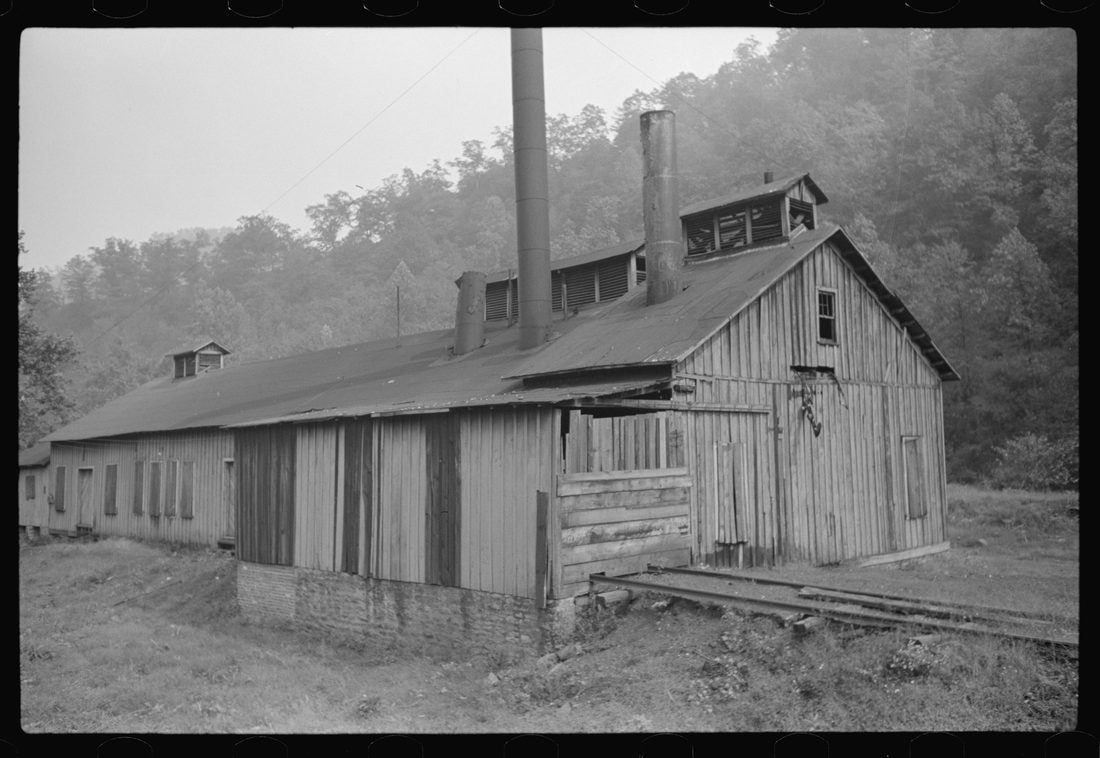
W10 Powerhouse boarded up, in deserted mining town, Twin Branch, West Virginia
Marion Post Wolcott · September 1938 · Library of Congress · FSA/OWI. View the original.
Twice since the closure, efforts had been made to get the miners to return to work non-union. Both times they refused.
The local still had two hundred and fifty-three members in good standing.
We are determined, the letter says, that if the Twin Branch mines are operated our union shall be recognised. And I am sure none of our members regrets the steps we took when we walked out on strike January sixteenth, nineteen thirty-four, but would do the same thing over if it was necessary to do so.
It is signed. Chester C. Watson, financial secretary, Local Union number six thousand and thirty, United Mine Workers of America, Twin Branch, West Virginia.
Withdrawal
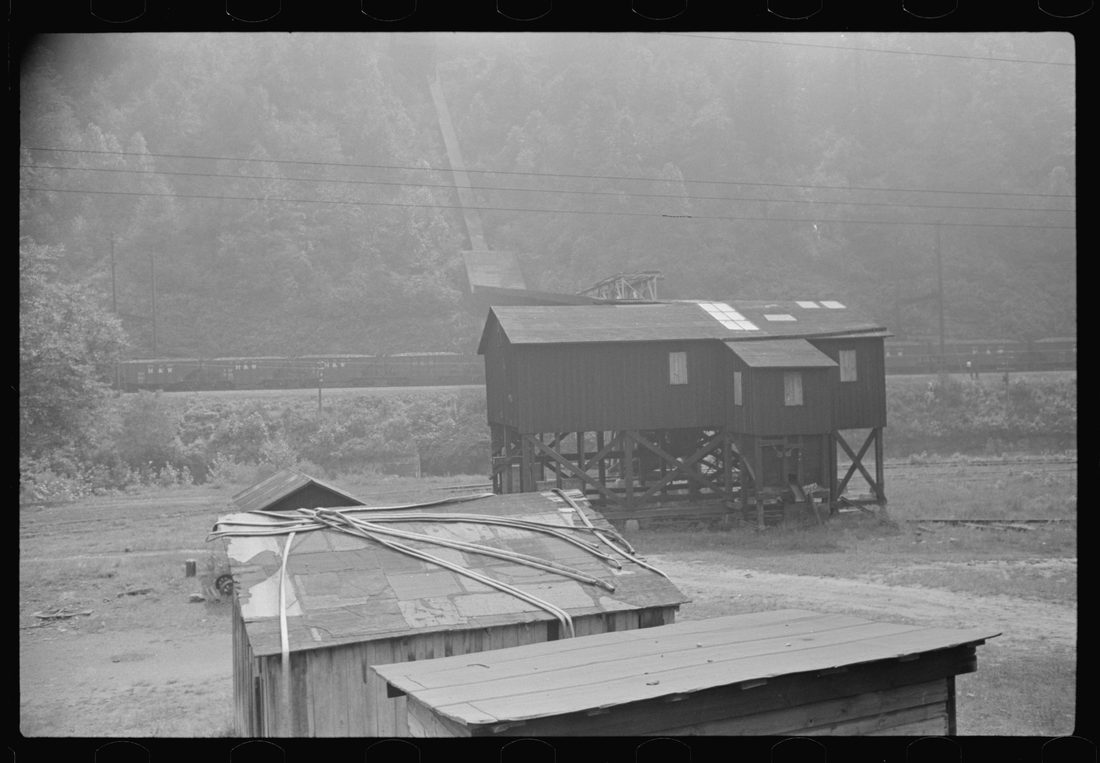
W11 Abandoned tipple in coal mining town, Twin Branch, West Virginia
Marion Post Wolcott · September 1938 · Library of Congress · FSA/OWI. View the original.
In June of nineteen thirty-six the Telegraph reported that Ford had sold his coal holdings in this part of the state. The sale, it said, marks the withdrawal of Ford interests from the southern West Virginia fields.
He had bought in twelve years earlier, for a reported ten million dollars.
What she found
W03 Abandoned mining town, Twin Branch, West Virginia
Marion Post Wolcott · September 1938 · Library of Congress · FSA/OWI. View the original.
Two years after that, the photographer arrived.
W06 Abandoned house, mining town, Twin Branch, West Virginia
Marion Post Wolcott · September 1938 · Library of Congress · FSA/OWI. View the original.
Boarded-up homes in abandoned mining town.
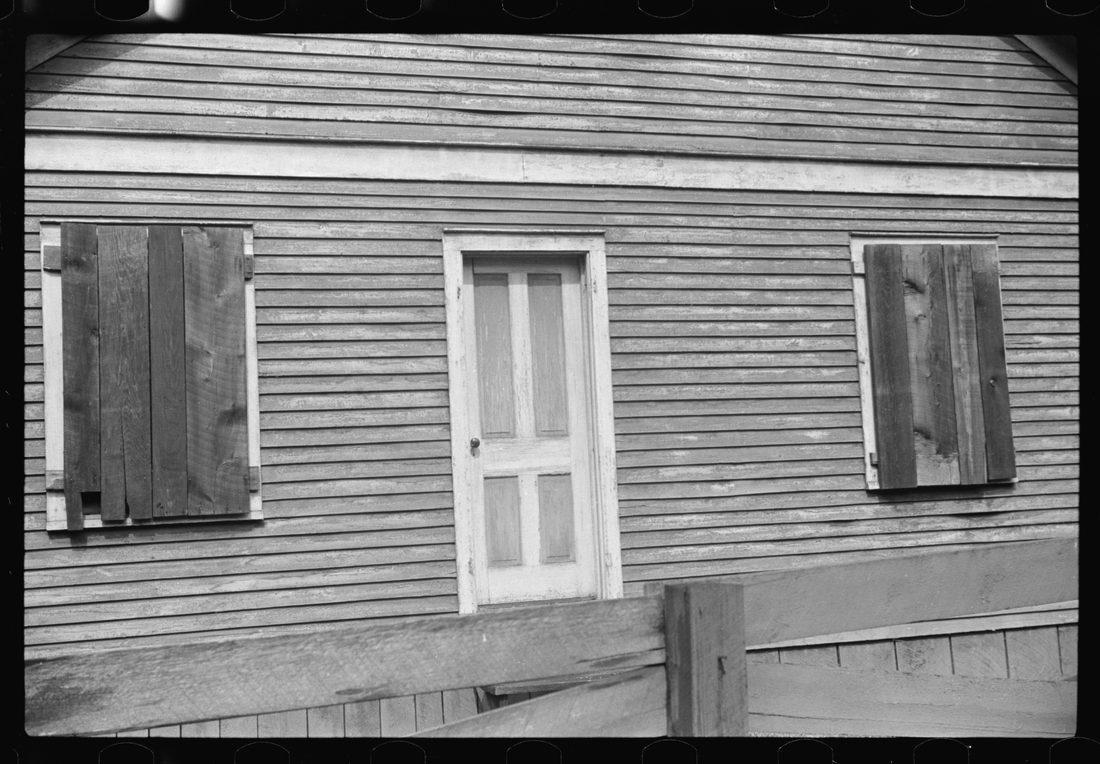
W07 Abandoned house, mining town, Twin Branch, West Virginia
Marion Post Wolcott · September 1938 · Library of Congress · FSA/OWI. View the original.
Planks nailed across the windows of houses that Ford's own film had said were kept freshly painted.
W09 Community building and company store in abandoned mining town, Twin Branch, West Virginia
Marion Post Wolcott · September 1938 · Library of Congress · FSA/OWI. View the original.
The community building and the company store.
W10 Powerhouse boarded up, in deserted mining town, Twin Branch, West Virginia
Marion Post Wolcott · September 1938 · Library of Congress · FSA/OWI. View the original.
The powerhouse.
W11 Abandoned tipple in coal mining town, Twin Branch, West Virginia
Marion Post Wolcott · September 1938 · Library of Congress · FSA/OWI. View the original.
The tipple.
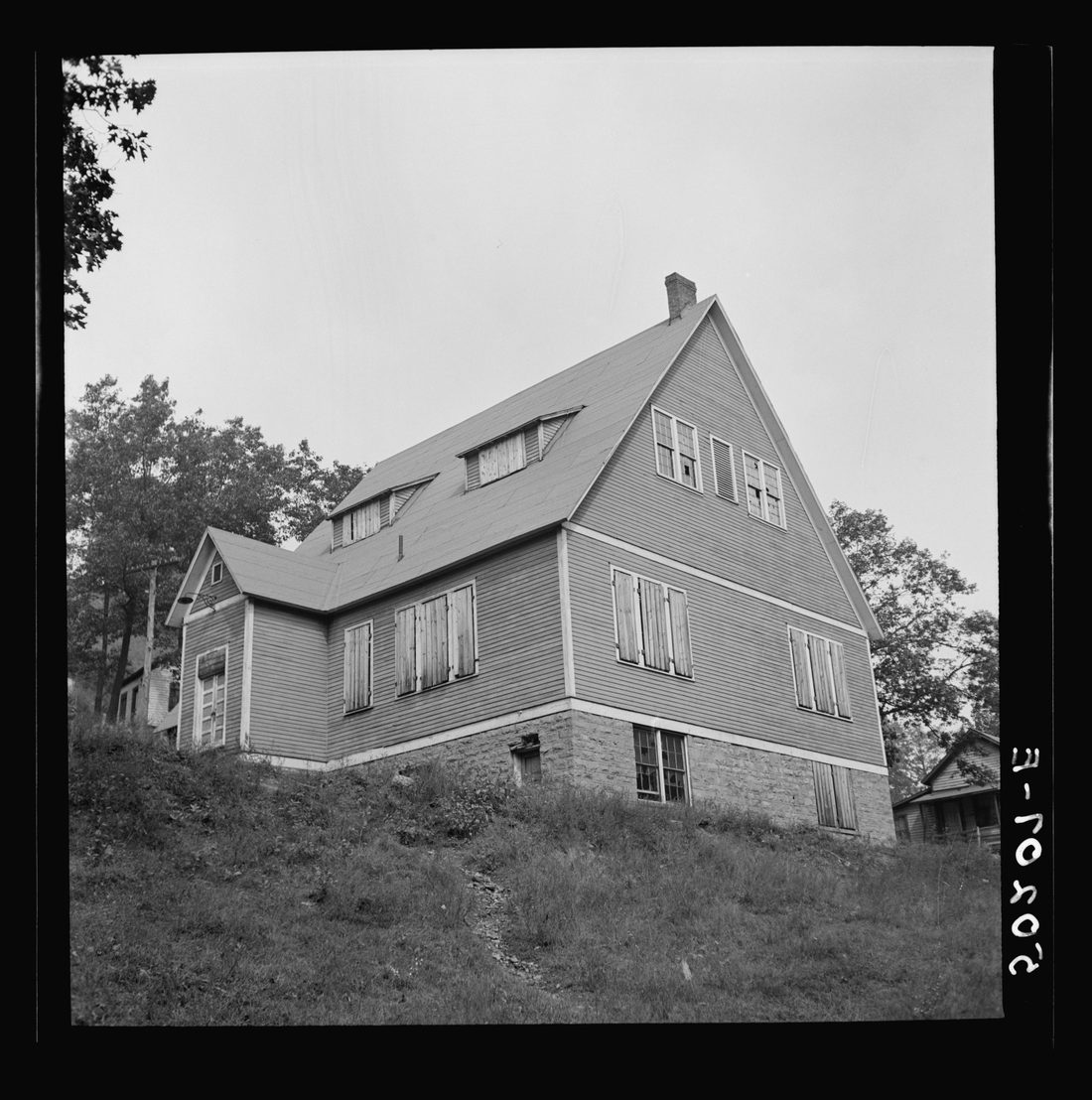
W12 Boarded-up church in abandoned mining town of Twin Branch, West Virginia. See 50274-E
Marion Post Wolcott · September 1938 · Library of Congress · FSA/OWI. View the original.
And the church, boarded up with the rest of it.
W02 Boarded-up homes in abandoned mining town. Twin Branch, West Virginia. Once very nice, owned by Ford. About four years ago when an attempt to organize it was made, Ford closed it down completely rather than have it unionized. Around 1000 men used to work there. They won't sell it, rent or let "squatters" live in the deserted homes that are rotting away. Twin Branch, West Virginia. See 30098-M1, 30084-M1
Marion Post Wolcott · September 1938 · Library of Congress · FSA/OWI. View the original.
Her caption says the company would not sell the houses, would not rent them, and would not let anyone live in them.
W13 Shack in "Marytown." Negro section of Twin Branch, West Virginia
Marion Post Wolcott · September 1938 · Library of Congress · FSA/OWI. View the original.
One part of the town was not empty. This is the section her caption calls Marytown, where the Black families had lived.
What the caption left out
W01 Deserted mining town, completely boarded up, owned by Ford who closed it down rather than have it unionized. Twin Branch, West Virginia
Marion Post Wolcott · September 1938 · Library of Congress · FSA/OWI. View the original.
So the caption on the back of the photograph was right, and it was also incomplete.
Ford did close the town rather than operate it union. But the men were not simply shut out. They walked, on the sixteenth of January, after being told the company would deal with them as individuals only.
And then they were asked twice to come back without the union, and twice they said no, with a hundred families in company houses under eviction notice and no gardens allowed.
W03 Abandoned mining town, Twin Branch, West Virginia
Marion Post Wolcott · September 1938 · Library of Congress · FSA/OWI. View the original.
The town in these photographs is not what was done to them. It is what they were willing to lose.
W05 Deserted homes, mining town, Twin Branch, West Virginia
Marion Post Wolcott · September 1938 · Library of Congress · FSA/OWI. View the original.
Nobody in Washington filed a case. The Wagner Act was still eighteen months away when the mine shut, so there was no federal board to hear it, and no hearing was ever held.
The whole account survives because a financial secretary in a dead coal camp typed it out and asked a newspaper to print it, and the newspaper did.
W12 Boarded-up church in abandoned mining town of Twin Branch, West Virginia. See 50274-E
Marion Post Wolcott · September 1938 · Library of Congress · FSA/OWI. View the original.
Twin Branch had eight hundred employees in Ford's film. Two hundred and fifty-three men were still paying dues to a local at a mine that no longer existed.
Sources
- "Mine Workers Union Gives History Of Shutdown Of Fordson Coal Company At Marytown Operation" — Bluefield Daily Telegraph, Sept. 27, 1934, p. 10. A letter to the editor from the Twin Branch local, printed in full.
- "Twin Branch Mine Of Fordson Will Close" — Bluefield Daily Telegraph, Jan. 25, 1934, p. 8.
- "Fordson Coal Holdings Sold To Eastern Coal Corporation, Report" — Bluefield Daily Telegraph, June 7, 1936, p. 1.
- The Ford Way of Mining Coal — Ford Motor Company, 1924. National Archives (catalog id 91013), via archive.org `fc-fc-336`. Published 1924, public domain. https://archive.org/details/fc-fc-336 Clips: c01 c02 c03 c04 c05 c06
- Marion Post Wolcott, Twin Branch, September 1938 — FSA/OWI Black-and-White Negatives, Library of Congress. Federal works, public domain. Master scans of the original negatives, no tonal adjustment.
- The two dates are not a contradiction. The letter says "up to January 17, 1934, Twin Branch was a thriving, busy mining town" and also "we walked out on strike January 16, 1934." The 16th is the superintendent's ultimatum and the walkout; the 17th is the last of the town as it had been. The episode gives the 16th as the strike date.
- The equipment. In January the company told the paper much of the equipment was being shipped away; in September the union said the equipment had not been moved. Both are reported, neither is resolved.
- One side of it. The bulk of this account is the union's own letter. The company's only contribution to the record is the superintendent's refusal to give a reason. That imbalance is in the sources, and the narration says whose account it is throughout.
- Ford himself. No document was found showing Henry Ford personally ordered the closure, or personally received the two representatives. The letter says the local sent them to Detroit to ask him; it does not say he met them.
- The 1936 sale concerns the Pond Creek tract in Mingo County. It establishes Ford's exit from the region; it is not a record of the disposal of Twin Branch itself.
- No NLRB case exists because none could: the mine shut in January 1934 and the Wagner Act was not passed until July 1935.