The Government Built 198 Houses in West Virginia. 1,640 Families Applied.
In September 1938 a Farm Security Administration photographer named Marion Post Wolcott spent a month in West Virginia and came back with about 1,300 negatives. The negatives are only half of it. On the caption sheets she typed field notes — some of them four hundred words long — and those notes are the document this episode is built on.
Transcript
It'll be purtier
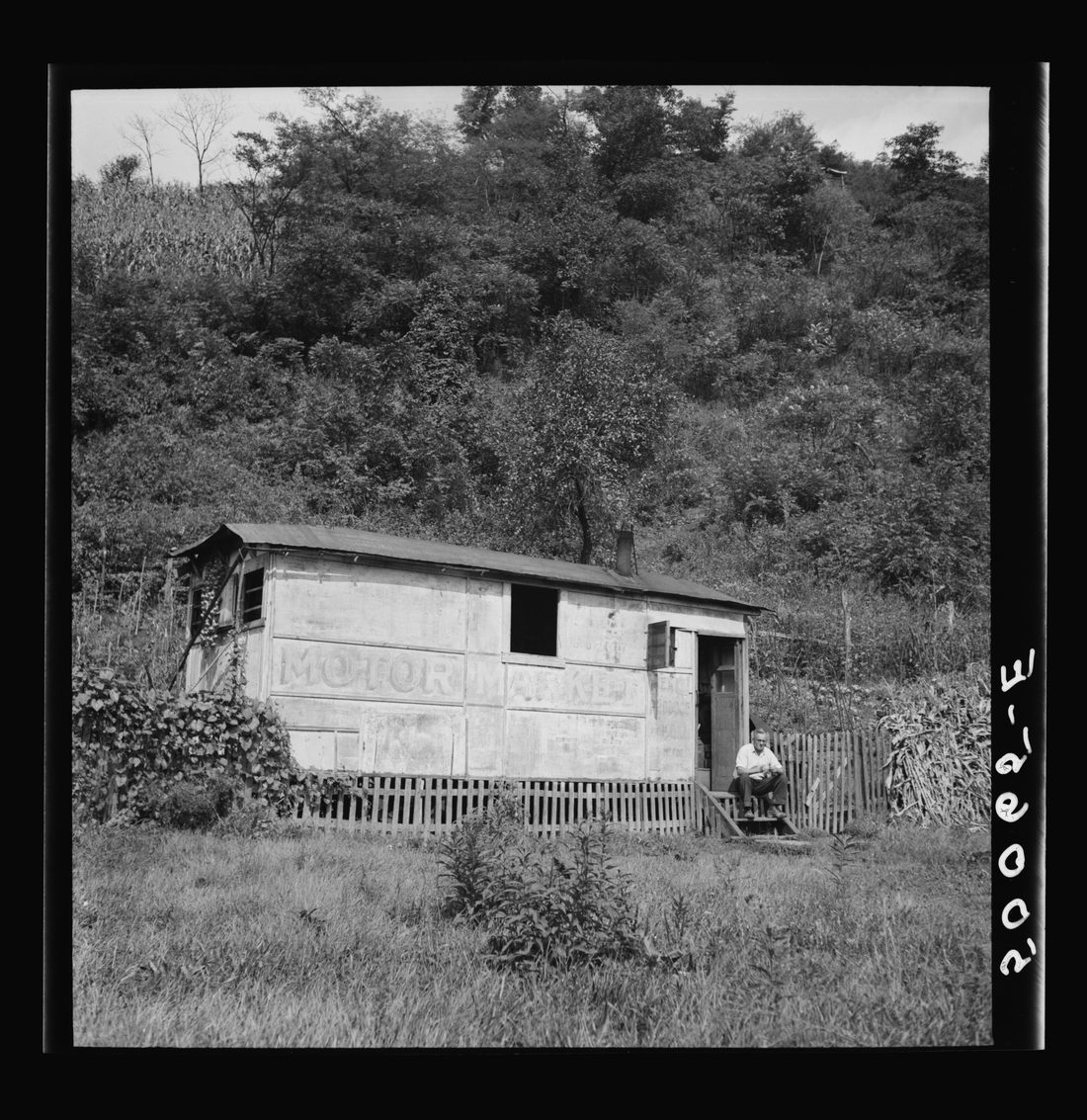
P01 Unemployed miner's home he built. "It'll be purtier when I paint it." Scott's Run, West Virginia. Osage, West Virginia
Marion Post Wolcott · September 1938 · Library of Congress · FSA/OWI. View the original.
This is a house a man built for himself, on a hillside in northern West Virginia, in September of nineteen thirty-eight.
The photographer wrote a caption for it. Unemployed miner's home he built. And then she wrote down what he told her. It'll be purtier when I paint it.
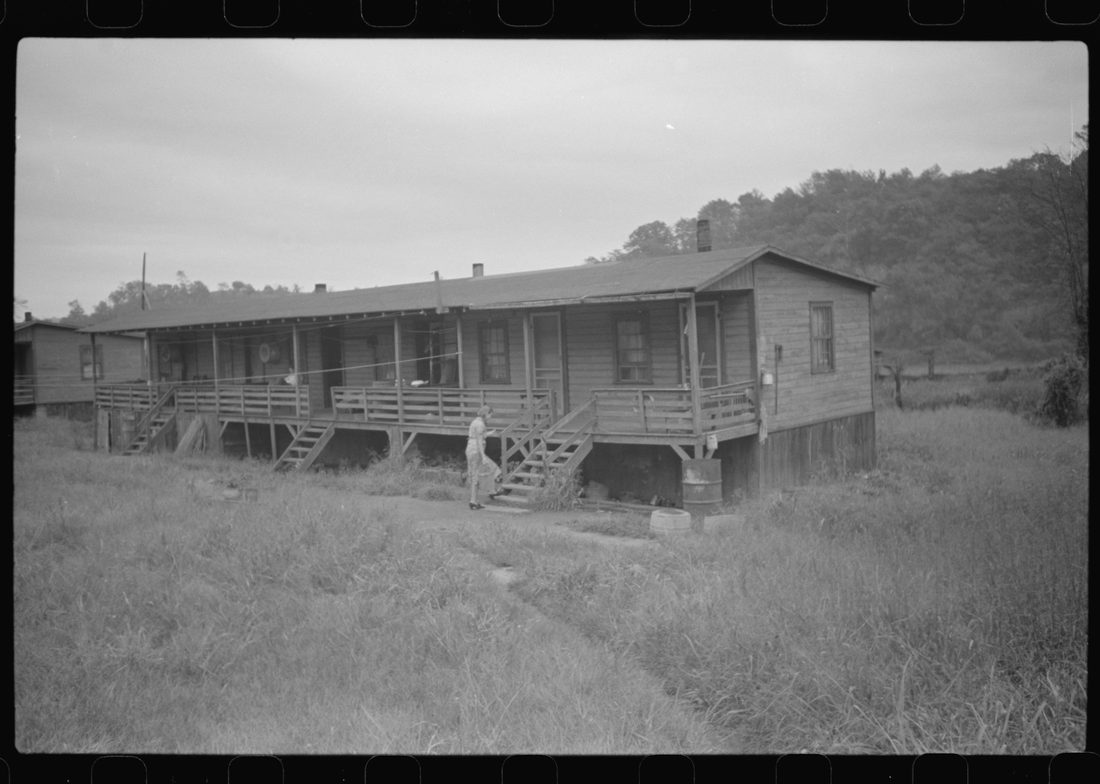
P02 Coal miners' shacks. Scotts Run, West Virginia
Marion Post Wolcott · September 1938 · Library of Congress · FSA/OWI. View the original.
Her name was Marion Post Wolcott. She worked for the federal government, and she spent that September driving around this state.
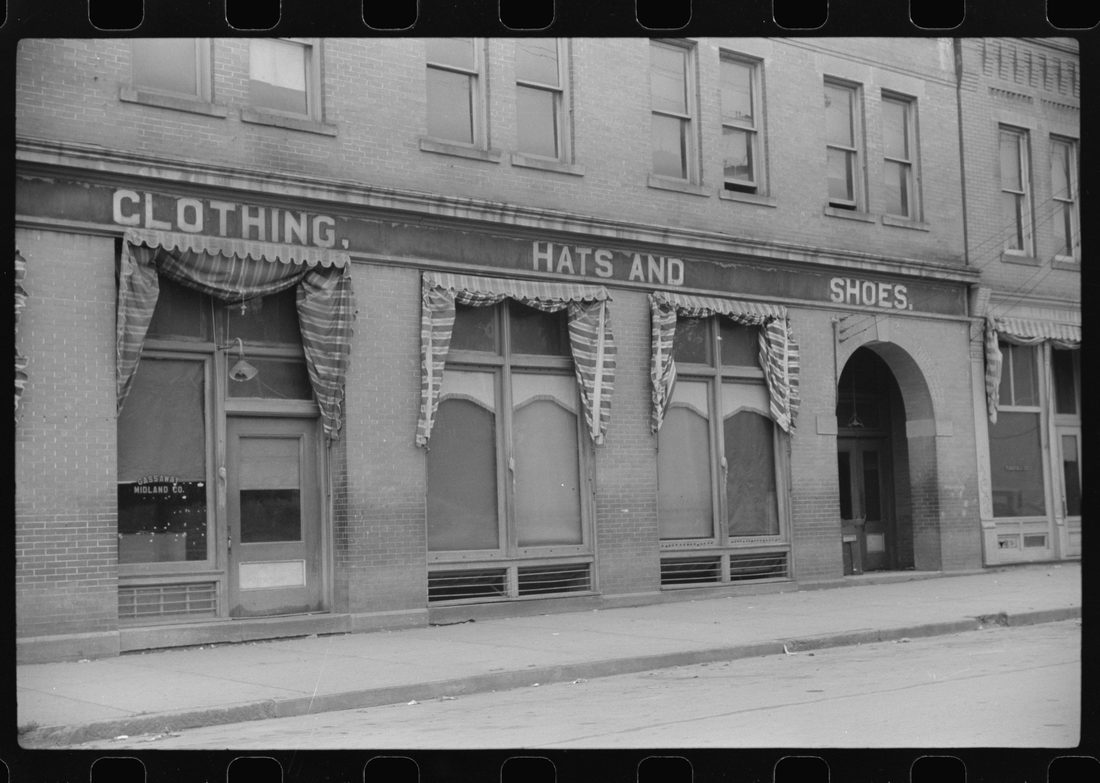
P04 Main store front in coal mining town, Scott's Run, West Virginia
Marion Post Wolcott · September 1938 · Library of Congress · FSA/OWI. View the original.
The other half is what she typed on the captions. Because she did not write captions. She wrote field notes, and some of them run four hundred words.
Thirty days
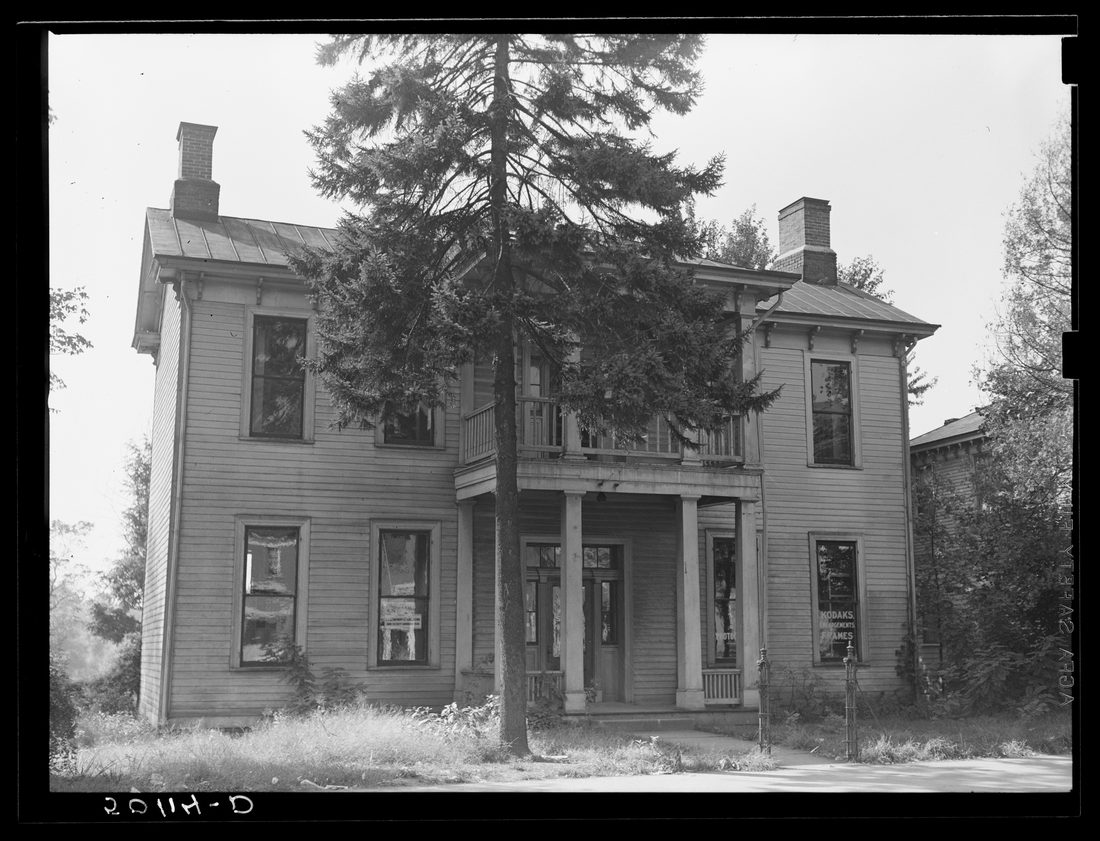
P05 Once a private home, now left part of building used for FSA (Farm Security Administration) offices. The other half is a photographer's studio. Elkins West Virginia
Marion Post Wolcott · September 1938 · Library of Congress · FSA/OWI. View the original.
This is the Farm Security Administration office at Elkins. The government rented half a house. The other half was a photographer's studio.
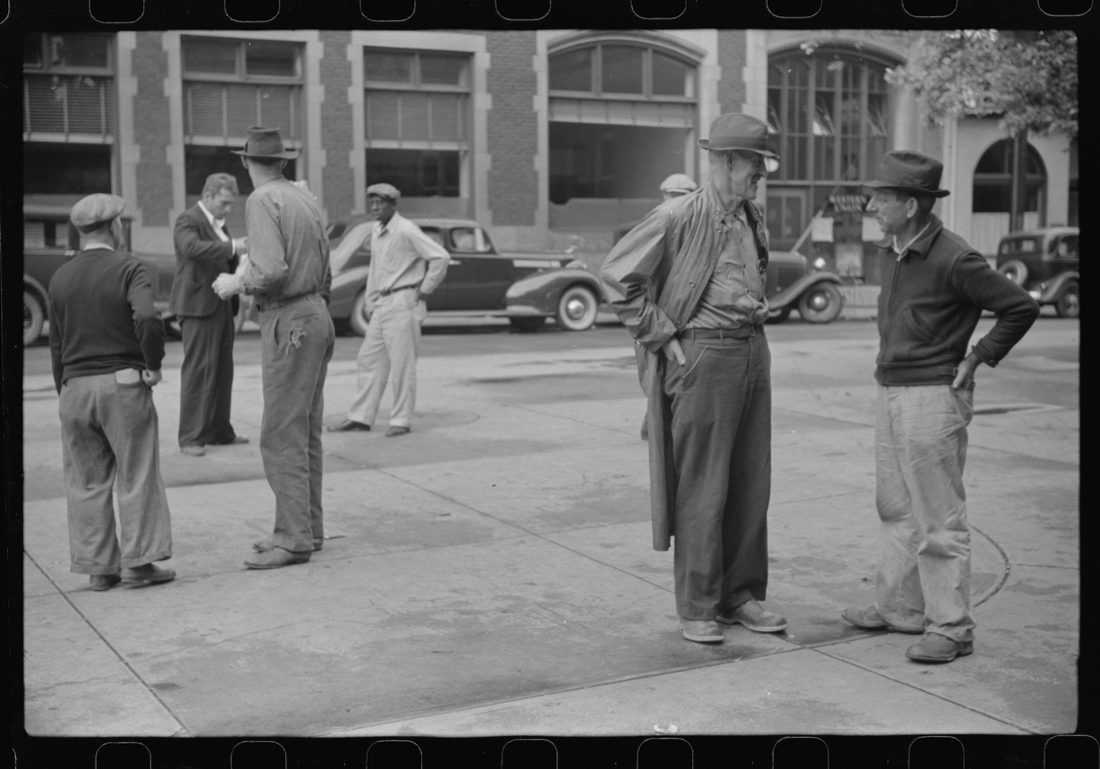
P06 A rainy Saturday afternoon, courthouse square, Morgantown, West Virginia
Marion Post Wolcott · September 1938 · Library of Congress · FSA/OWI. View the original.
Every frame in this episode is filed the same way. Nineteen thirty-eight, September. No day of the month on any of them.
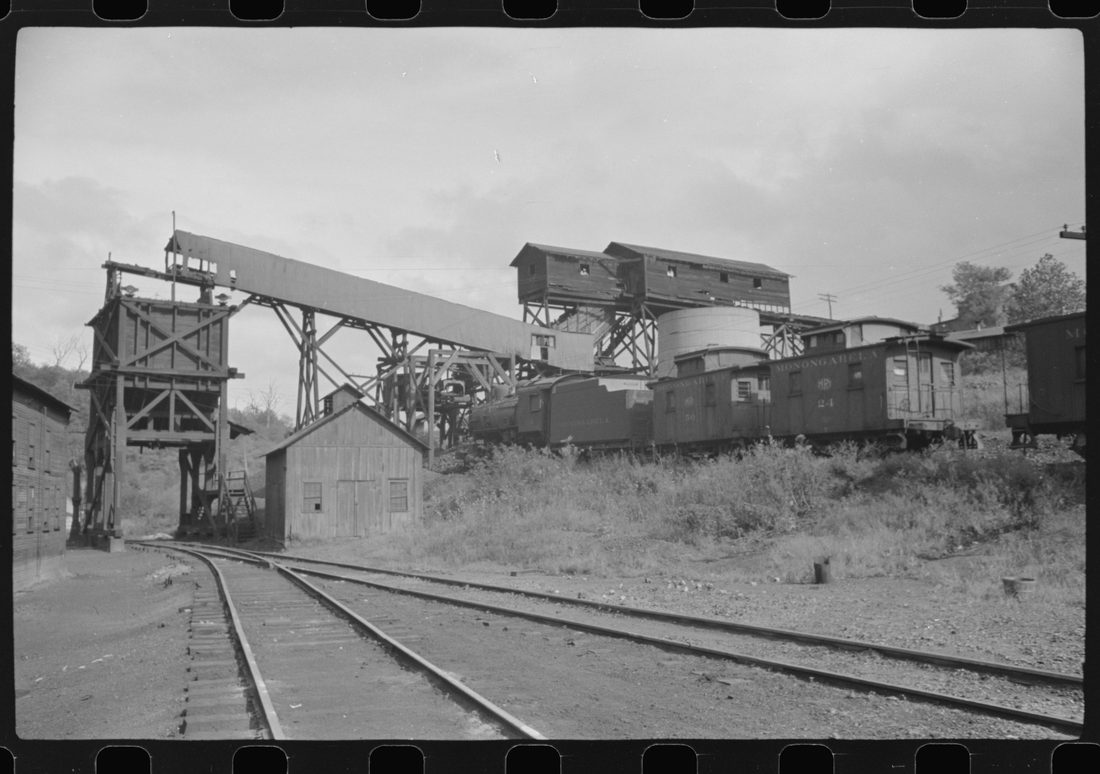
P07 Abandoned coal tipple near Osage, West Virginia
Marion Post Wolcott · September 1938 · Library of Congress · FSA/OWI. View the original.
So the order of her month is gone, and this is not a route. It is a state, in thirty days, arranged by place.
Scotts Run
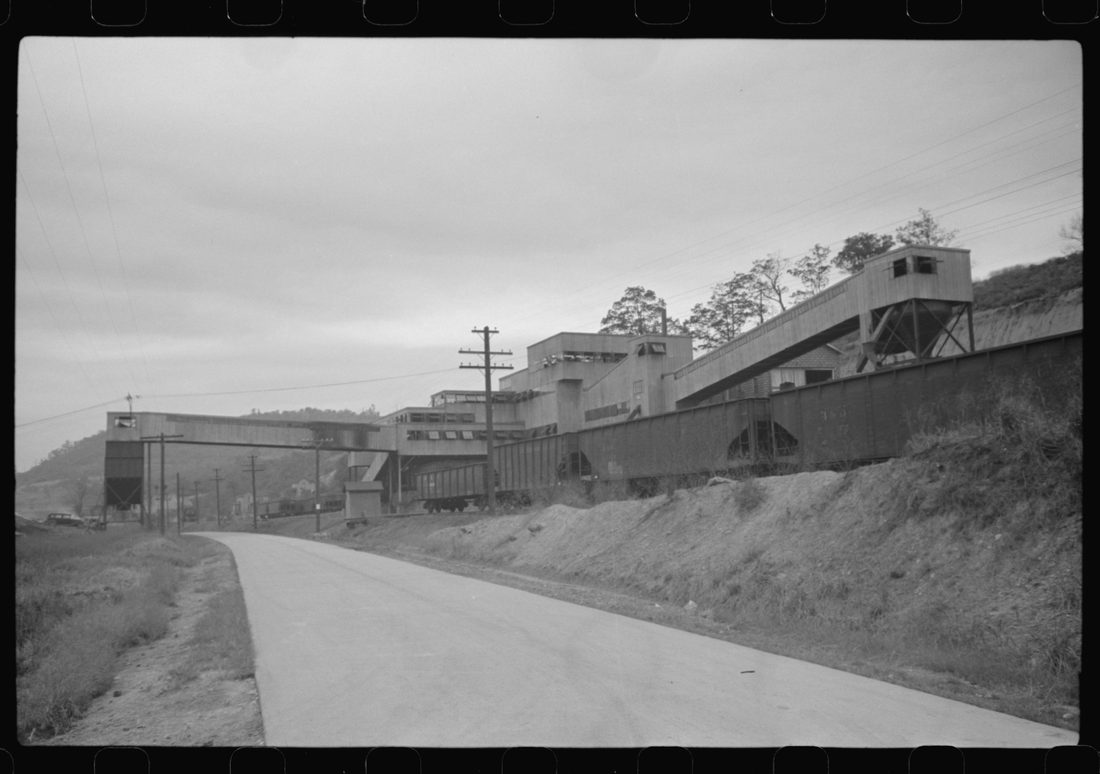
P08 Modern new coal mine tipple, Scotts Run, West Virginia
Marion Post Wolcott · September 1938 · Library of Congress · FSA/OWI. View the original.
Start north of Morgantown, in a hollow called Scotts Run.
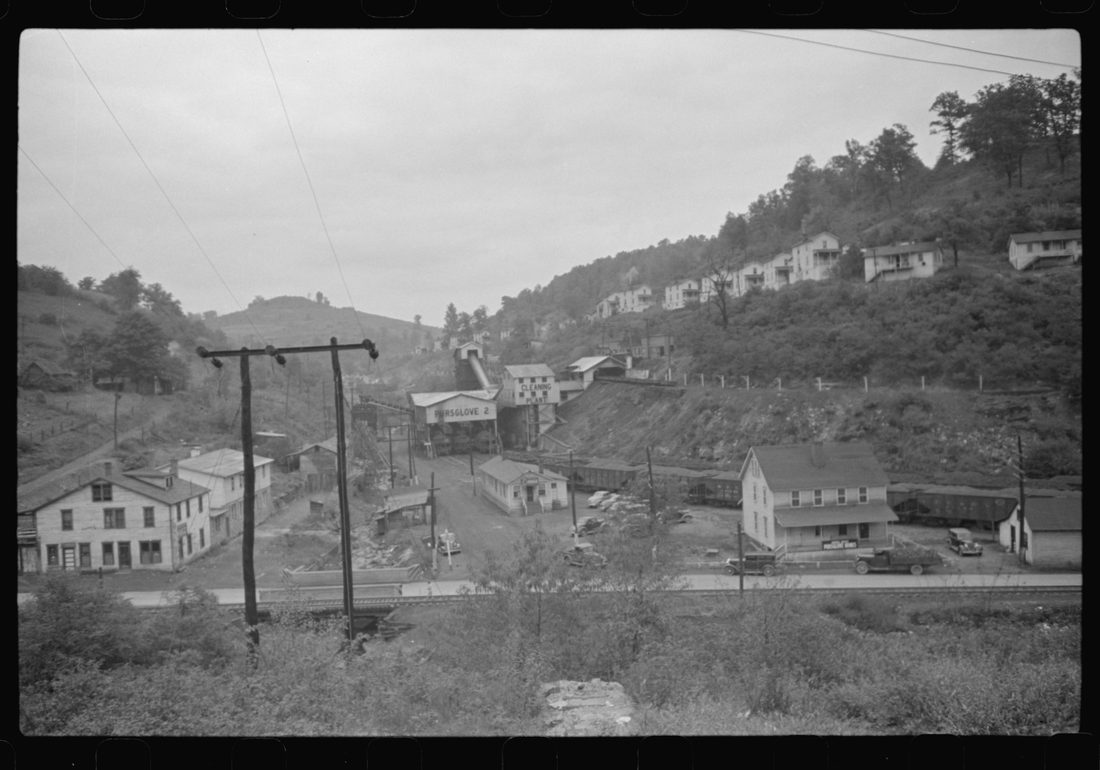
P09 Company houses, coal mining section, with coal washer in center, Purseglove, Scotts Run, West Virginia
Marion Post Wolcott · September 1938 · Library of Congress · FSA/OWI. View the original.
Company houses on the hill above the coal washer.
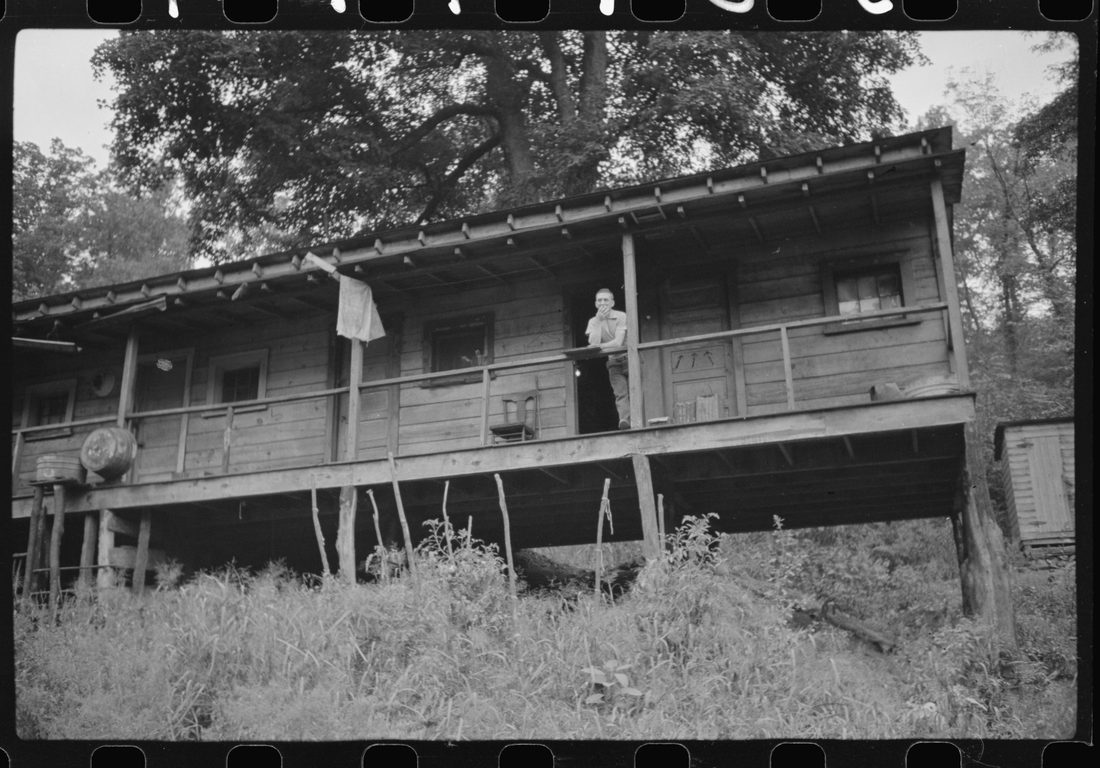
P11 Coal miners' shanties. The "Patch," Cassville, West Virginia
Marion Post Wolcott · September 1938 · Library of Congress · FSA/OWI. View the original.
Her word for these rows is the Patch. She always puts it in quotation marks, so it was their word, not hers.
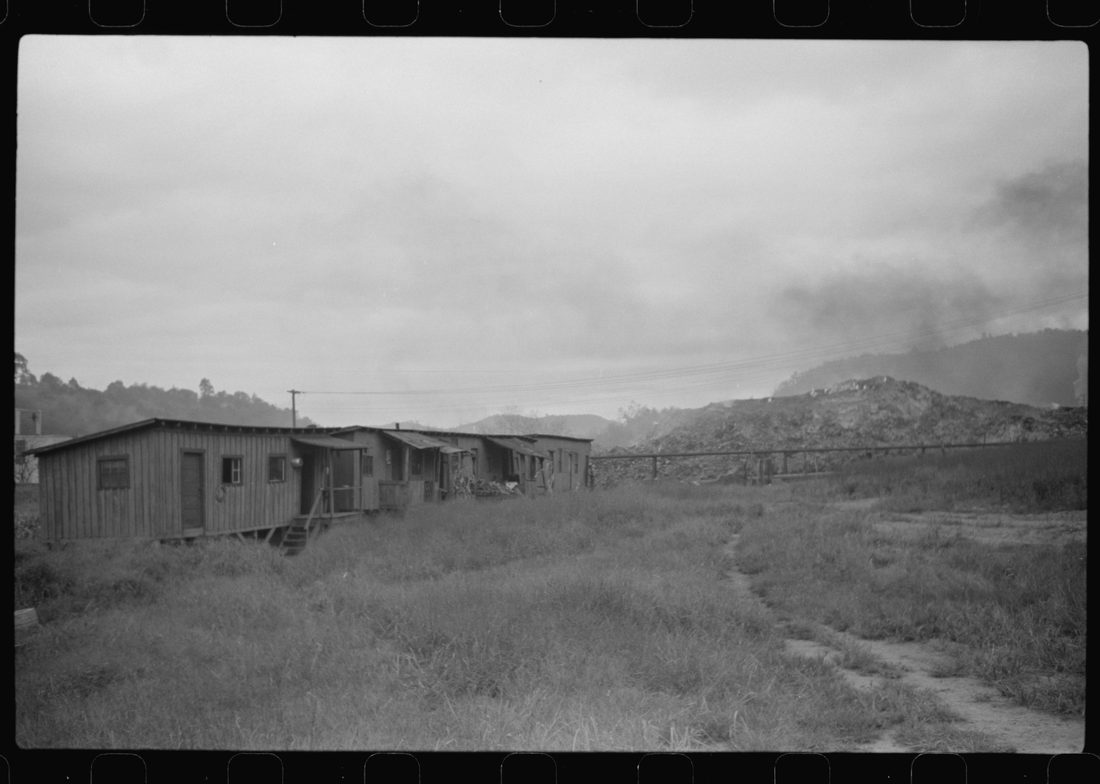
P12 Section of Rosedale Mining Company. Shanties by the river (burning slag pile to right). These used to be United Mine Workers barracks just thrown up to temporarily house men thrown out of company houses, during strike. Scotts Run, West Virginia
Marion Post Wolcott · September 1938 · Library of Congress · FSA/OWI. View the original.
These were union barracks, her caption says, thrown up in a hurry during a strike to house men who had been put out of the company houses. By nineteen thirty-eight people were simply living in them.
Water
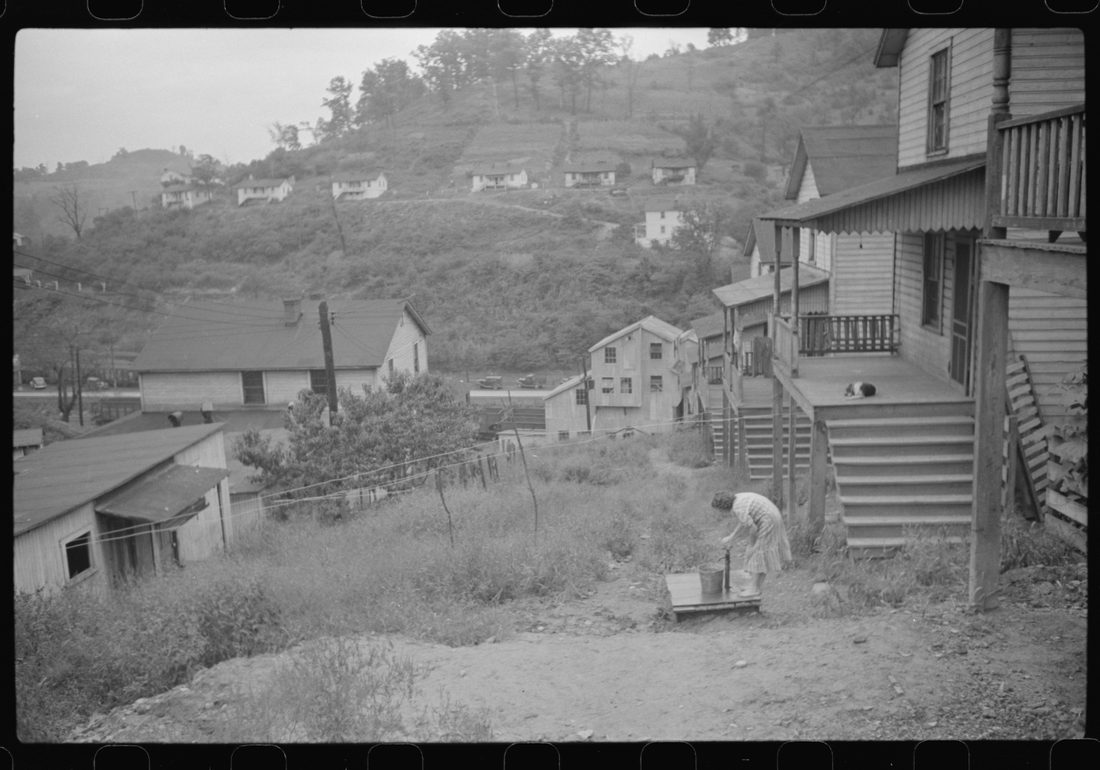
P14 Coal miner's wife getting water from pump, company houses, Pursglove, Scotts Run, West Virginia
Marion Post Wolcott · September 1938 · Library of Congress · FSA/OWI. View the original.
Almost none of these houses had water in them.
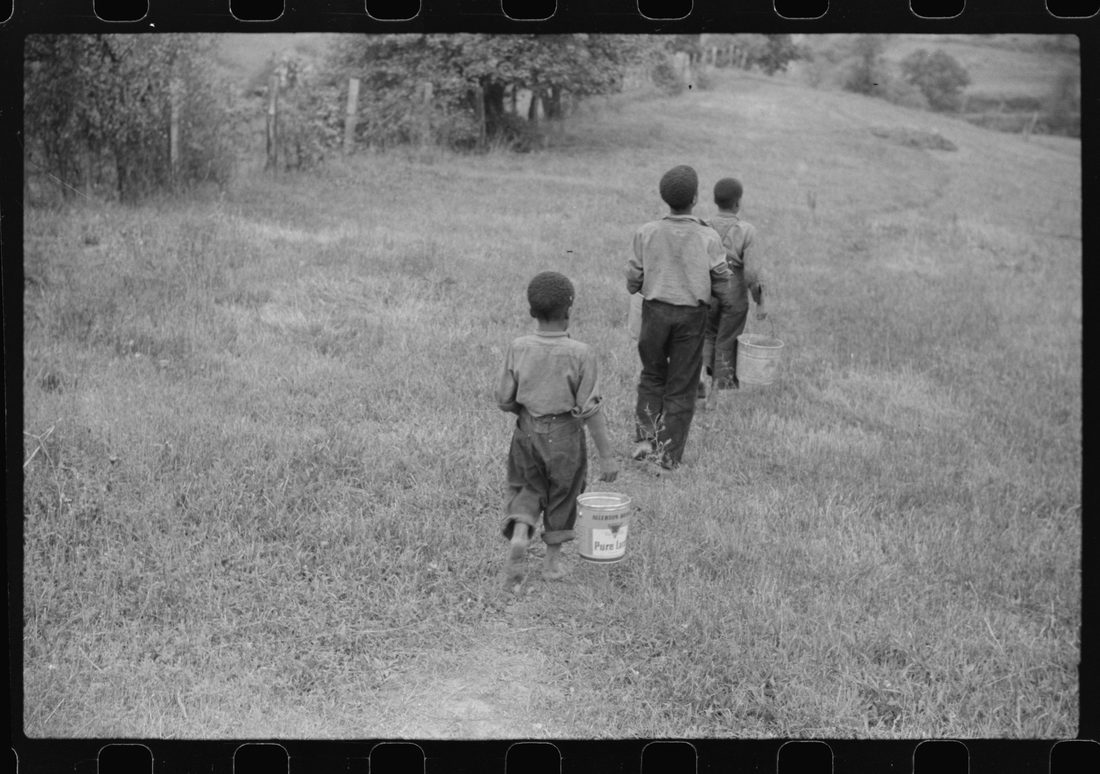
P15 Three of miner's children going down hill to get water in old lard cans. Chaplin, West Virginia
Marion Post Wolcott · September 1938 · Library of Congress · FSA/OWI. View the original.
So water is a job somebody does. Three of a miner's children, going down the hill with lard cans.
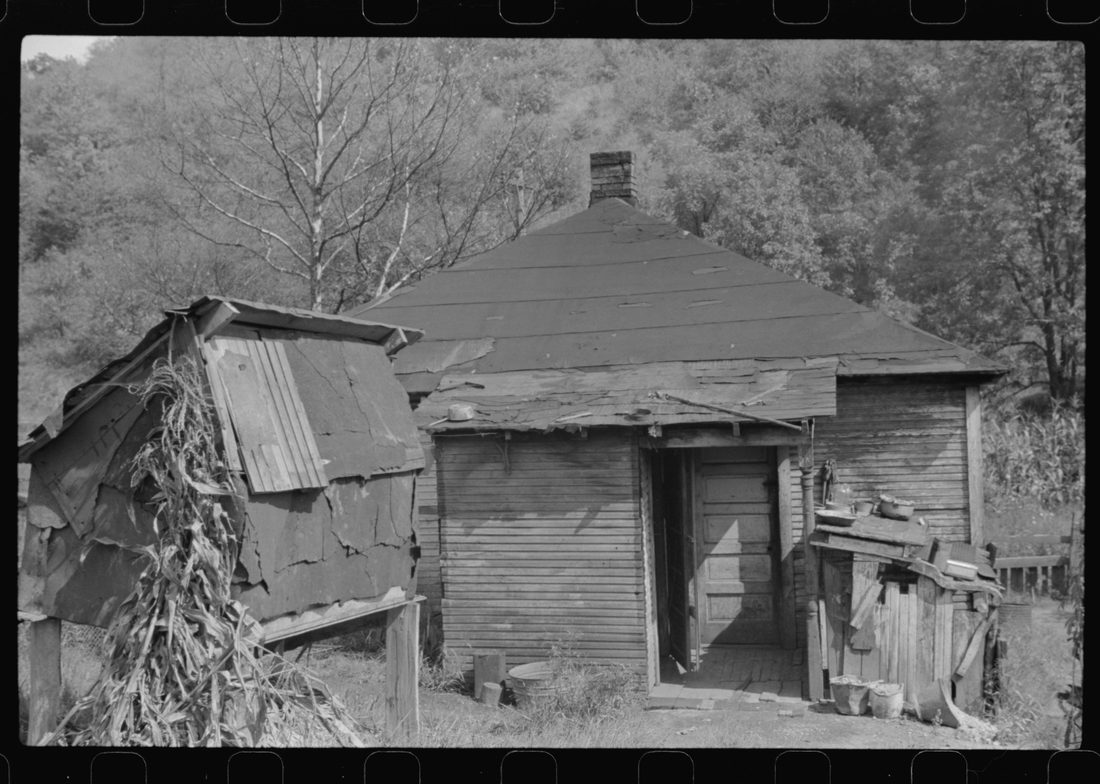
P17 Rear of coal miner's home and homemade corn crib at left. There's not any water or electricity. Bertha Hill, West Virginia
Marion Post Wolcott · September 1938 · Library of Congress · FSA/OWI. View the original.
Her caption for this one is four words long. There's not any water or electricity.
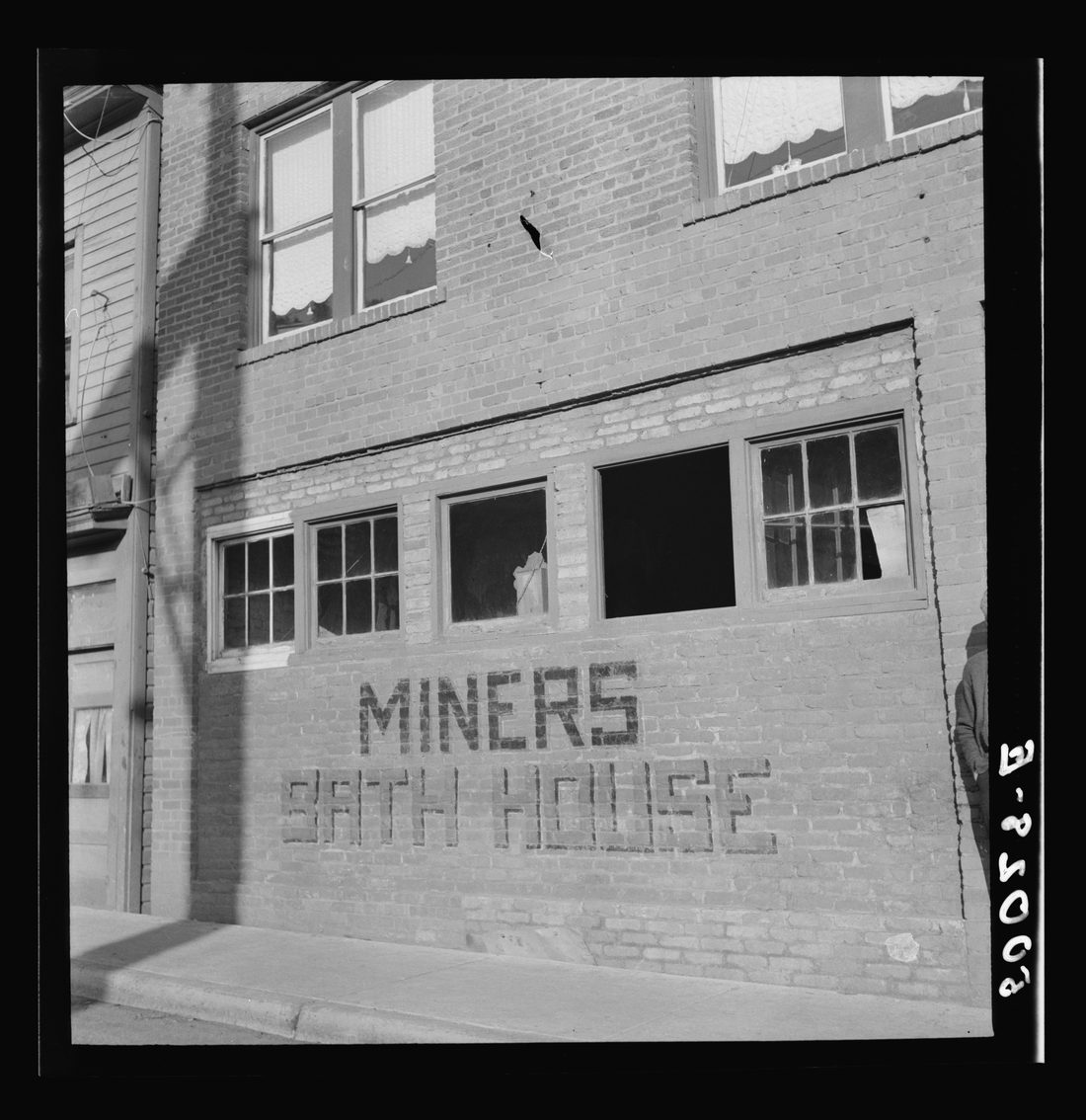
P18 Public bath houses for miners in center of town in Welch. Bluefield section, West Virginia. Most miners' homes have no running water, and water must be carried a long distance
Marion Post Wolcott · September 1938 · Library of Congress · FSA/OWI. View the original.
Down in the southern coalfield at Welch there were public bath houses in the middle of town, because most miners' homes had no running water and it had to be carried a long way.
The wires
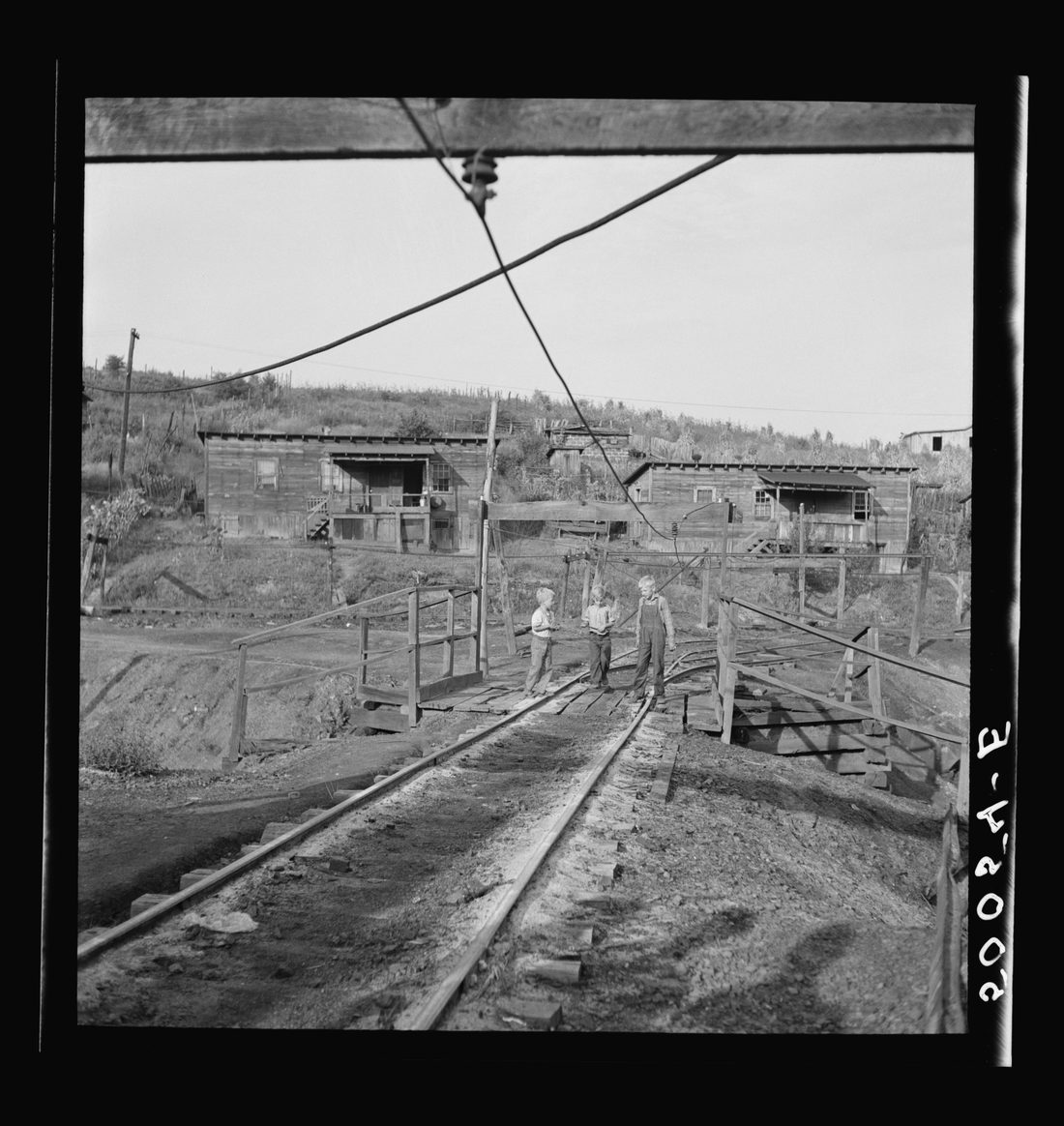
P19 Coal miner's children on way to get groceries. All these wires are alive, carrying from 250 to 530 volts. People and children are often knocked down, sometimes killed. This is the main and only thoroughgare to company store and school, from their homes (in background). The "Patch," Chaplin, West Virginia
Marion Post Wolcott · September 1938 · Library of Congress · FSA/OWI. View the original.
This is the road to the company store and the school at Chaplin. It is the only one.
Her caption: all these wires are alive, carrying from two hundred and fifty to five hundred and thirty volts. People and children are often knocked down, sometimes killed.
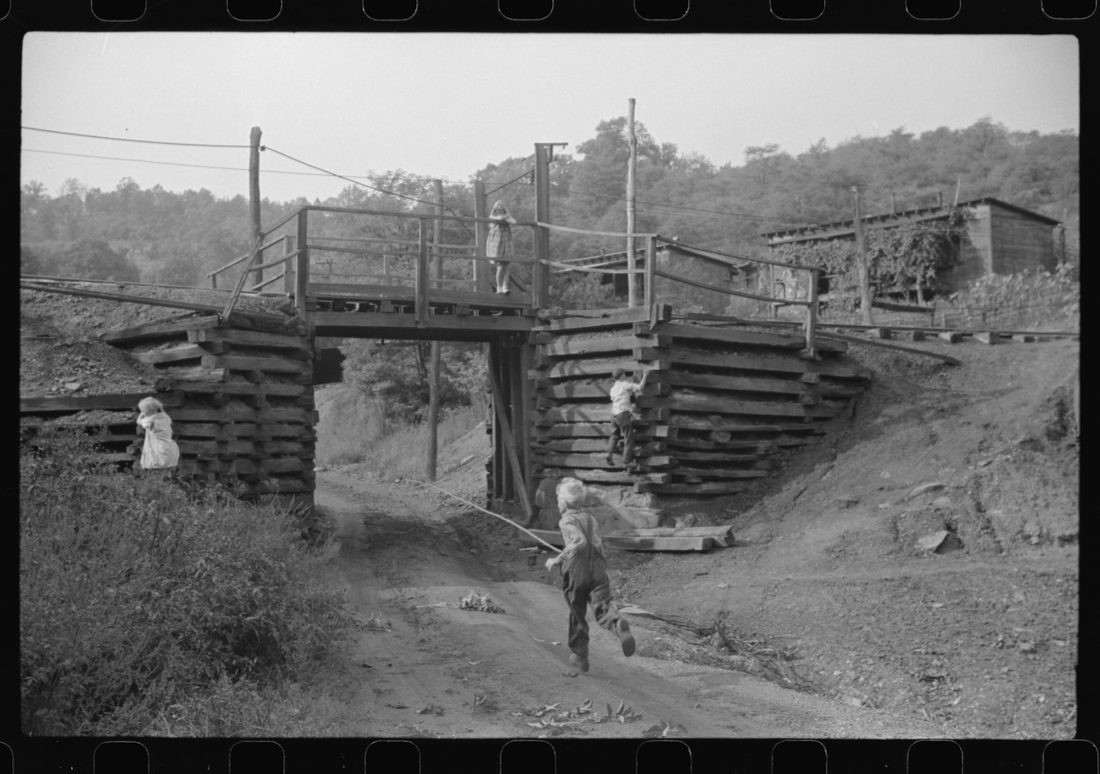
P20 Coal miner's children playing around tracks. Note live wires. Chaplin, West Virginia
Marion Post Wolcott · September 1938 · Library of Congress · FSA/OWI. View the original.
Children playing on the tracks. Note live wires, she wrote.
Payday
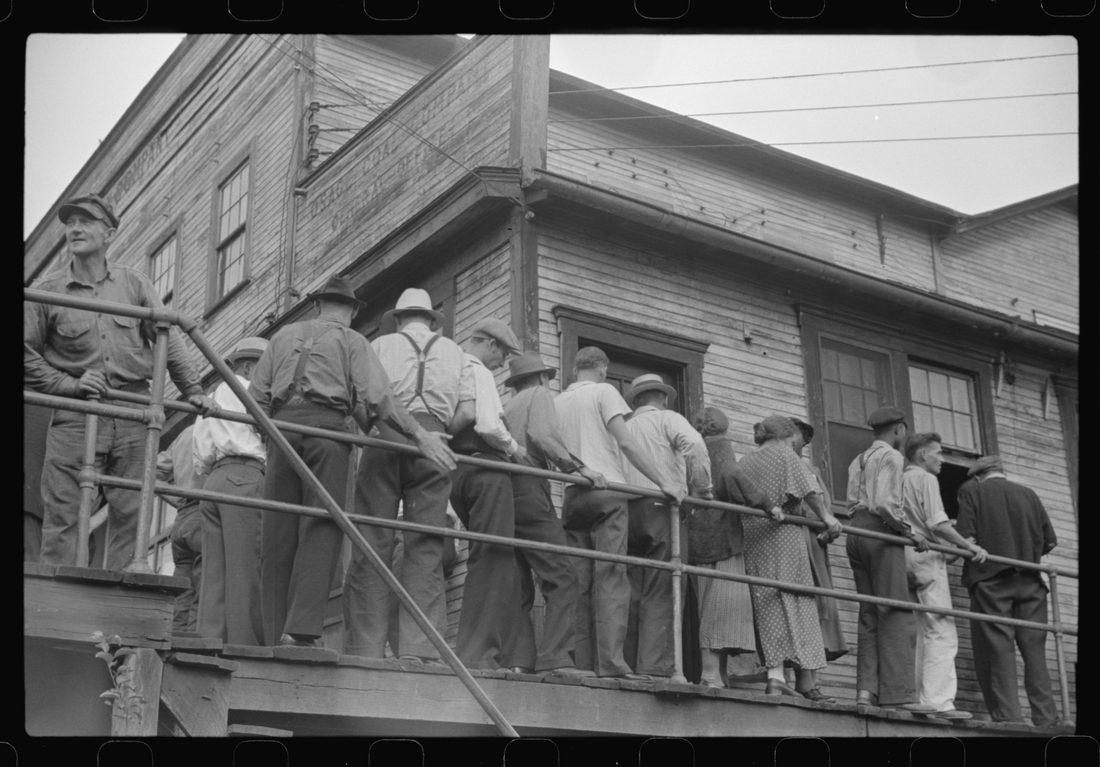
P23 Payday, Osage, West Virginia
Marion Post Wolcott · September 1938 · Library of Congress · FSA/OWI. View the original.
Payday at Osage.
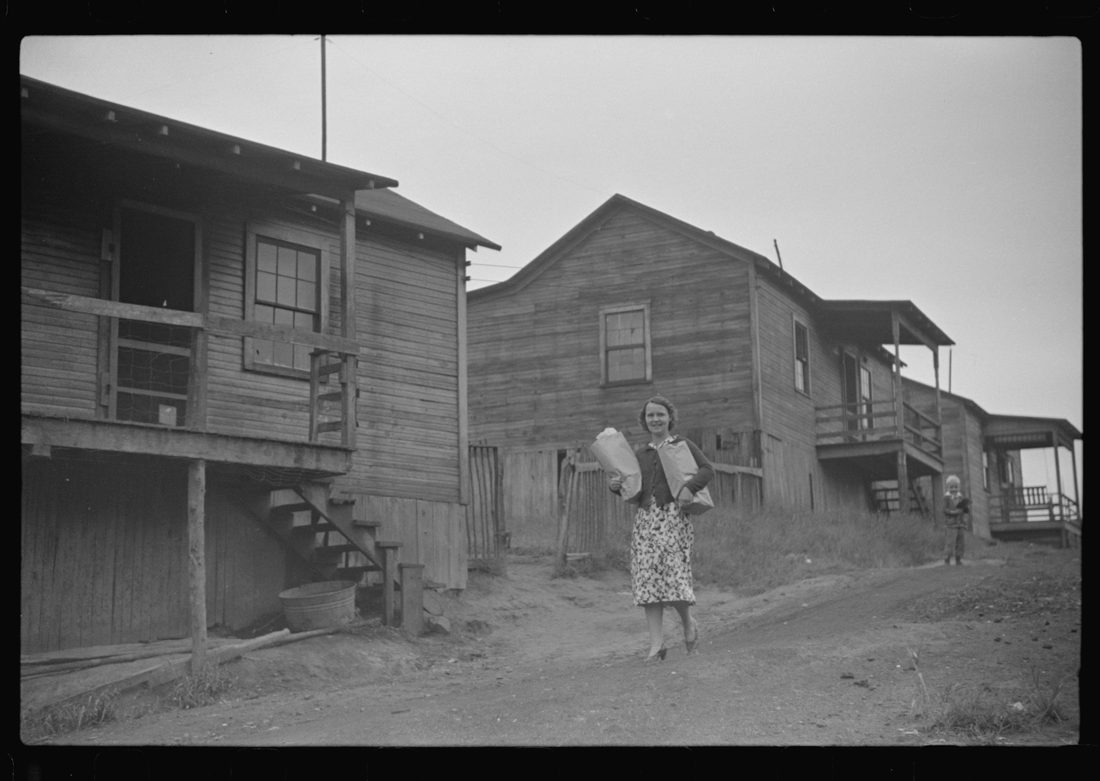
P24 Coal miner's wife bringing home the groceries on payday from company store, Chaplin, West Virginia
Marion Post Wolcott · September 1938 · Library of Congress · FSA/OWI. View the original.
A miner's wife bringing the groceries home from the company store, on the day the money came.
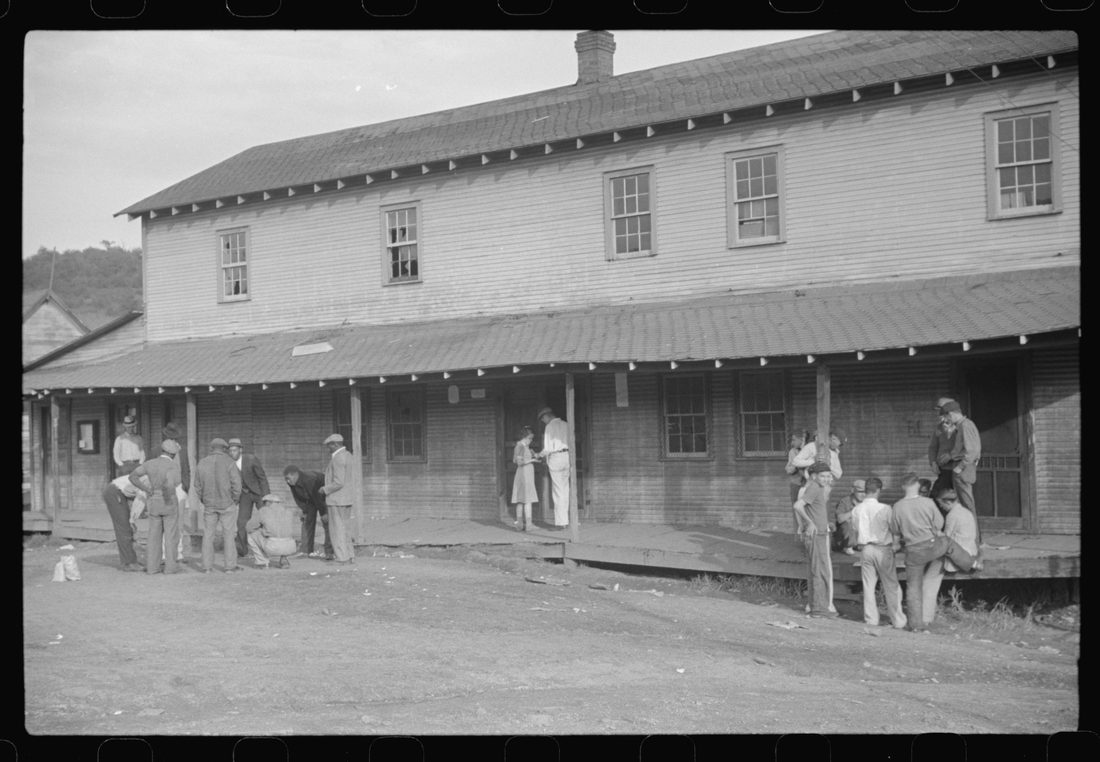
P25 Company store, Saturday afternoon. At left, miners shooting craps; at right, card gambling, favorite pastime. Chaplin, West Virginia
Marion Post Wolcott · September 1938 · Library of Congress · FSA/OWI. View the original.
Saturday at the store at Chaplin. Her caption sorts it for you. At left, miners shooting craps. At right, card gambling, favorite pastime.
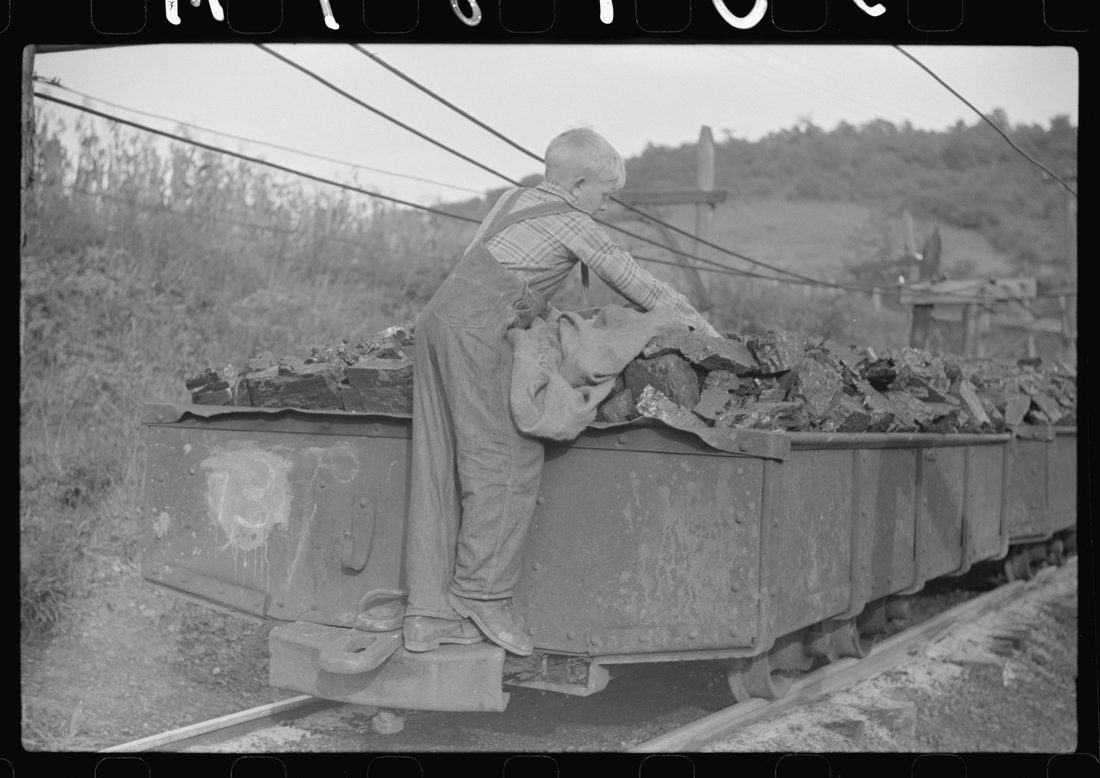
P28 Coal miner's son swiping coal from coal cars for home use. The "Patch," Chaplin, West Virginia
Marion Post Wolcott · September 1938 · Library of Congress · FSA/OWI. View the original.
And this is how a lot of families got the coal they burned. A miner's son, on top of a loaded car. Her word for it is swiping.
The insurance
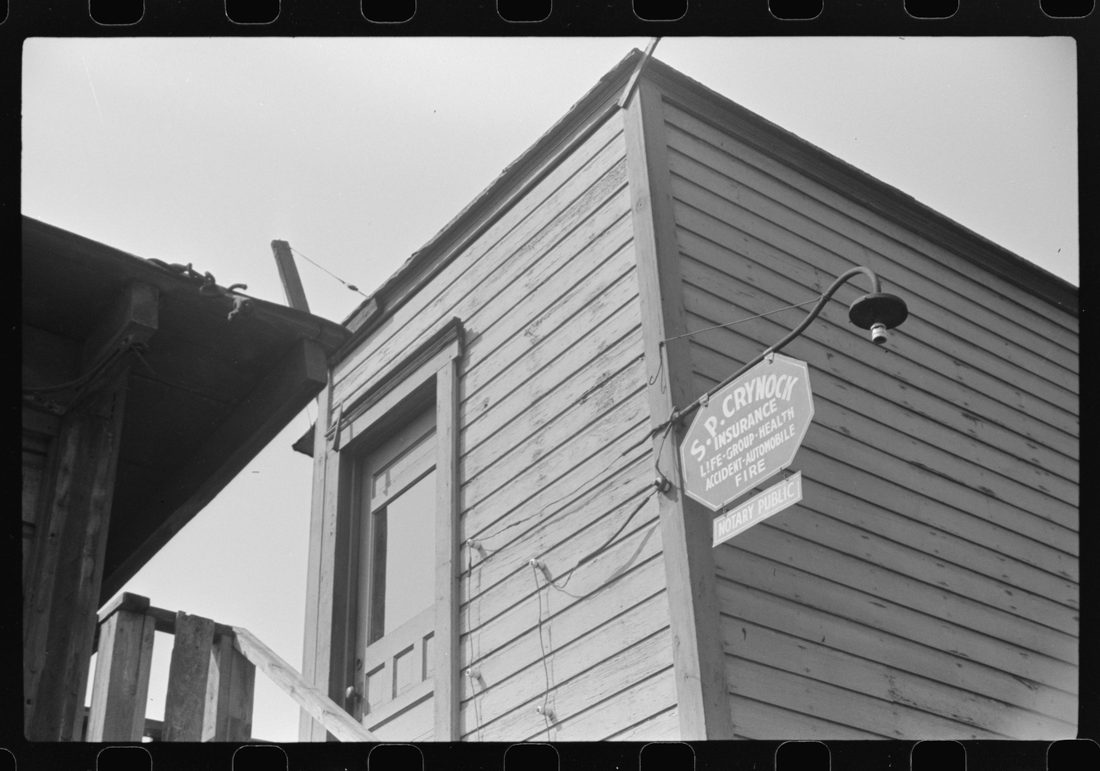
P29 The coal company also offers insurance to workers covering accidents anywhere except in the mines for five dollars per month. Most miners signed up for it. If killed or hurt even after working for that company for twenty years, they get nothing. Purseglove, West Virginia
Marion Post Wolcott · September 1938 · Library of Congress · FSA/OWI. View the original.
The company at Purseglove sold its men insurance. Five dollars a month.
Her caption explains the terms. It covered accidents anywhere except in the mines. Most miners signed up for it.
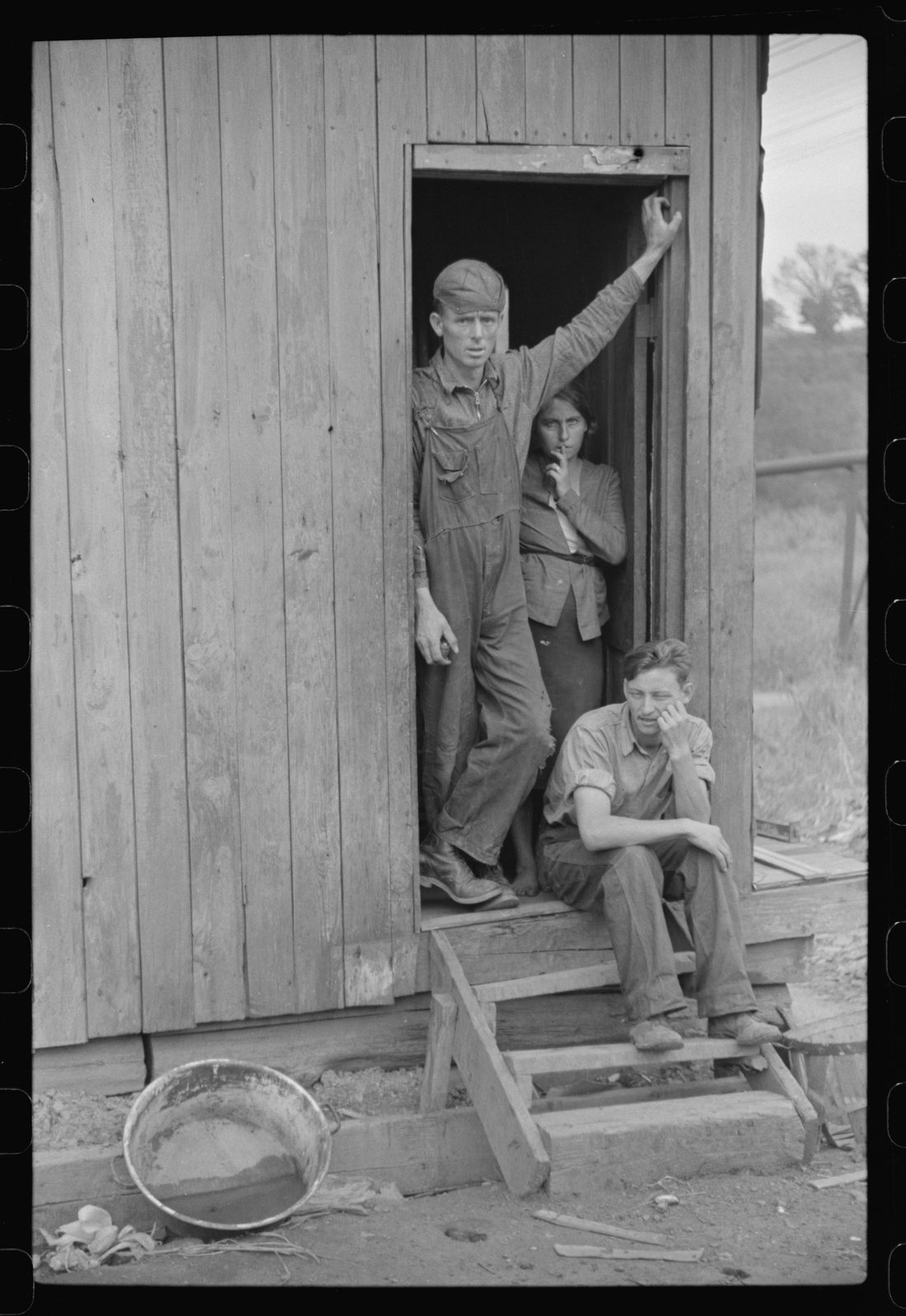
P30 Former coal miner, worked twelve years for Chaplin Coal Company as hand coal loader. He and several others complained to company about conditions not being up to NRA (National Recovery Administration) standards. All lost jobs. He's now on WPA (Works Progress Administration) at thirty-eight dollars and twenty-five cents per month. Scotts Run, West Virginia
Marion Post Wolcott · September 1938 · Library of Congress · FSA/OWI. View the original.
This man loaded coal by hand for twelve years. He and several others complained that conditions did not meet the federal standards. All of them lost their jobs.
He was on relief work when she found him, at thirty-eight dollars and twenty-five cents a month.
Jere
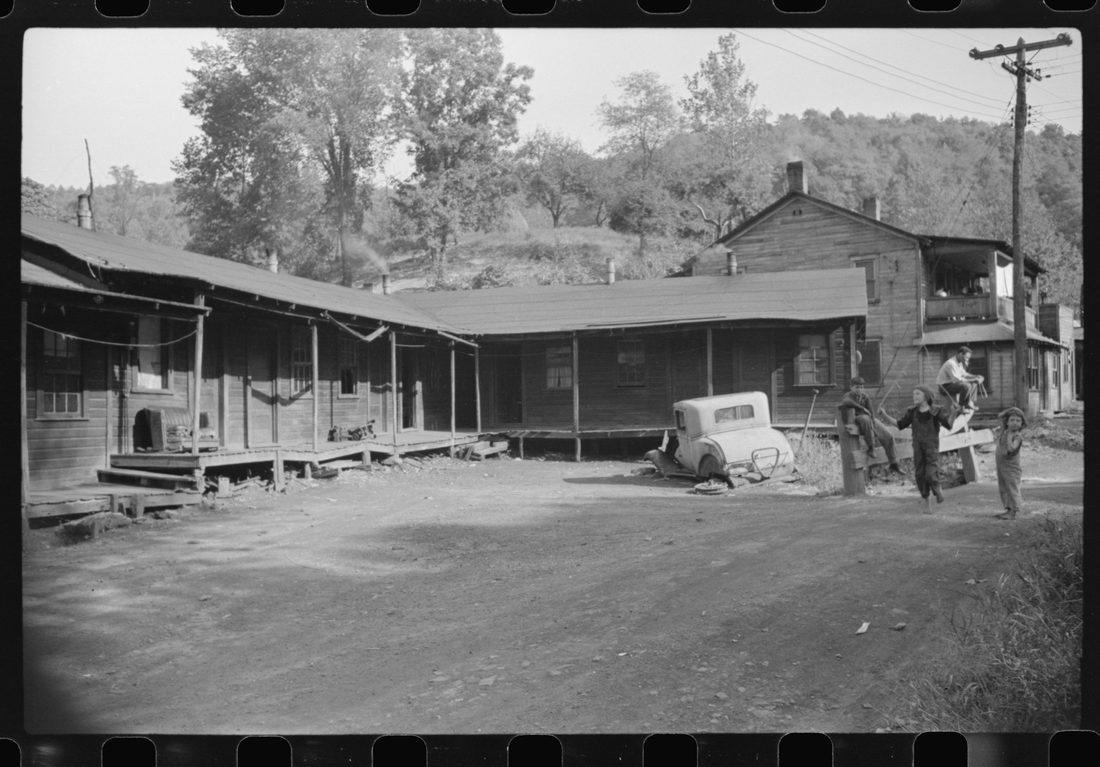
P32 Miners' homes, abandoned town, Jere, West Virginia
Marion Post Wolcott · September 1938 · Library of Congress · FSA/OWI. View the original.
A few miles on there is a town called Jere, and the company had already gone.
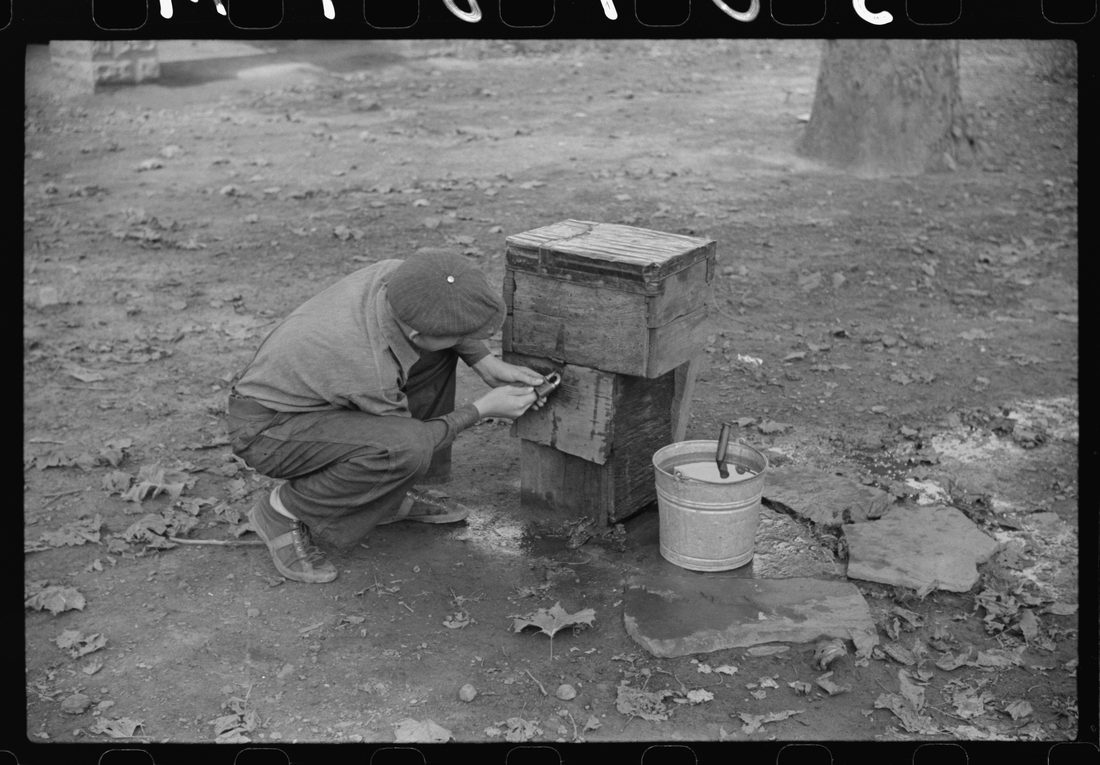
P33 The "water company" was formed by the people in abandoned mining town of Jere, West Virginia, after the coal company cut off all public services because they were abandoning the mine. The coal company used to charge one dollar and twenty-cove cents per month for water. The present "people's" water company charges its members twenty-five cents per month and makes money at that even when everyone can't pay dues. There are dividends of flour, sugar, lard, etc. The lock is necessary to keep people from other camps from stealing the water, which is very scarce. It's still necessary to change the lock about every four months
Marion Post Wolcott · September 1938 · Library of Congress · FSA/OWI. View the original.
When it left it cut off the water. It had been charging a dollar twenty a month for it.
So the people who stayed built a box over the spring, put a lock on it, and formed what her caption calls the people's water company. Twenty-five cents a month.
It made money at that even when not everyone could pay, and it paid dividends in flour, sugar and lard. The lock had to be changed about every four months.
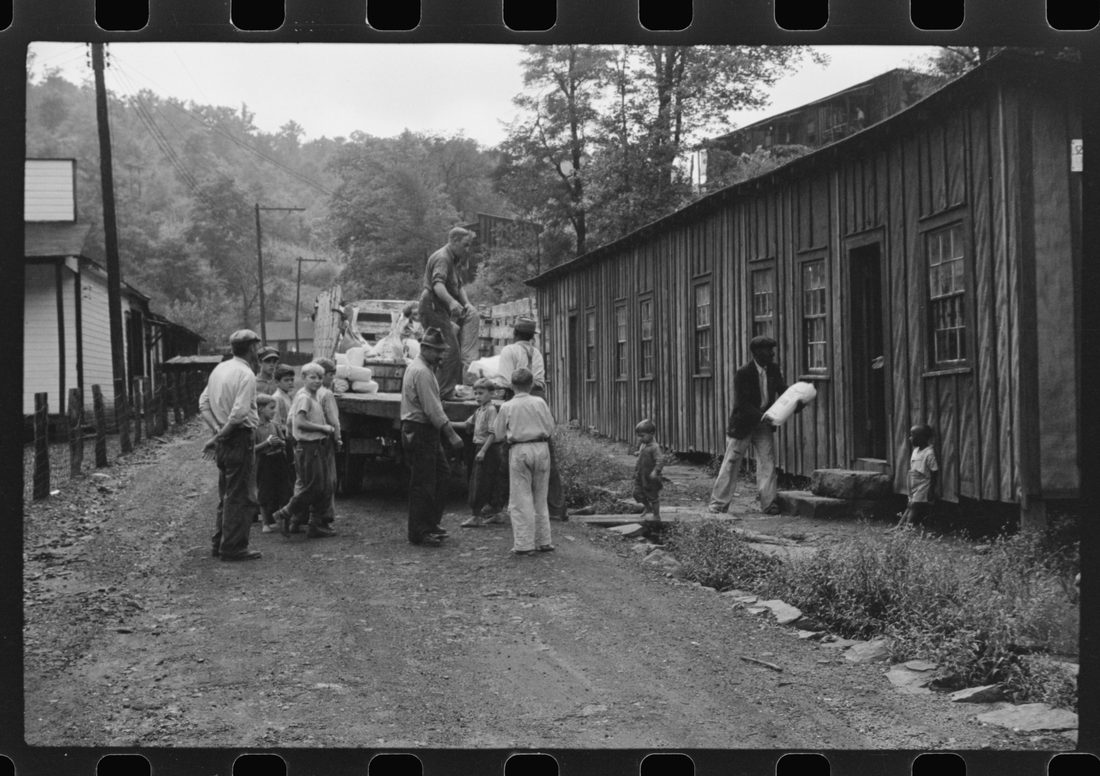
P34 The relief truck brings food supplies to abandoned mining town, Jere, West Virginia. The shack on right is used as community house for prayer and church meetings, union and water company meetings, etc. Is represented by many people whose homes are so much worse than this
Marion Post Wolcott · September 1938 · Library of Congress · FSA/OWI. View the original.
The relief truck came with food. The shack on the right was the community house, used for prayer meetings, union meetings and water company meetings.
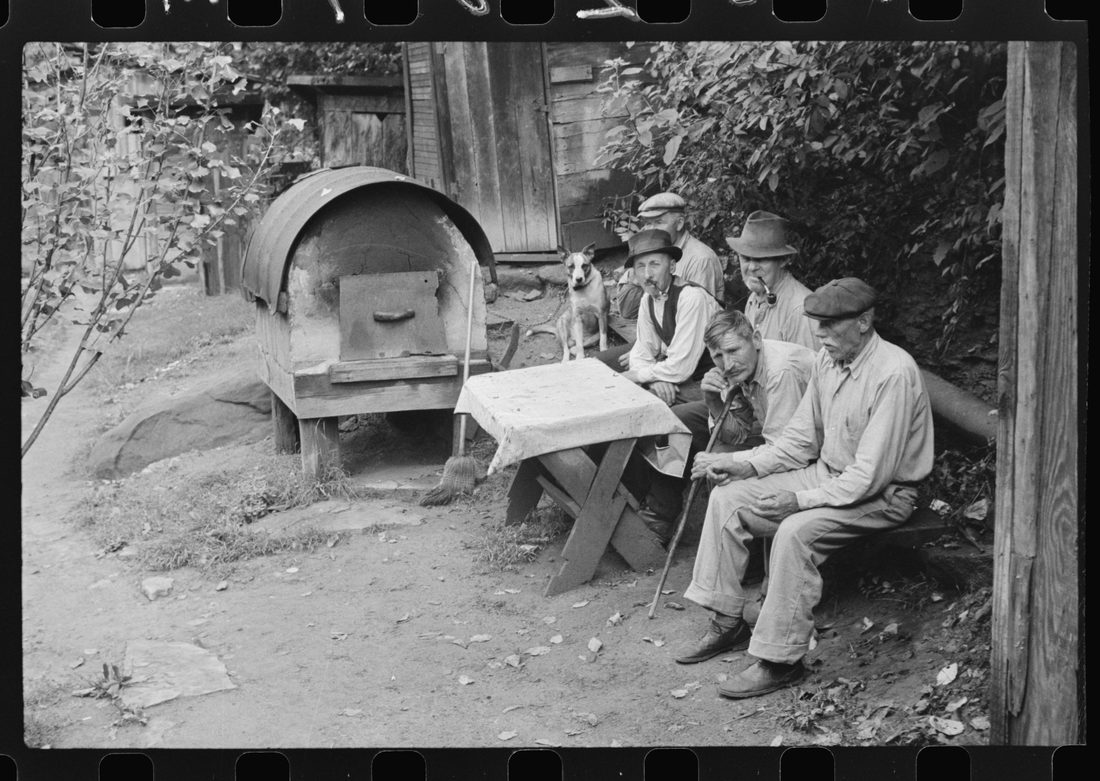
P35 Bohemian miners (coal loaders) unemployed since mechanization of mines. Jere, West Virginia. They live together in one house with a woman housekeeper. All on relief. Spend most of their time fighting about politics. Call their dog "Hitler" because he's so mean and nasty. To the left is an outdoor oven for baking bread. Abandoned mining town
Marion Post Wolcott · September 1938 · Library of Congress · FSA/OWI. View the original.
These men were hand loaders until the mines mechanised. They live in one house together and, her caption says, spend most of their time arguing about politics. They named the dog after Hitler, because he was mean.
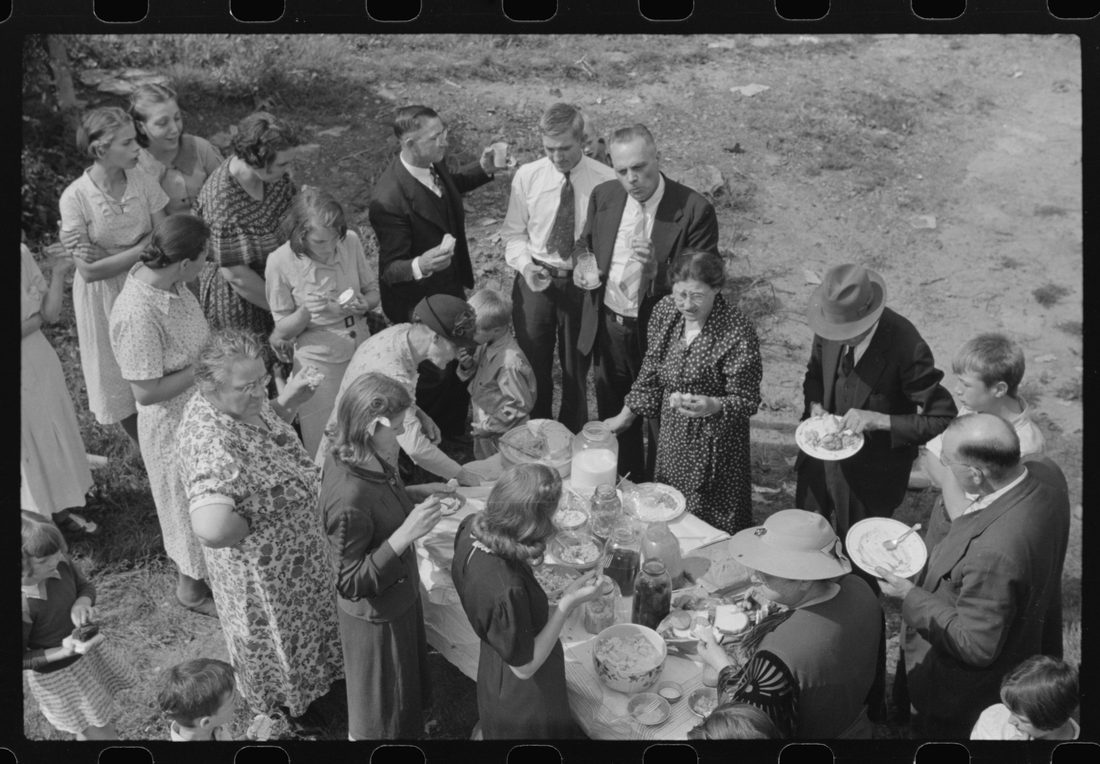
P36 Sunday school picnic. Much of the food brought into abandoned mining town of Jere, West Virginia by "neighboring folk" from other parishes. There is a great deal of "hard feelings" and many fights between Catholics and Protestants. Miners as a whole are not very religious, many not having any connections with church, though they may have religious background. Hard times has caused this to a certian extent. As one said, "The Catholic church expected us to give when we just didn't have it"
Marion Post Wolcott · September 1938 · Library of Congress · FSA/OWI. View the original.
A Sunday school picnic, brought into the abandoned town by people from other parishes.
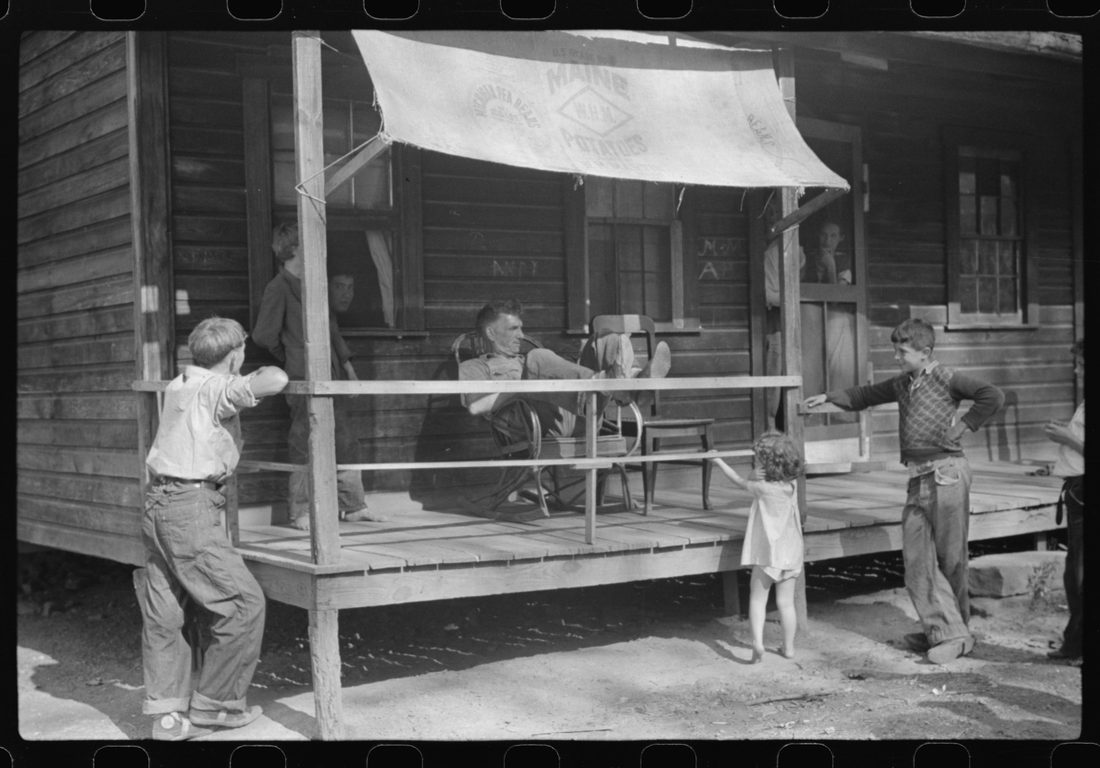
P38 Former coal miner sitting on his front porch. He is the town philosopher. He repairs his home (note railing and potato sack awning). Experiments with an elaborate garden on a hill about seven miles away. Jere, Scotts Run, West Virginia
Marion Post Wolcott · September 1938 · Library of Congress · FSA/OWI. View the original.
And the man she calls the town philosopher, who fixed up his porch with a potato sack for an awning and kept a garden going on the hill. He told her, so long as I see things moving and bettering, I don't care how much benefit I get from it.
Who was brought in
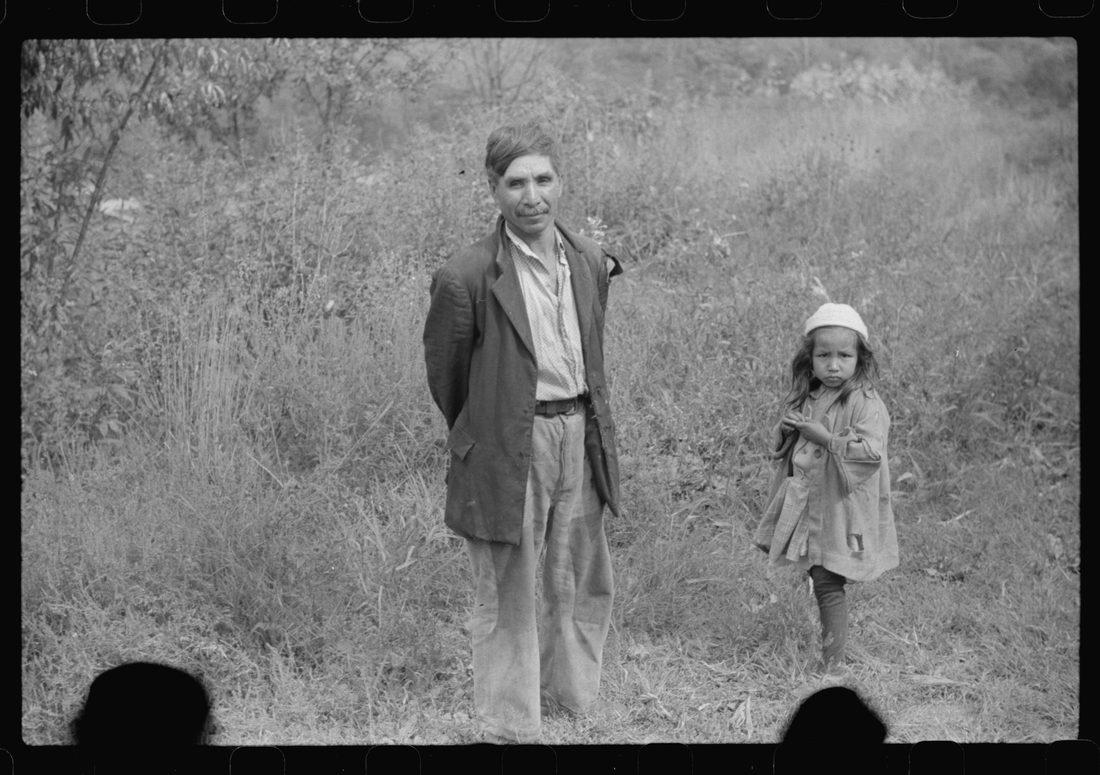
P39 Mexican miner and child, Bertha Hill, West Virginia. Many Mexicans and Negroes were brought into Scotts Run around 1926 to break the strike. Now about one fourth of all mines employ any at all and these, only very small percent and "only the cream." They are generally accepted by other folks and there is a good deal of mixing and intermarrying
Marion Post Wolcott · September 1938 · Library of Congress · FSA/OWI. View the original.
There is a hill above Scotts Run called Bertha Hill, and the people on it were brought to West Virginia on purpose.
Her caption says Mexican and Black miners were brought into Scotts Run around nineteen twenty-six, to break a strike. Twelve years later, three mines in four would not hire them at all.
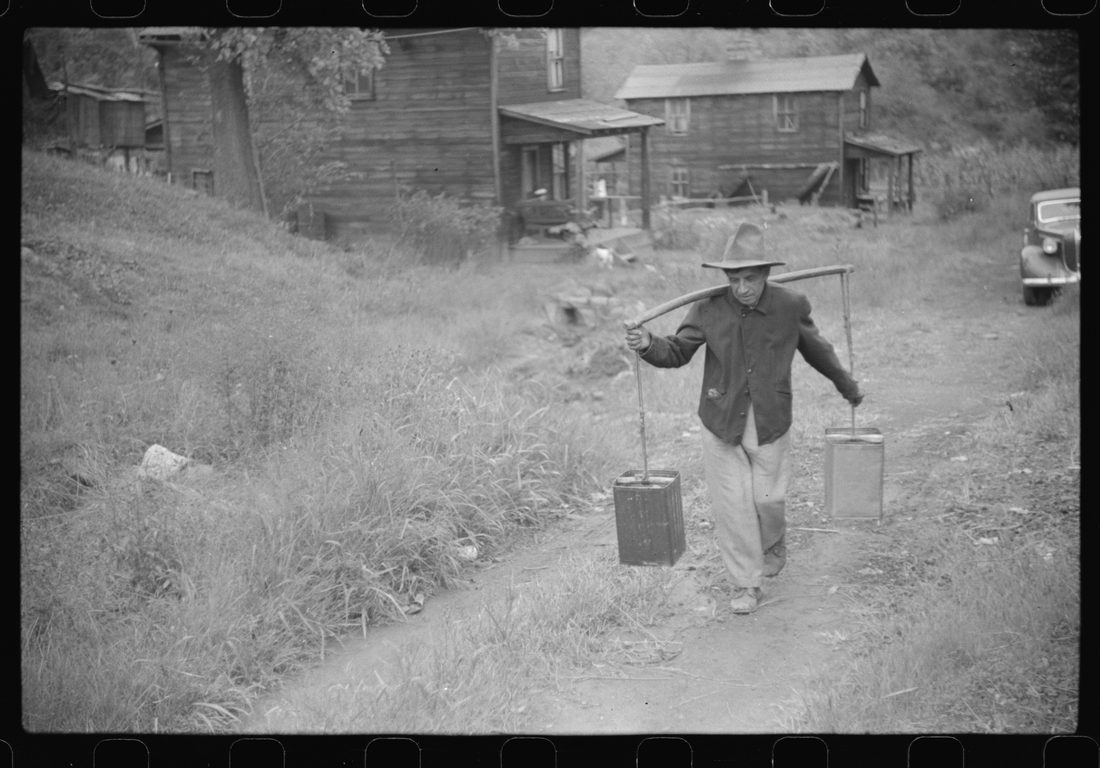
P40 Mexican miner carrying water up the hill to his home, about two miles. Bertha Hill, West Virginia
Marion Post Wolcott · September 1938 · Library of Congress · FSA/OWI. View the original.
This man carried his water about two miles uphill. Her caption says he did it the way he had learned to as a boy.
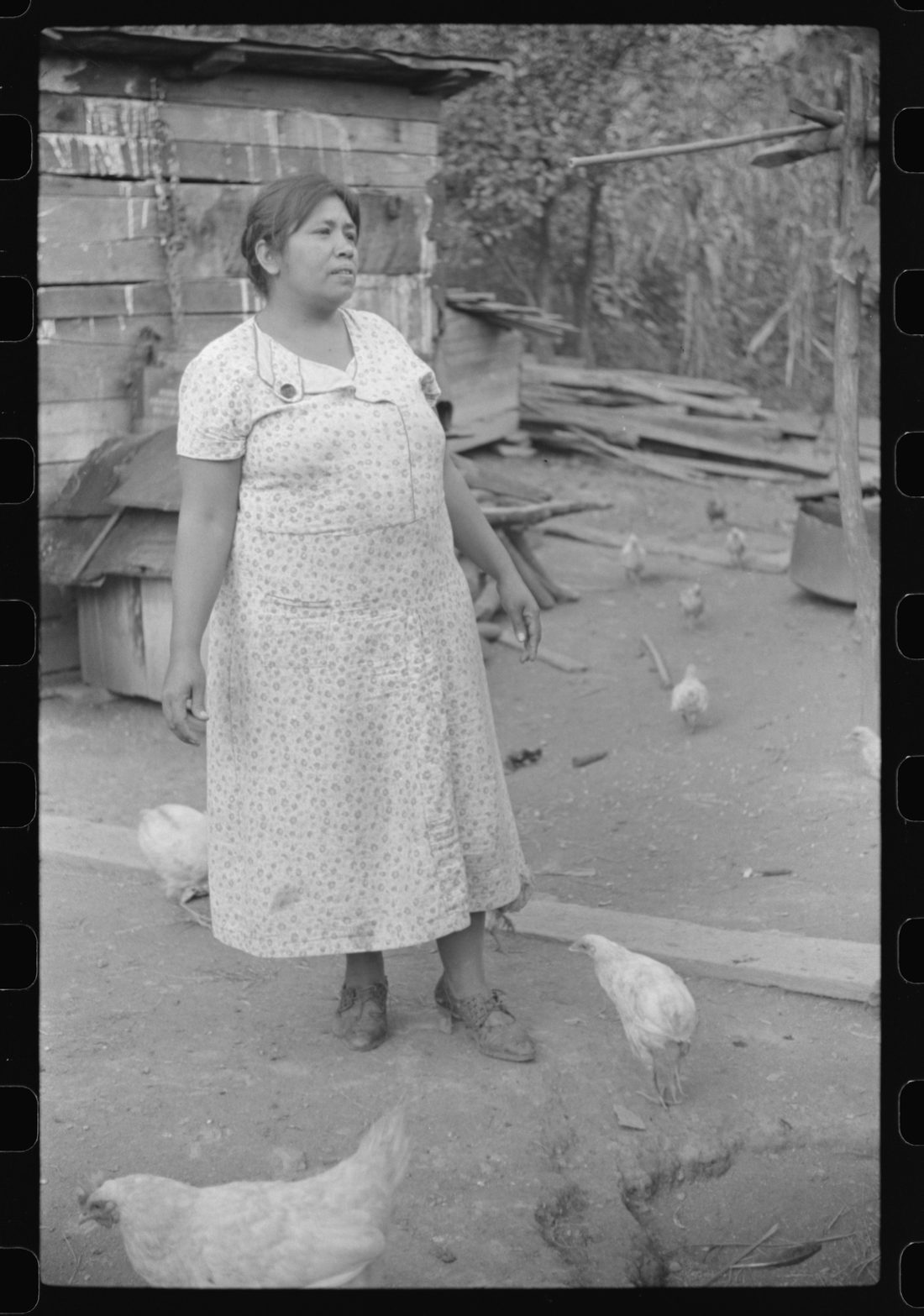
P41 Mexican miner's wife. She doesn't speak English. Scotts Run, Bertha Hill, West Virginia
Marion Post Wolcott · September 1938 · Library of Congress · FSA/OWI. View the original.
His neighbour. Her caption records one fact about her. She doesn't speak English.
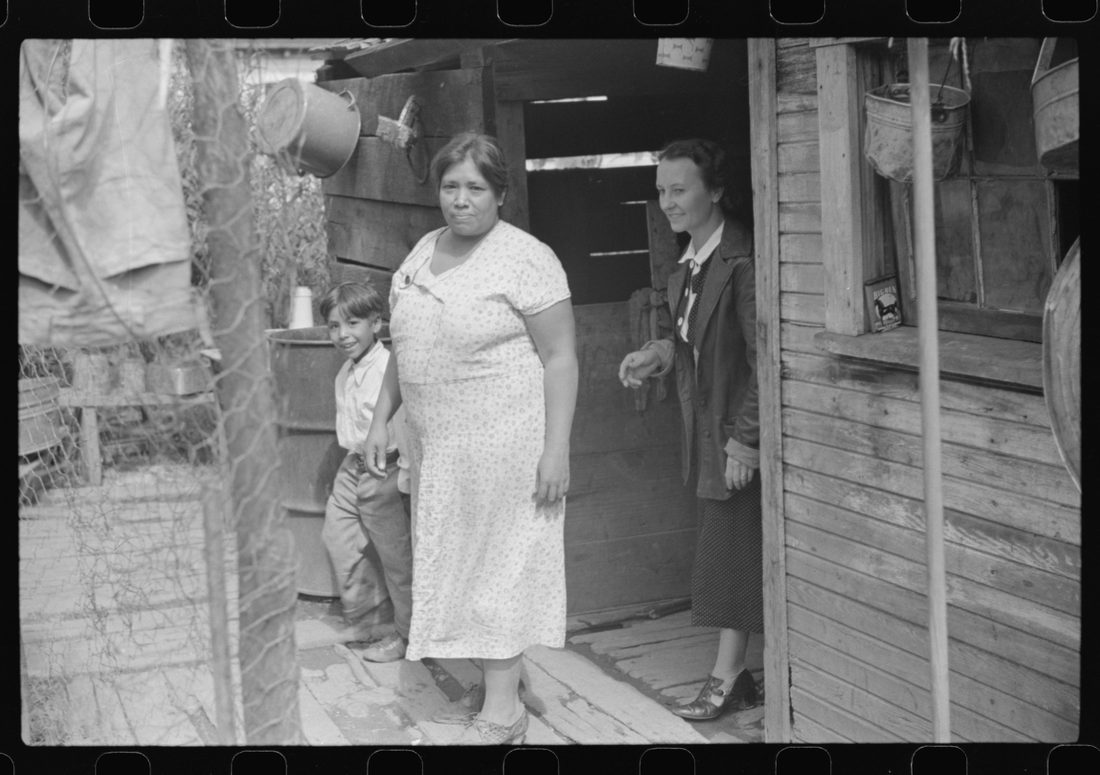
P42 Mexican miner's wife and child are visited by another miner's wife (Hungarian) who is interested in starting a maternal health clinic there. Scotts Run, Bertha Hill, West Virginia
Marion Post Wolcott · September 1938 · Library of Congress · FSA/OWI. View the original.
And this is a visit. The woman on the right is Hungarian, and she is trying to start a clinic on the hill for mothers. The same caption that records the strike-breaking also says the families were generally accepted on the Run, and that there was a good deal of mixing and intermarrying.
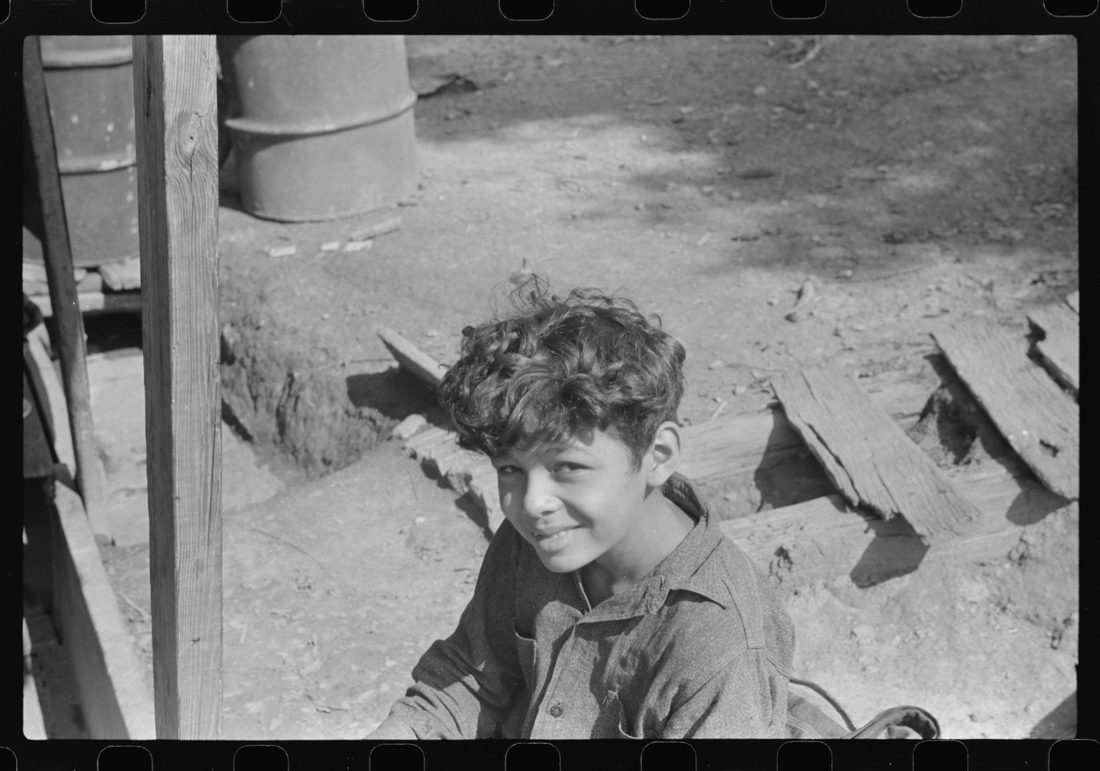
P43 Mexican miner's child, doesn't go to school much. He's too shy and school's too far away, especially when it is cold. Bertha Hill, West Virginia
Marion Post Wolcott · September 1938 · Library of Congress · FSA/OWI. View the original.
This boy doesn't go to school much. Her caption gives the reasons. He's too shy, and the school is too far away, especially when it is cold.
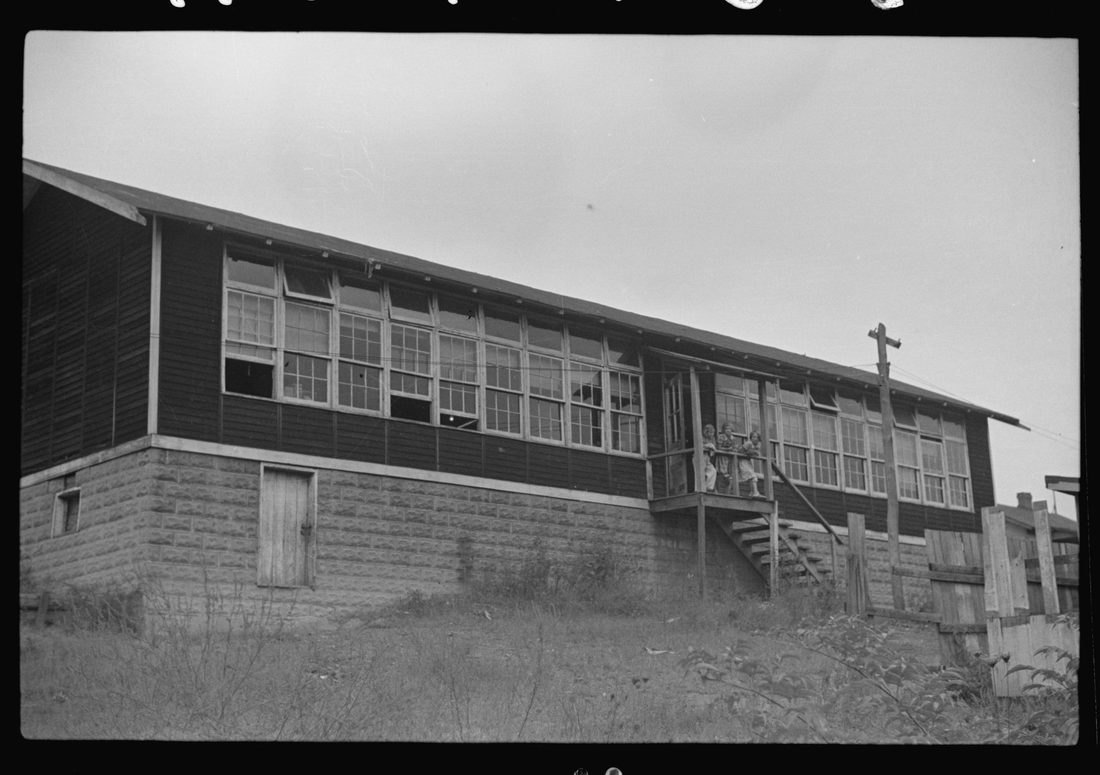
P44 "White" school house, Chaplin, Scotts Run, West Virginia
Marion Post Wolcott · September 1938 · Library of Congress · FSA/OWI. View the original.
The school. Her caption puts one word of its name in quotation marks, and the word is White.
The sentence
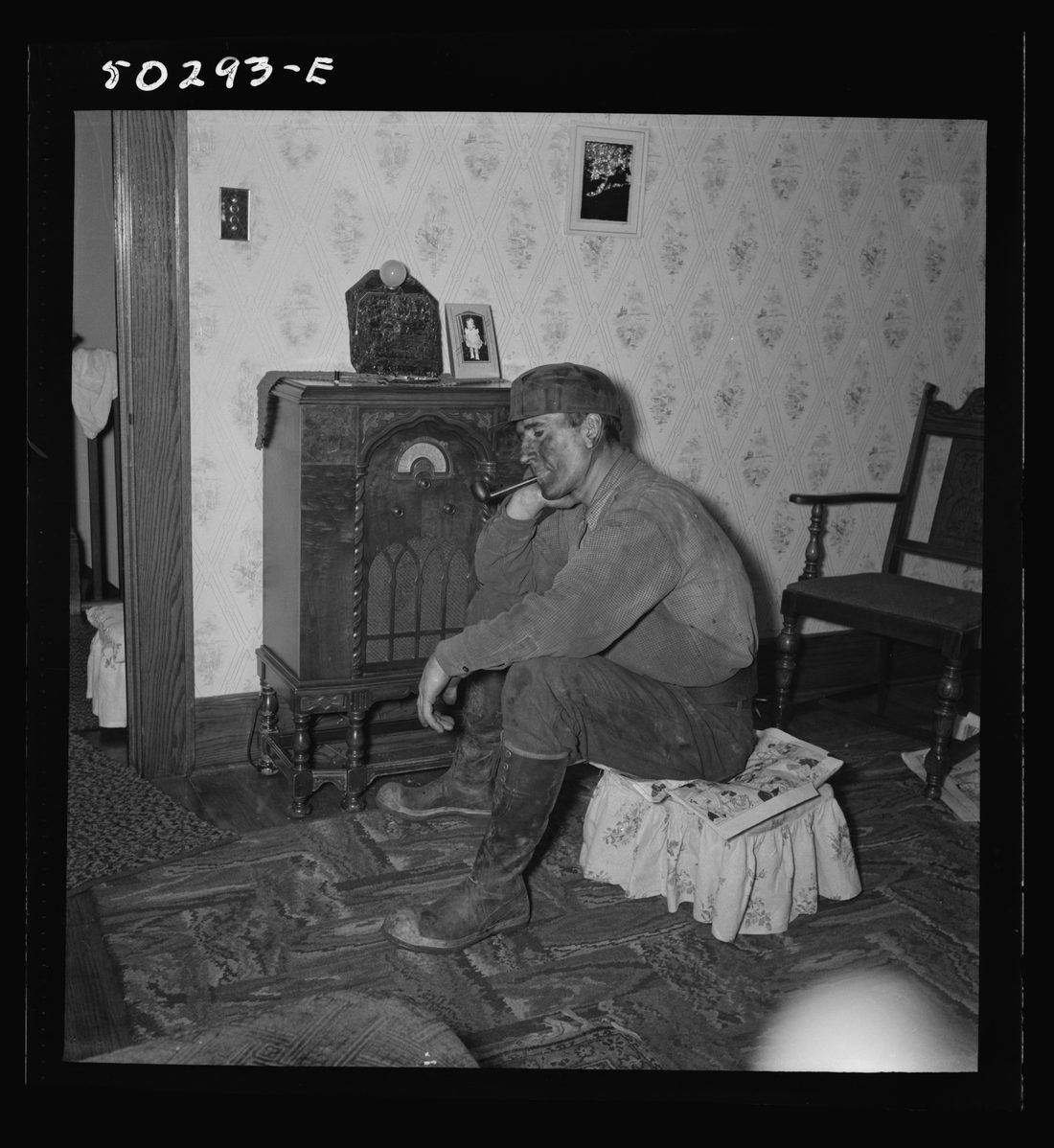
P45 A more well-to-do miner listening to the radio when he returns home in the morning after working on the night shift. He is Polish, his wife Hungarian. These "foreigners" are generally thrifties and their houses are cleaner than the Negros or "Americans." Westover, West Virginia
Marion Post Wolcott · September 1938 · Library of Congress · FSA/OWI. View the original.
Now a photograph of a man who has come off the night shift and is listening to his radio in the morning.
Her caption says he is Polish and his wife is Hungarian. Then it says that people like them are generally thrifty, and that their houses are cleaner than the houses of their Black neighbours, and cleaner than the houses of the people she calls, in quotation marks, Americans.
That is a ranking. She typed it onto a federal caption sheet and sent it to Washington with the picture, and it is still attached to the picture today.
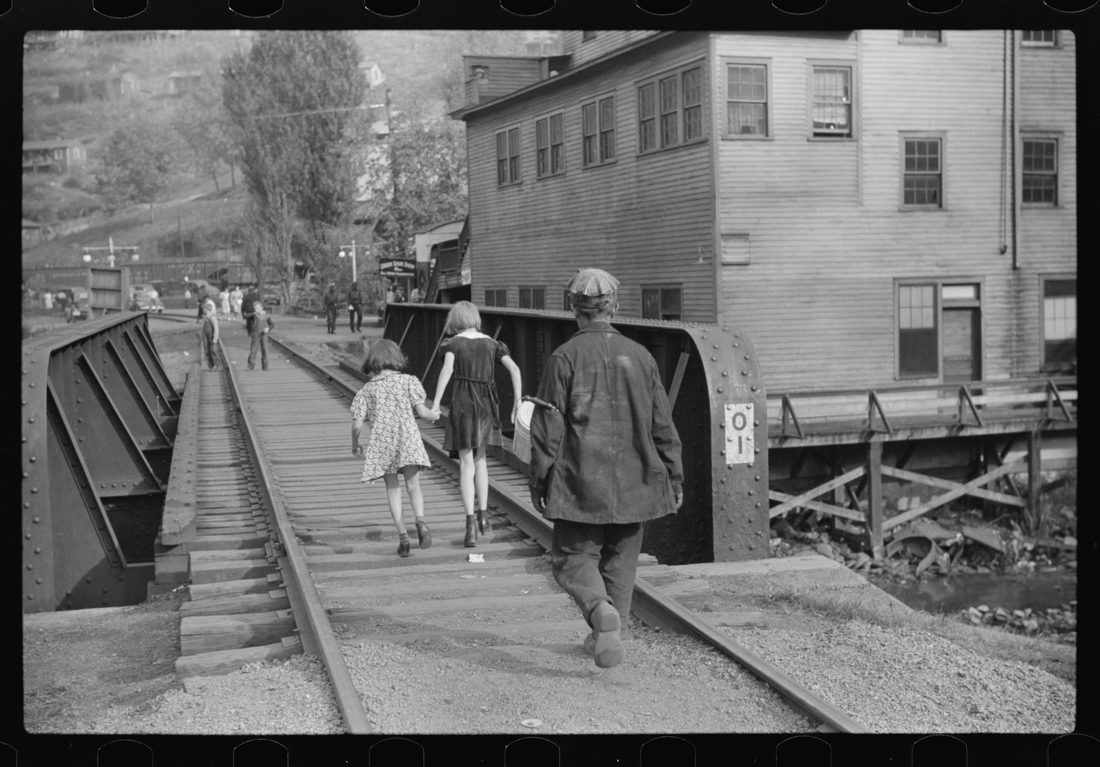
P46 Miners are often not much taller than children, especially the "foreigners" who often send boys to work at an earlier age than Americans do. Omar, West Virginia
Marion Post Wolcott · September 1938 · Library of Congress · FSA/OWI. View the original.
She was in her twenties. I am not going to walk past the sentence, because the notes are the evidence in this episode, and that means all of them.
In the same set she writes that the miners are often not much taller than the children, because boys were sent underground young.
Omar and Capels
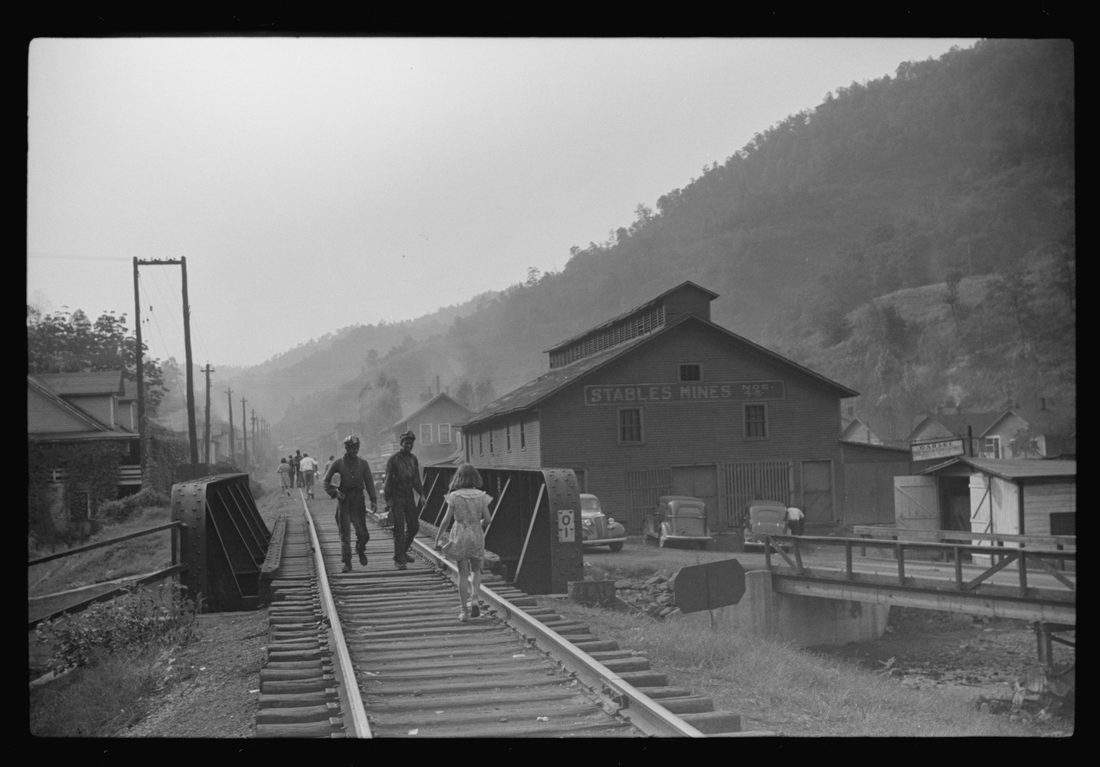
P48 Coal miners returning to and from work and children going from school along tracks, Omar, West Virginia
Marion Post Wolcott · September 1938 · Library of Congress · FSA/OWI. View the original.
Far to the south, in the other coalfield, the shift lets out at Omar.
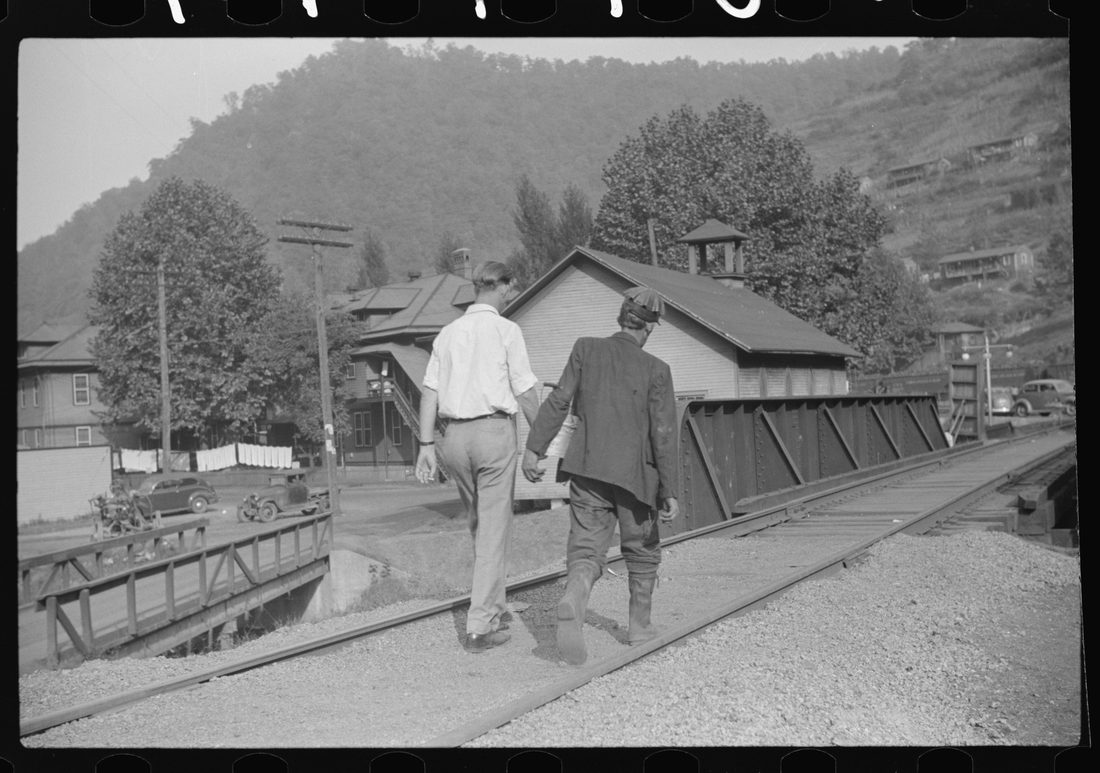
P49 Coal miner going home with friend after work. Many miners are lame. Omar, West Virginia
Marion Post Wolcott · September 1938 · Library of Congress · FSA/OWI. View the original.
Two men walking home. Her caption adds four words. Many miners are lame.
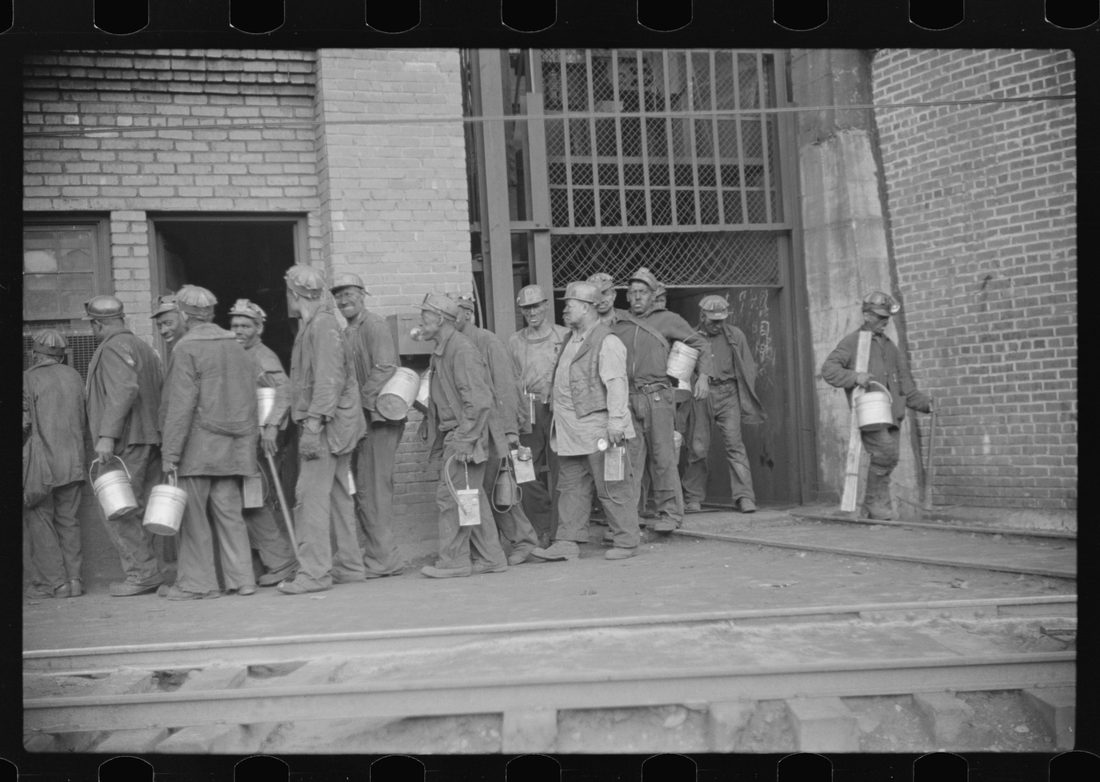
P52 Miners turning in lamps after getting out of cage from shaft, which goes down sixty feet to tunnel, which is two miles long. Caples, West Virginia
Marion Post Wolcott · September 1938 · Library of Congress · FSA/OWI. View the original.
The men come up out of a shaft that drops sixty feet to a tunnel two miles long, and hand in their lamps.
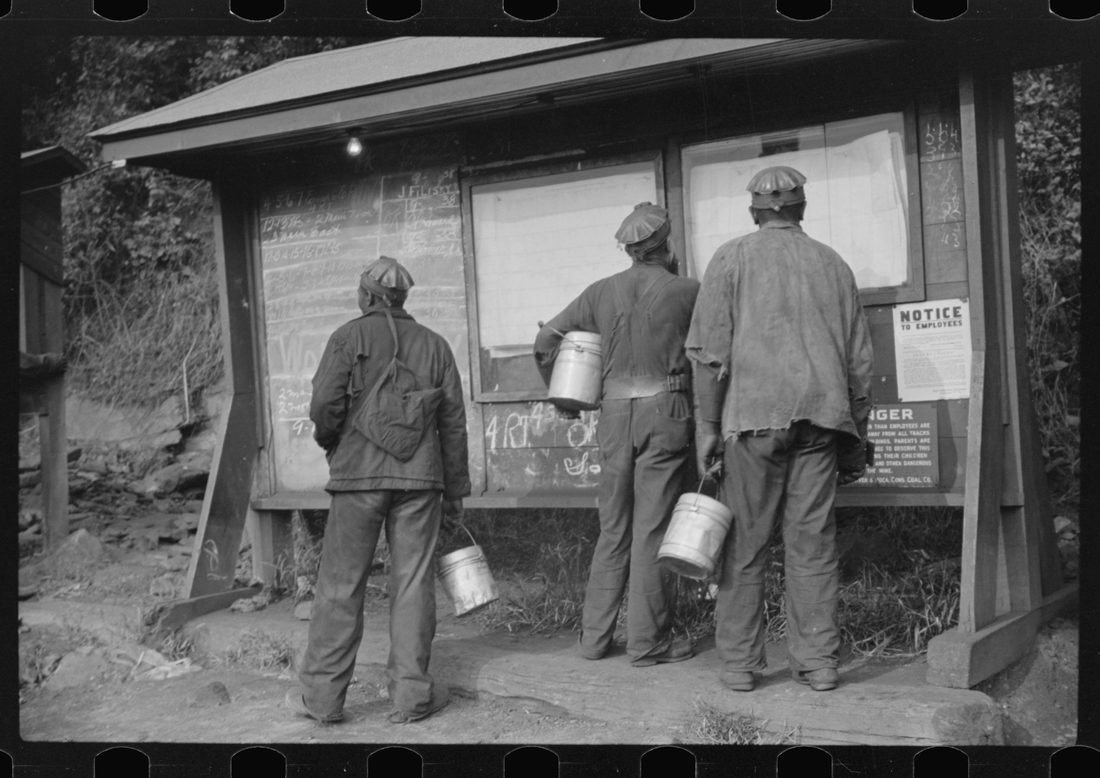
P53 Miners looking at daily reports, checking the number of tons of slate and coal they loaded during their shift. Also to find out whether or not they work the next day. Caples, West Virginia
Marion Post Wolcott · September 1938 · Library of Congress · FSA/OWI. View the original.
Then they read the board.
Chalked on it is a man's name in block capitals with a number beside it. The number is how many tons he loaded. The board also tells him whether there is work tomorrow.
And bolted up beside the chalk is a company danger sign, telling parents to keep their children away from the tracks.
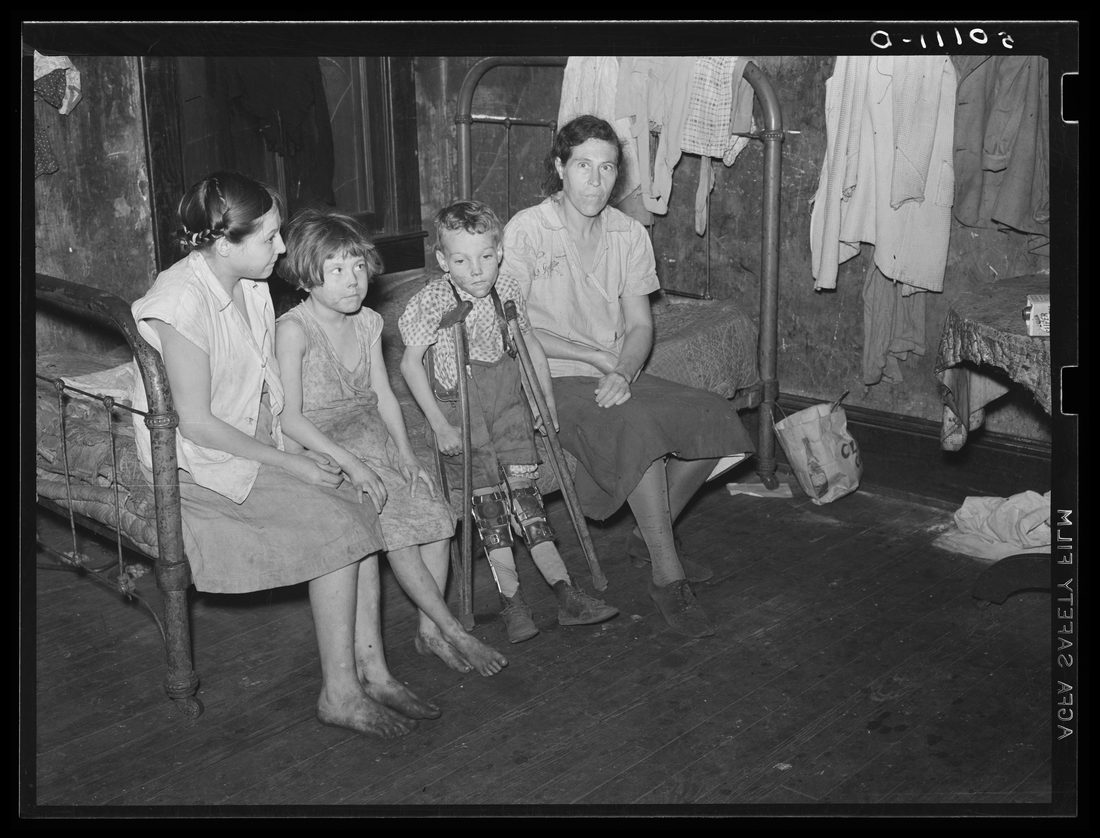
P54 Part of one family living in miner's boarding house. One woman and six children live in one room. Two beds, no water, no heat. Mohegan, West Virginia
Marion Post Wolcott · September 1938 · Library of Congress · FSA/OWI. View the original.
This is a room in a miners' boarding house at Mohegan. Her caption counts what is in it. One woman and six children live in one room. Two beds, no water, no heat.
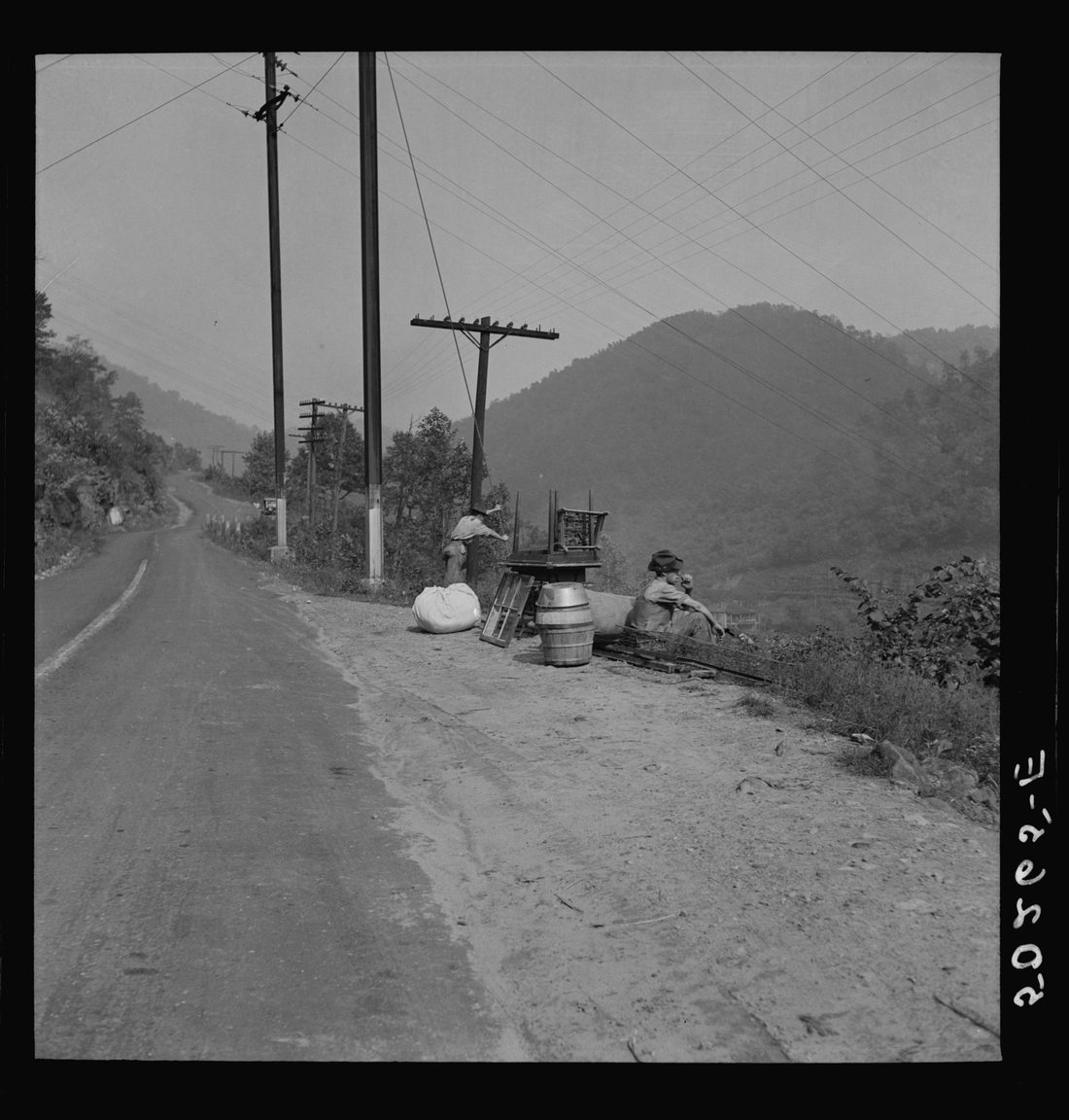
P56 Places to live being very scarce, miners must sometimes wait on main country roads for help from others with all their belongings. No job, no home. Mohegan, West Virginia
Marion Post Wolcott · September 1938 · Library of Congress · FSA/OWI. View the original.
And this is a family on the county road with everything they own, waiting for somebody to help them move it. Her caption ends: no job, no home.
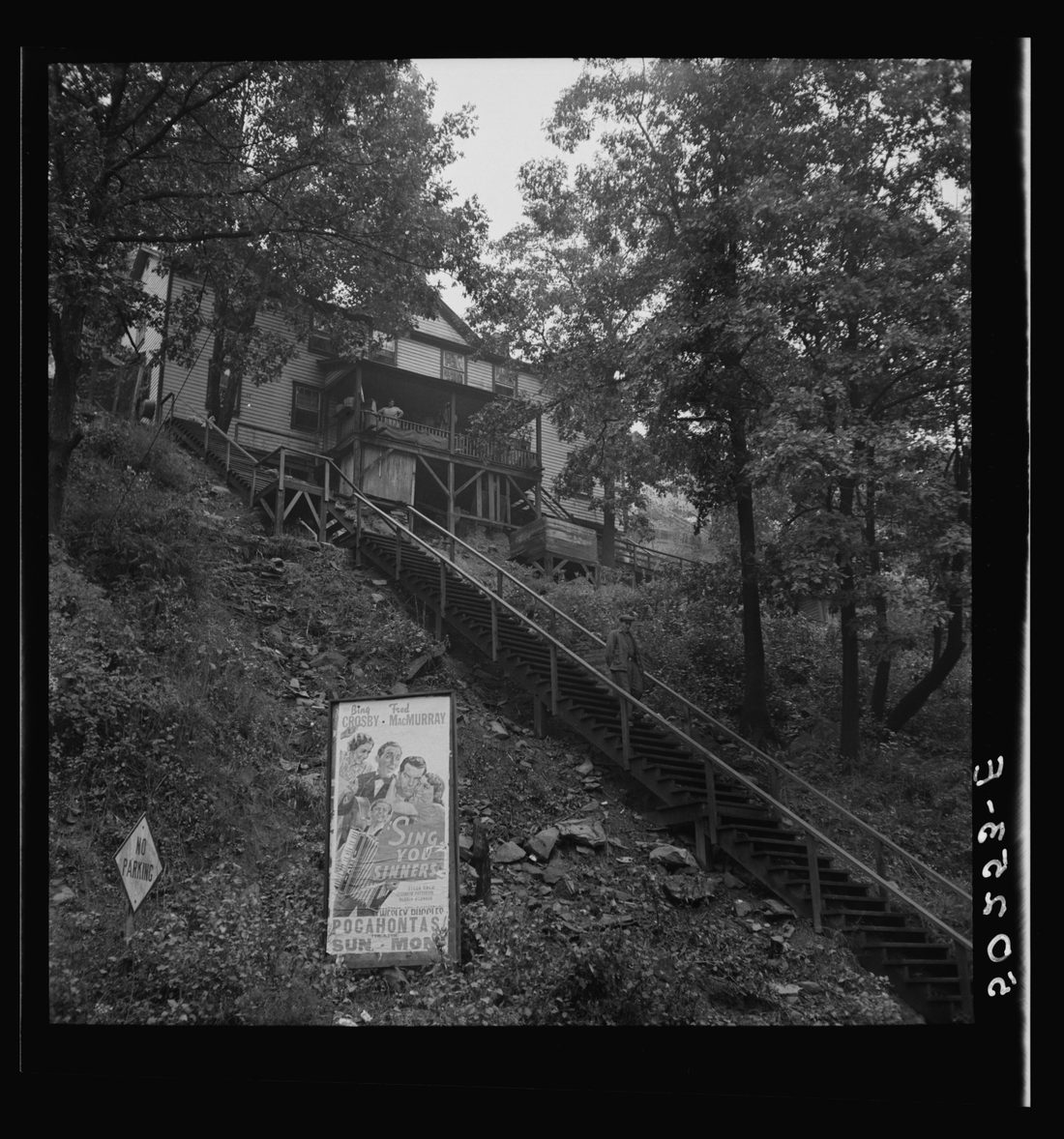
P57 Home of Negro families. Mining town, Capels, West Virginia
Marion Post Wolcott · September 1938 · Library of Congress · FSA/OWI. View the original.
Housing for Black families at Capels, on the hill, up the steps, above the town.
Twin Branch
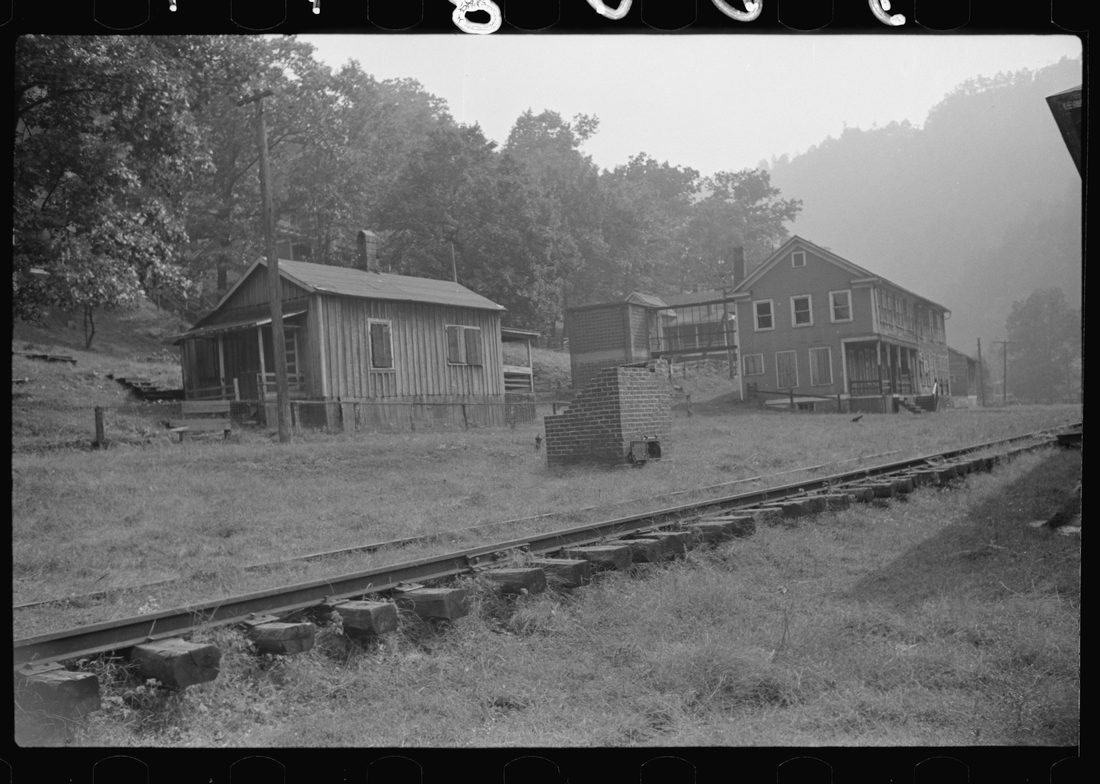
P58 Deserted mining town, completely boarded up, owned by Ford who closed it down rather than have it unionized. Twin Branch, West Virginia
Marion Post Wolcott · September 1938 · Library of Congress · FSA/OWI. View the original.
And then there is Twin Branch, which is empty.
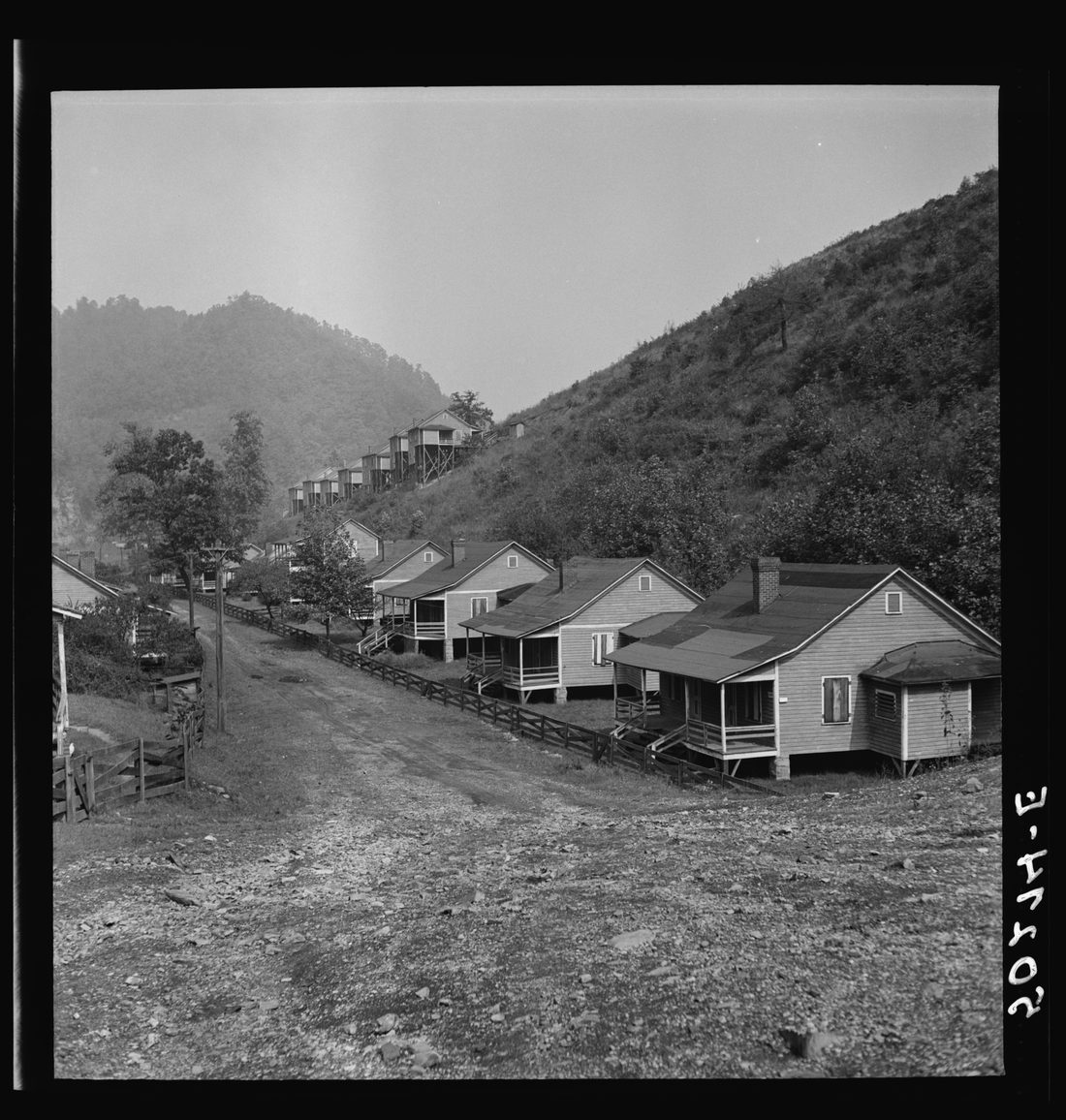
P59 Boarded-up homes in abandoned mining town. Twin Branch, West Virginia. Once very nice, owned by Ford. About four years ago when an attempt to organize it was made, Ford closed it down completely rather than have it unionized. Around 1000 men used to work there. They won't sell it, rent or let "squatters" live in the deserted homes that are rotting away. Twin Branch, West Virginia. See 30098-M1, 30084-M1
Marion Post Wolcott · September 1938 · Library of Congress · FSA/OWI. View the original.
Her caption is the longest she wrote that month. It says the town was once very nice, that it was owned by Ford, and that about four years earlier, when the men tried to organise it, Ford closed it down completely rather than have it unionised.
Around a thousand men had worked there. I could not confirm that account in a federal record, so take it as her note and not as a finding. What is certain is the state of the town in the frame.
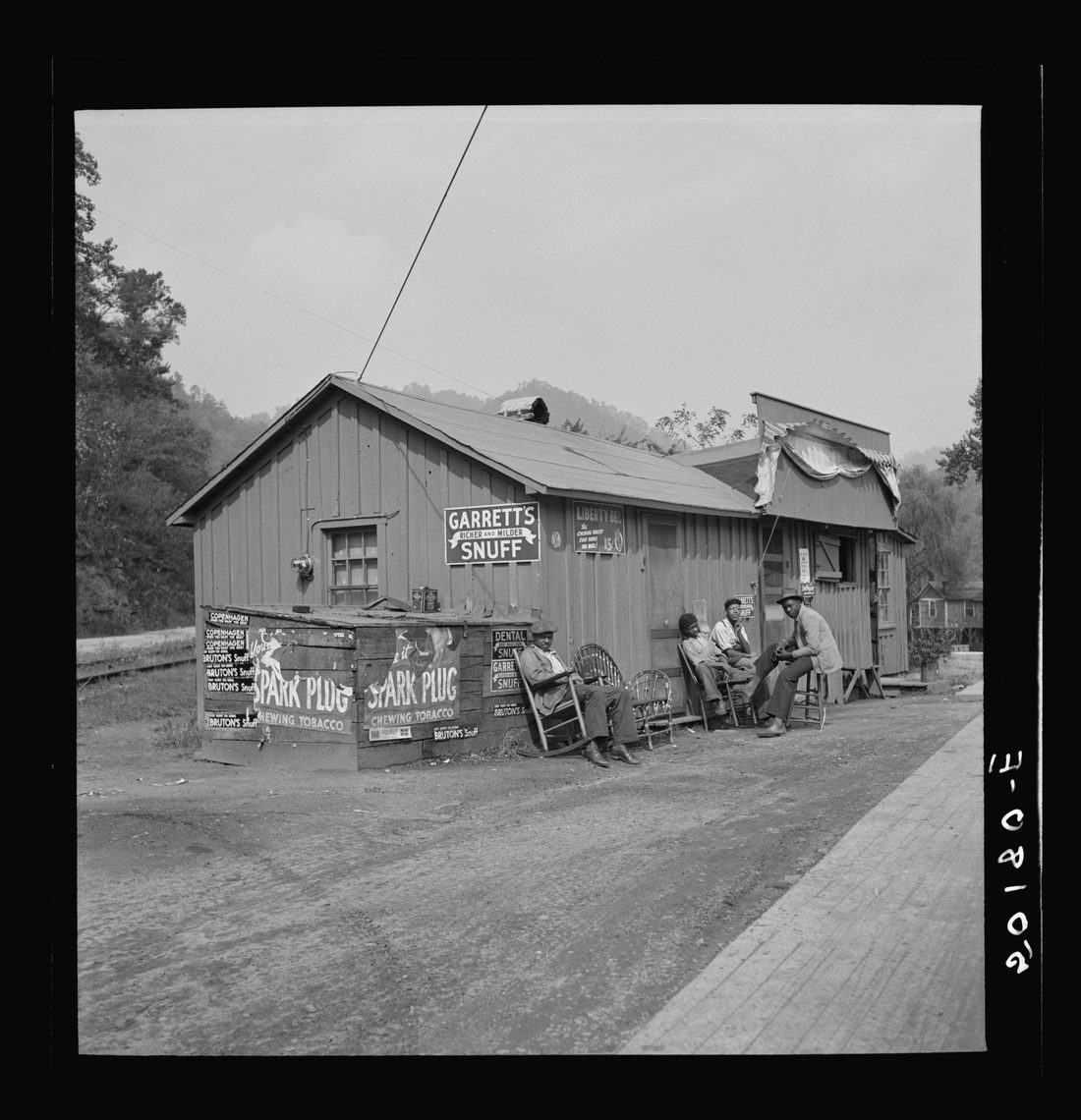
P61 Shack in "Marytown." Negro section of Twin Branch, West Virginia
Marion Post Wolcott · September 1938 · Library of Congress · FSA/OWI. View the original.
The church boarded up with the rest of it.
Gauley Bridge
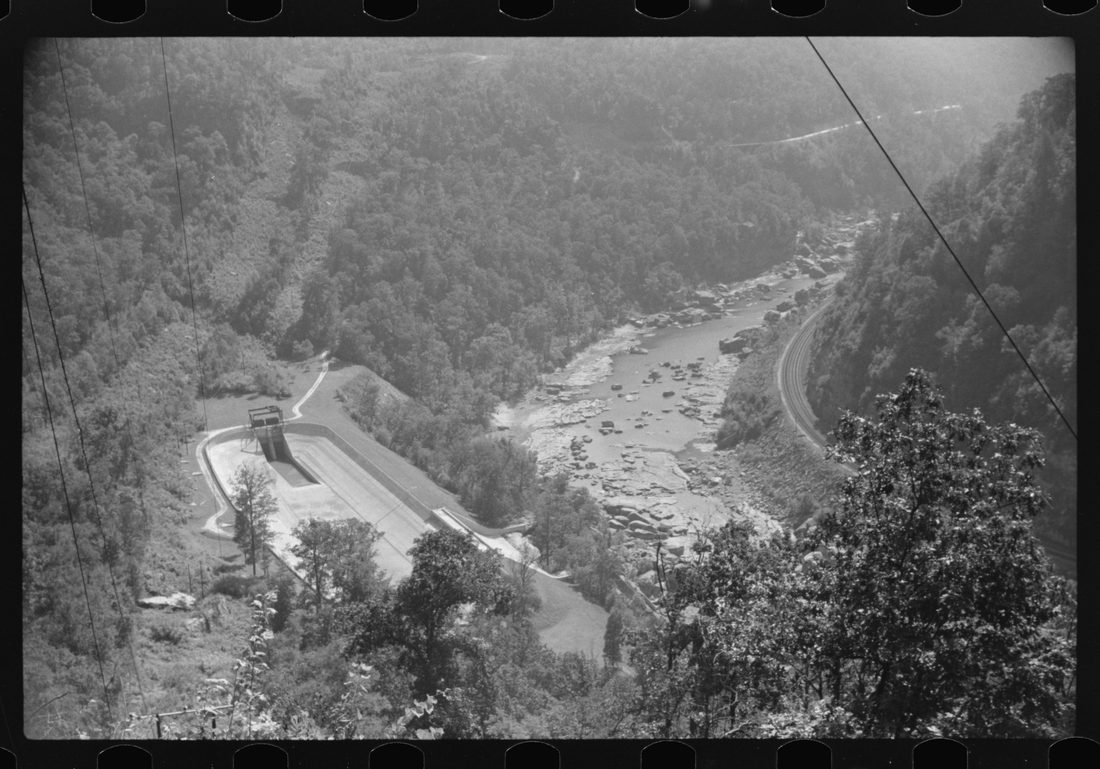
P62 At leLance to tunnel near Gauley Bridge, West Virginia. Famous for "silicosis" scandal
Marion Post Wolcott · September 1938 · Library of Congress · FSA/OWI. View the original.
East of there she drove the road along the New River, and photographed this from above.
A concrete intake with a gate tower, and below it the river running thin over bare rock. Her caption names the place near Gauley Bridge, and adds that it is famous for, in quotation marks, silicosis.
Eight years before this, men had been sent into a tunnel here to divert that river through the mountain. The rock ran better than ninety-nine per cent silica. More than half the men who dug it were Black men brought up from the South.
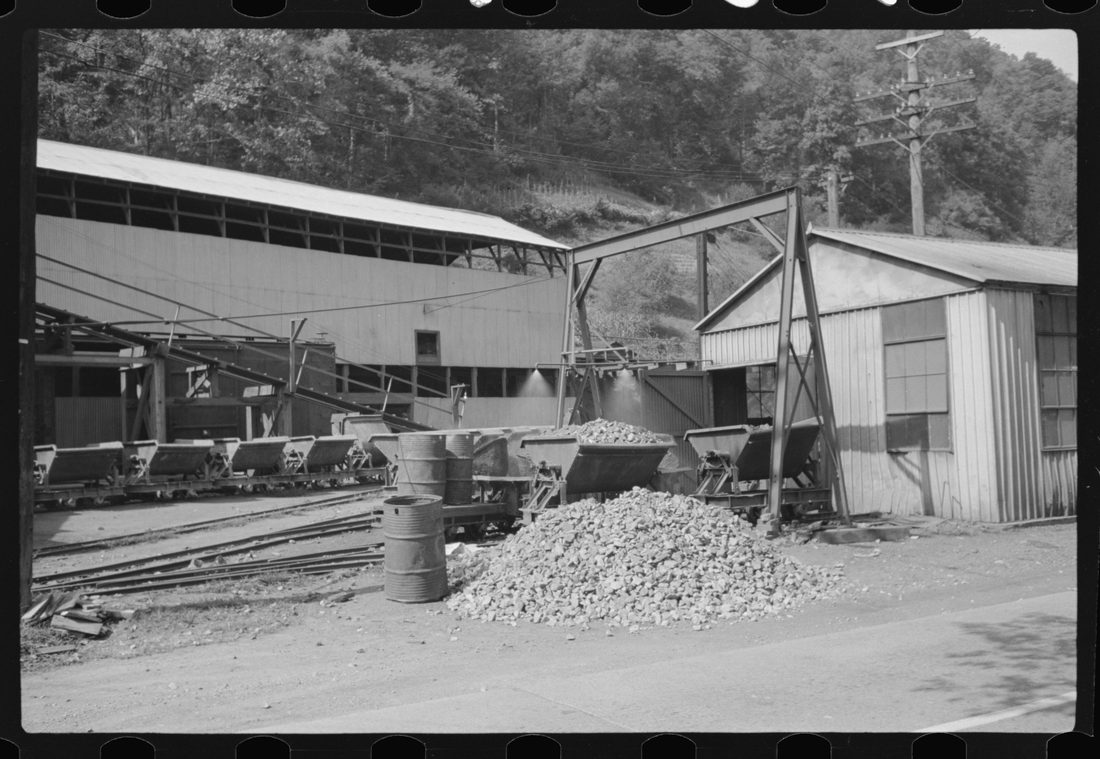
P63 An alloy plant, Falls View, West Virginia
Marion Post Wolcott · September 1938 · Library of Congress · FSA/OWI. View the original.
The men's own count of the dead was more than four hundred. The contractor said forty-eight. Congress held hearings in nineteen thirty-six and nobody ever established the number. Two years later, the word still needed quotation marks.
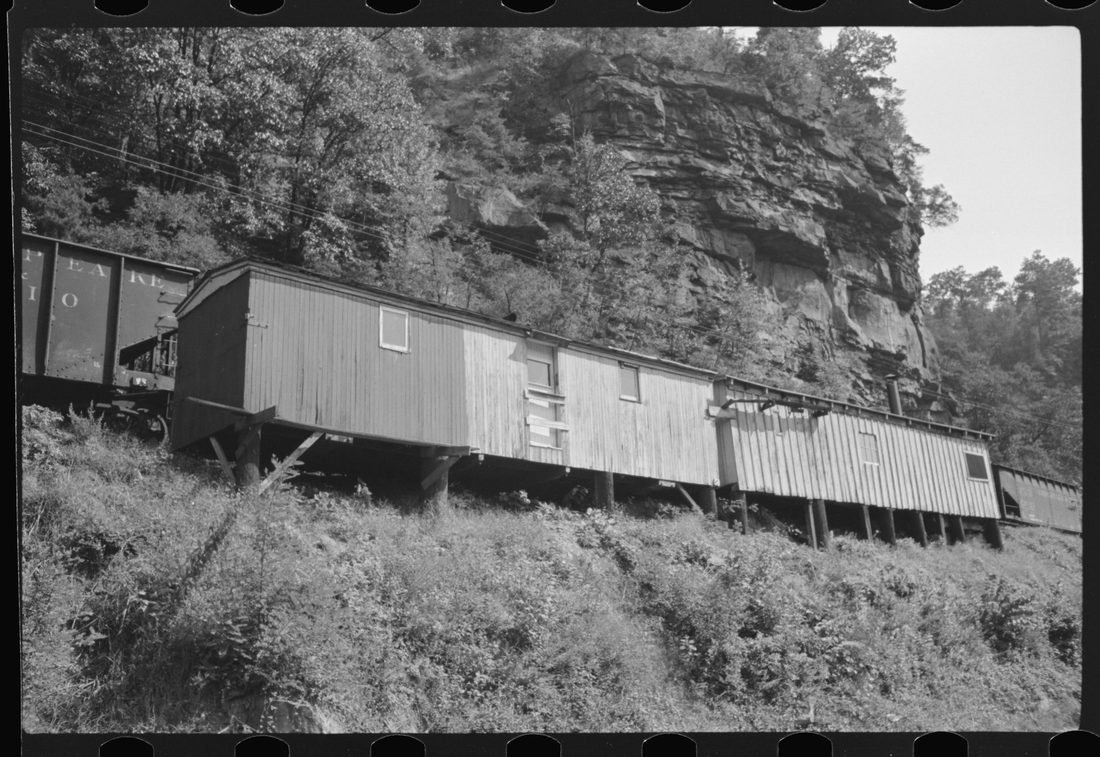
P65 Old boxcars often converted into homes along highway between Charleston and Gauley Bridge, West Virginia
Marion Post Wolcott · September 1938 · Library of Congress · FSA/OWI. View the original.
And in boxcars.
Charleston
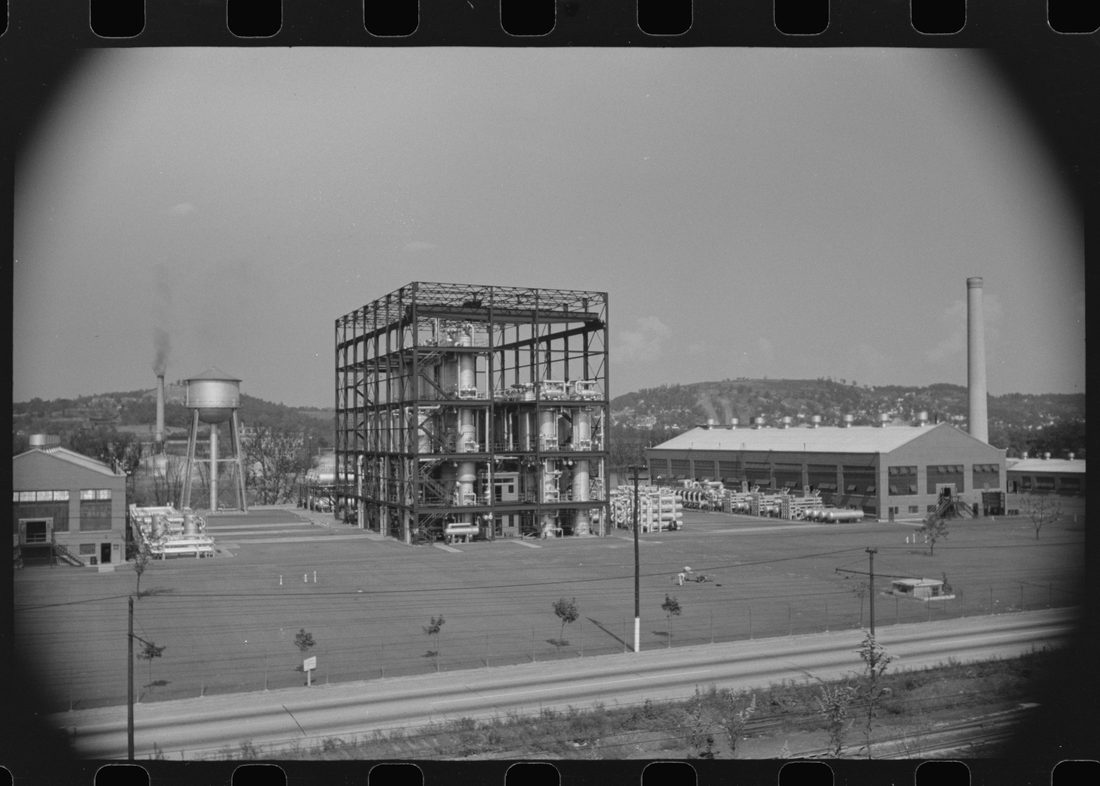
P66 Charleston, West Virginia. Part of the Union Carbon and Carbide Chemicals Corporation, a unit of the Union Carbide and Carbon Corporation. The plant employs 1800 workers
Marion Post Wolcott · September 1938 · Library of Congress · FSA/OWI. View the original.
At Charleston the chemical plants were running and hiring.
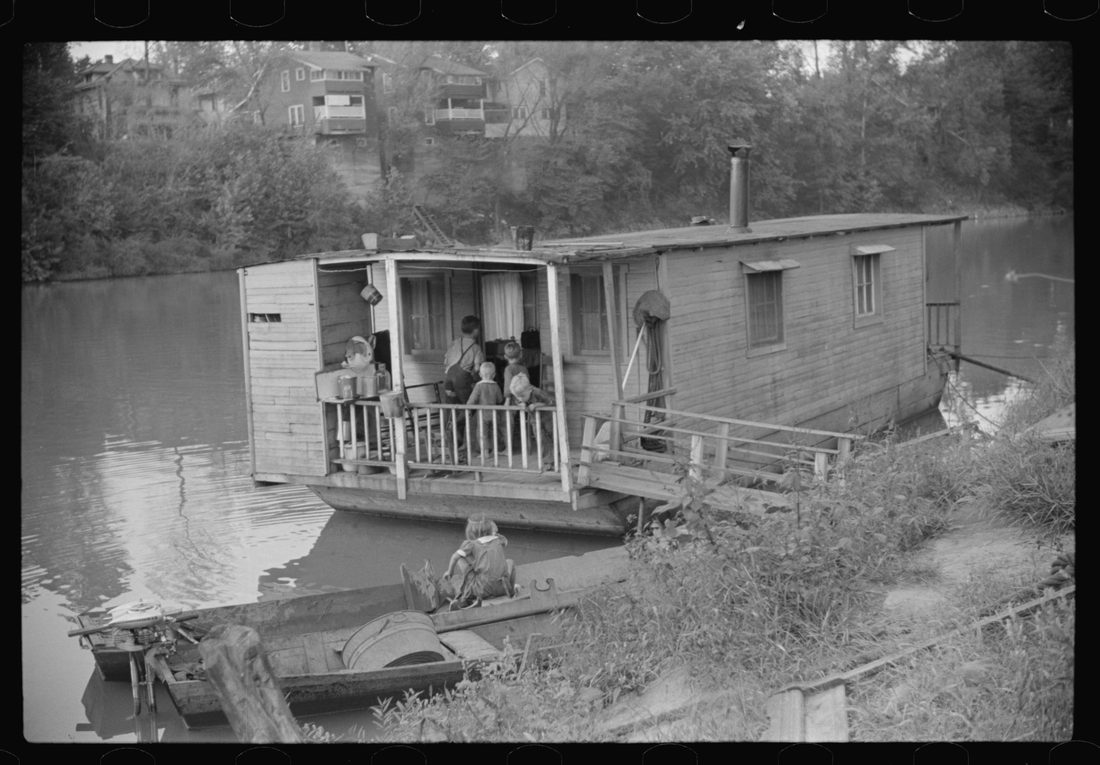
P67 Many families live on riverboats in Charleston, West Virginia
Marion Post Wolcott · September 1938 · Library of Congress · FSA/OWI. View the original.
And families were living on the river in boats.
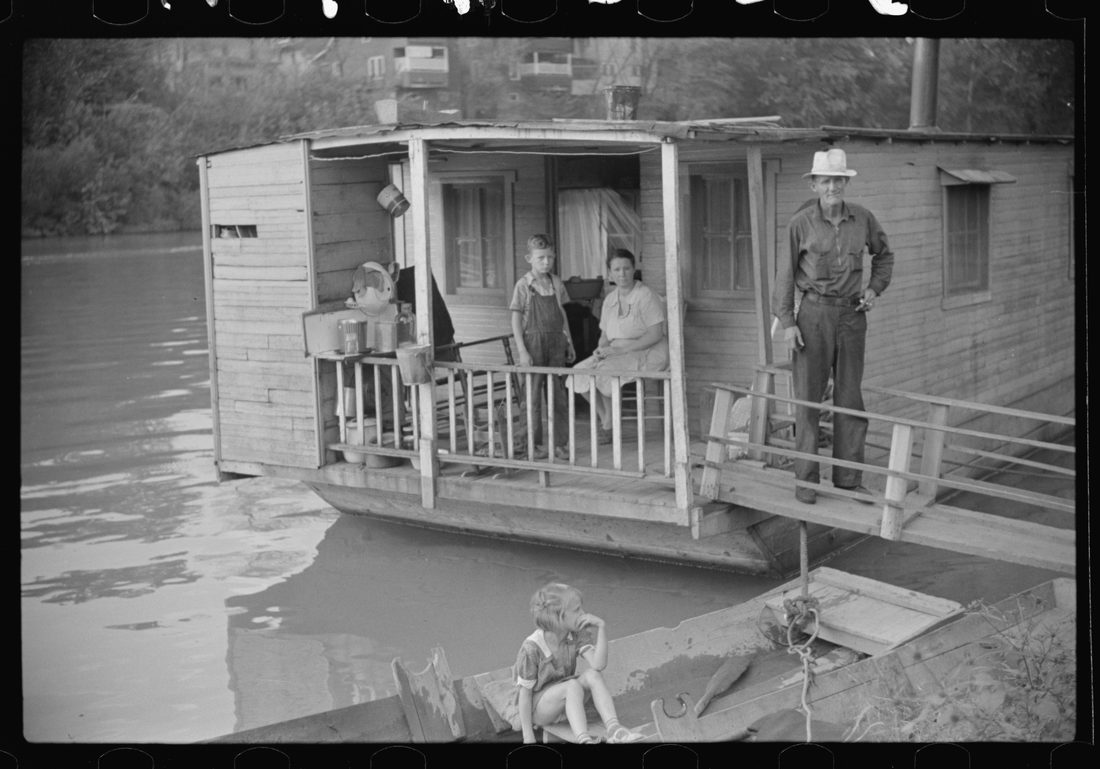
P68 Family living on riverboat, Charleston, West Virginia. Husband now on WPA (Works Progress Administration) labor
Marion Post Wolcott · September 1938 · Library of Congress · FSA/OWI. View the original.
This one had a husband on federal relief work.
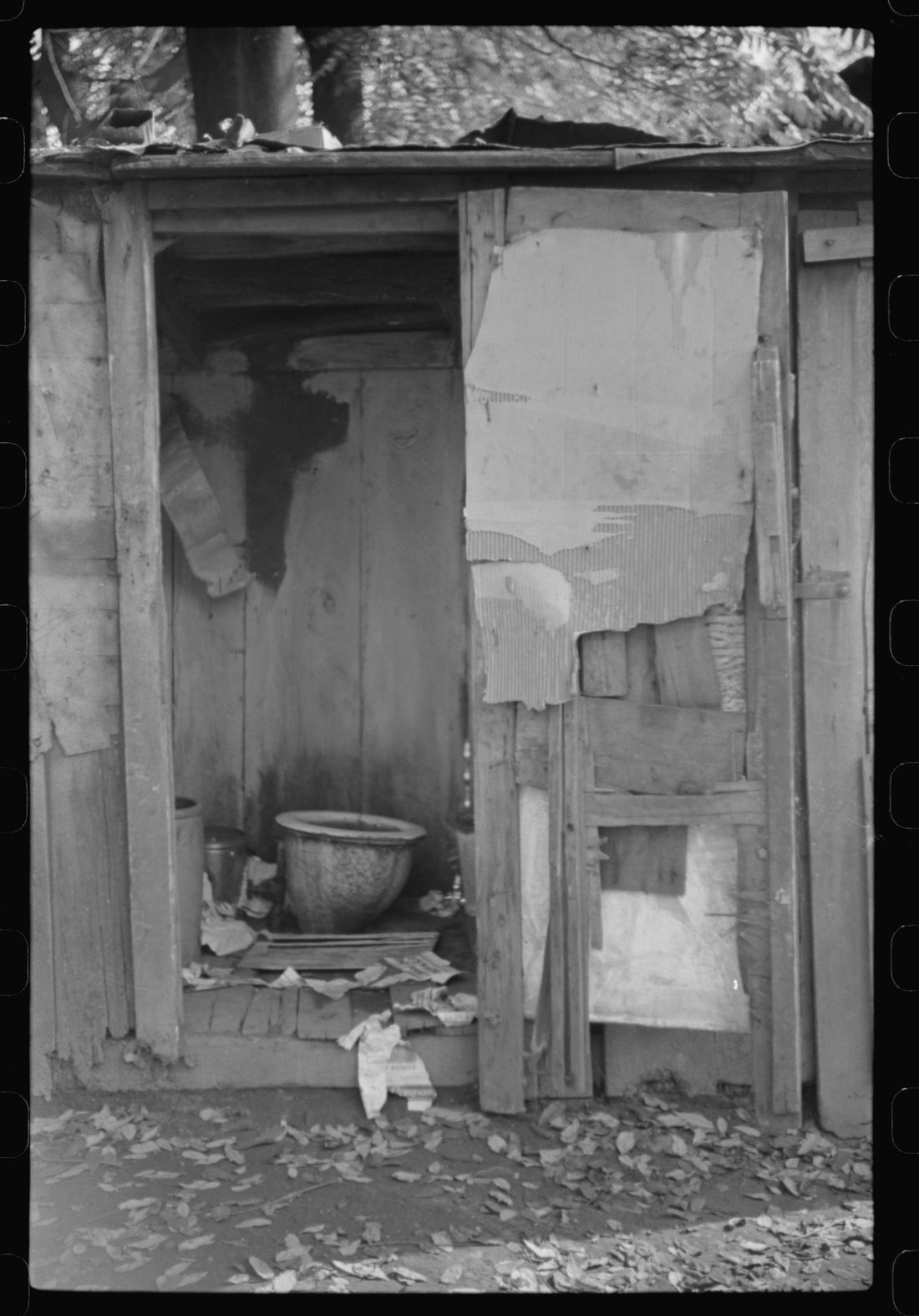
P69 Privy in Negro section "Paradise Alley." Only one for sixty people. Charleston, West Virginia
Marion Post Wolcott · September 1938 · Library of Congress · FSA/OWI. View the original.
In the Black section of Charleston she photographed a privy and wrote down the arithmetic of it. Only one, for sixty people.
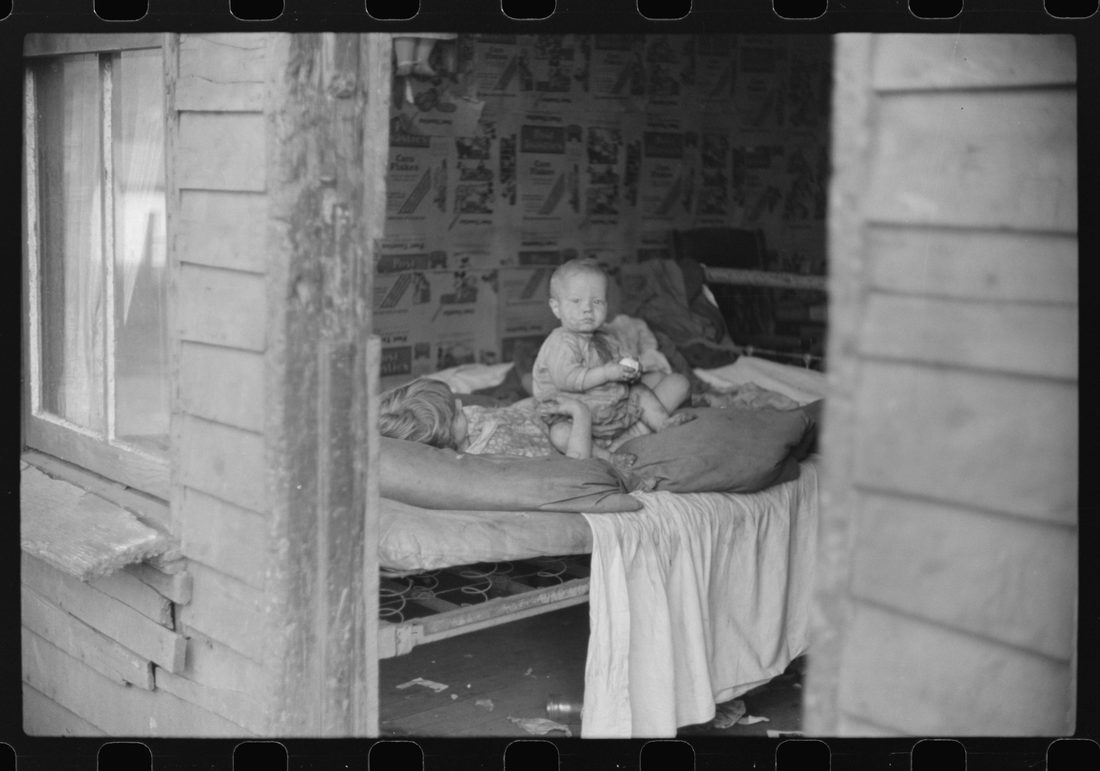
P71 Children in bedroom of their home. Mother has TB, father is on WPA (Works Progress Administration), Charleston, West Virginia
Marion Post Wolcott · September 1938 · Library of Congress · FSA/OWI. View the original.
And a bedroom where the children slept. Her caption: mother has TB, father is on relief work.
Racine
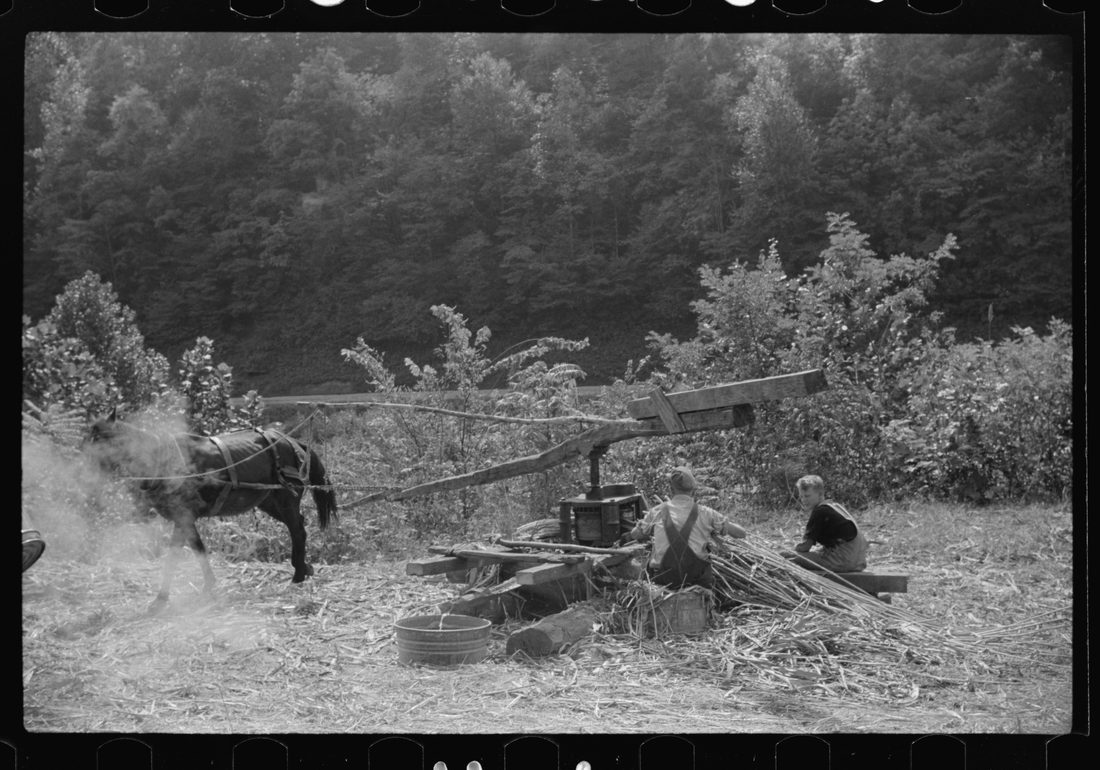
P72 Pressing juice from sugarcane to make sorghum molasses, Racine, West Virginia
Marion Post Wolcott · September 1938 · Library of Congress · FSA/OWI. View the original.
She did photograph one thing that month that was simply going well.
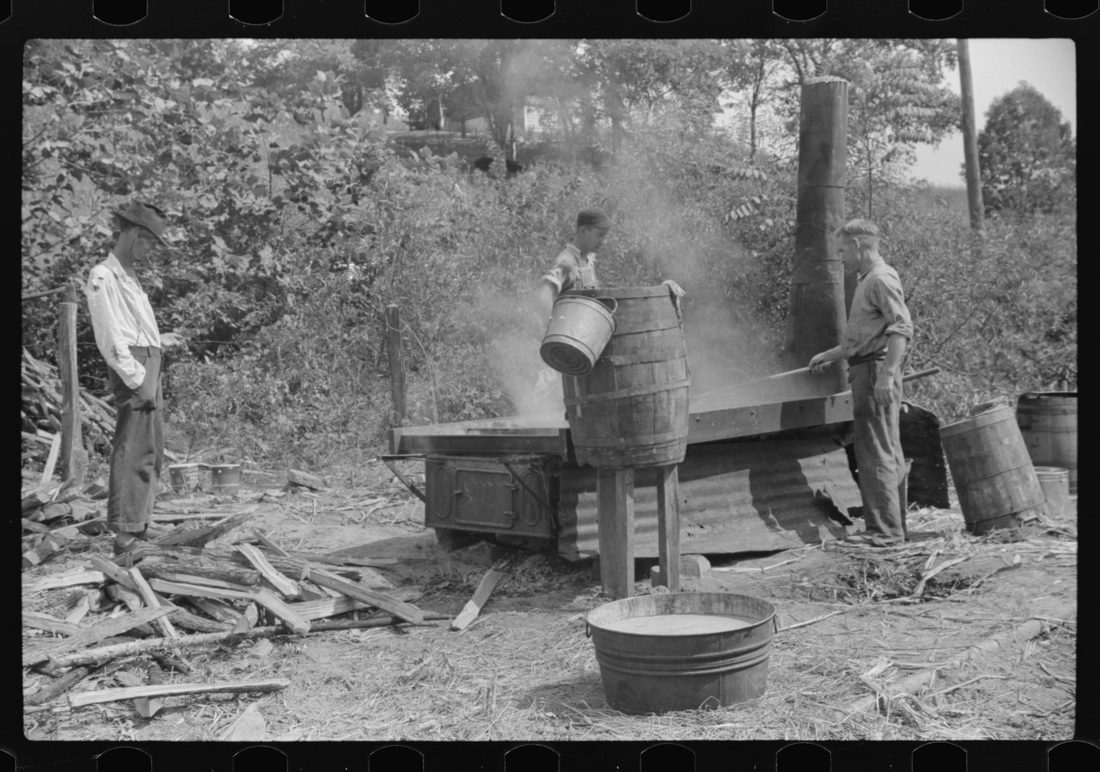
P73 Boiling juice of sugarcane into sorghum molasses. Racine, West Virginia
Marion Post Wolcott · September 1938 · Library of Congress · FSA/OWI. View the original.
Sugar cane pressed by a mule going in circles, the juice boiled down in a long vat into sorghum molasses.
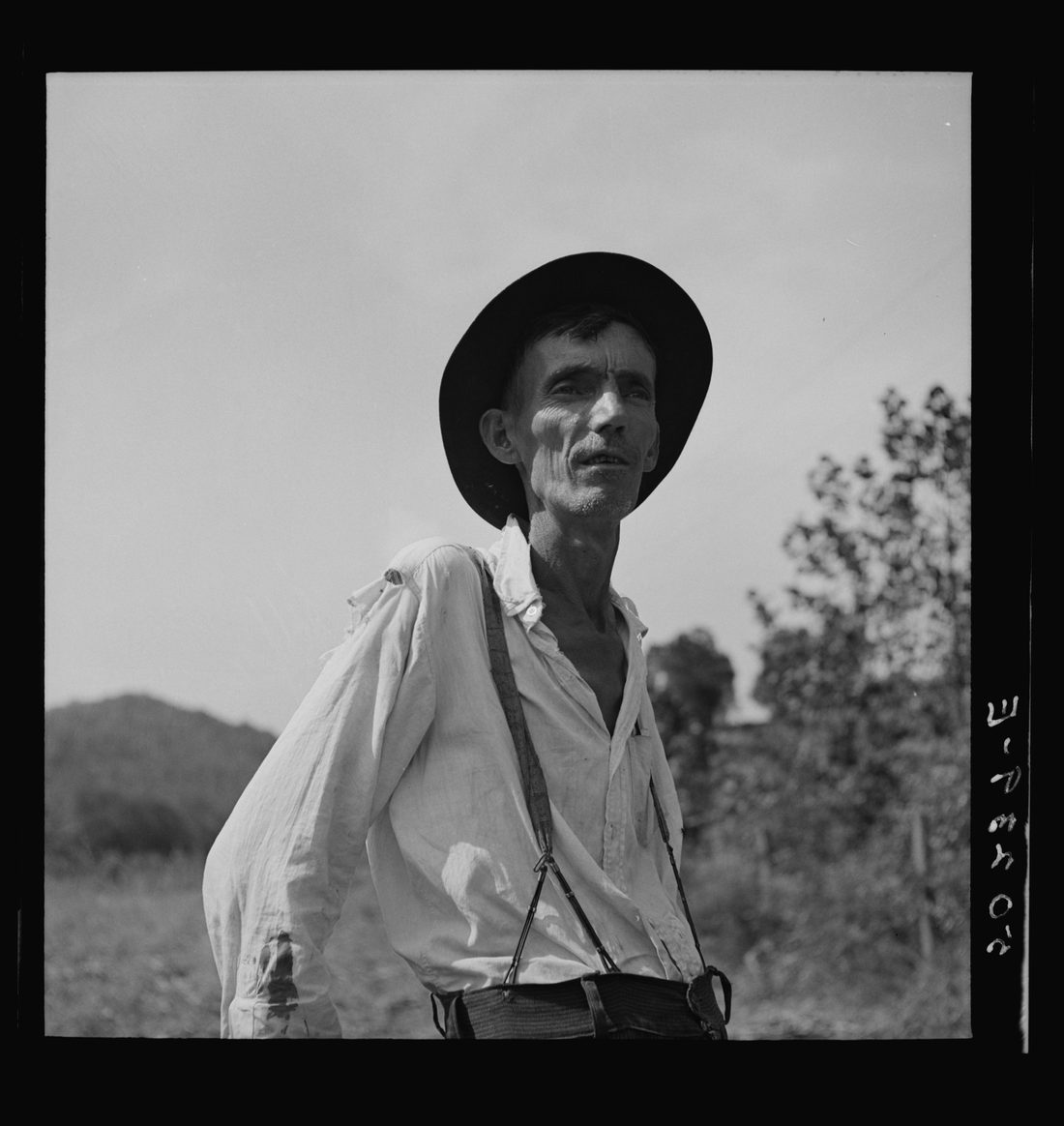
P74 Badly wounded and gassed in world war. Racine, West Virginia. Watching sorghum mill operations
Marion Post Wolcott · September 1938 · Library of Congress · FSA/OWI. View the original.
A neighbour came to watch. Her caption says he was badly wounded and gassed in the world war.
Tygart Valley
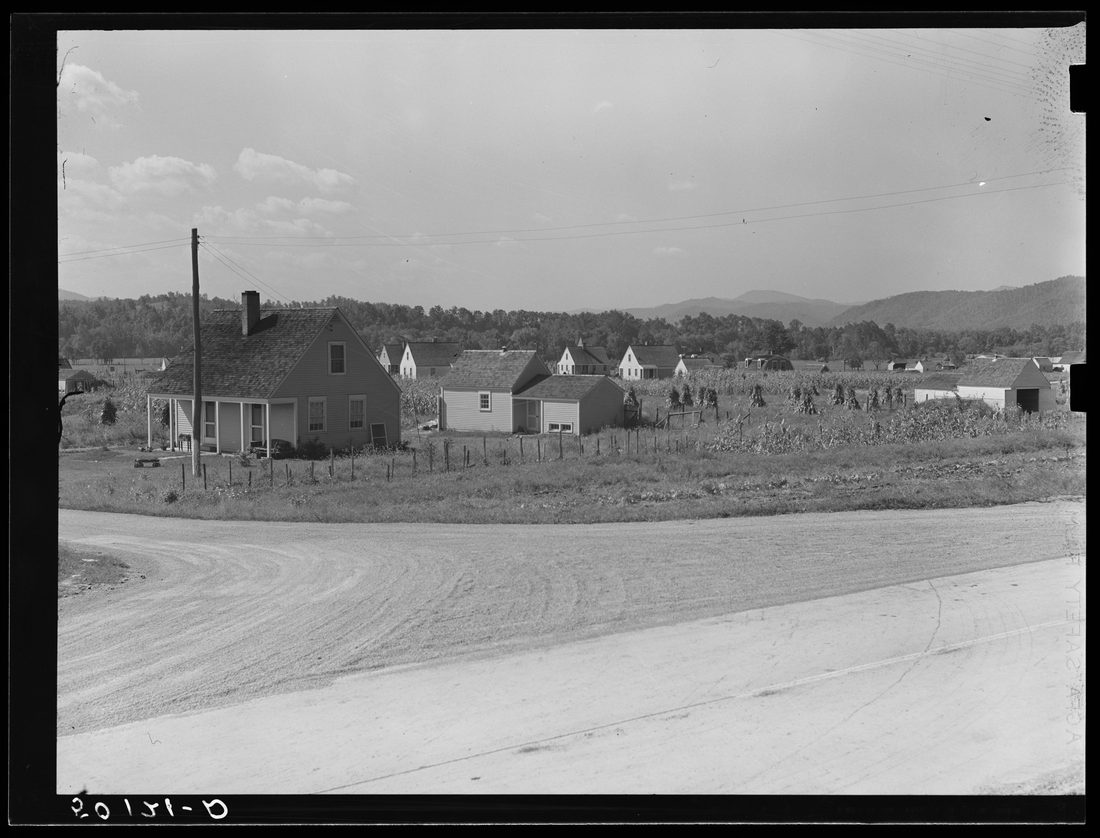
P76 Good roads and good land in Tygart Valley homesteads. West Virginia
Marion Post Wolcott · September 1938 · Library of Congress · FSA/OWI. View the original.
And then she drove to Randolph County, to photograph the answer.
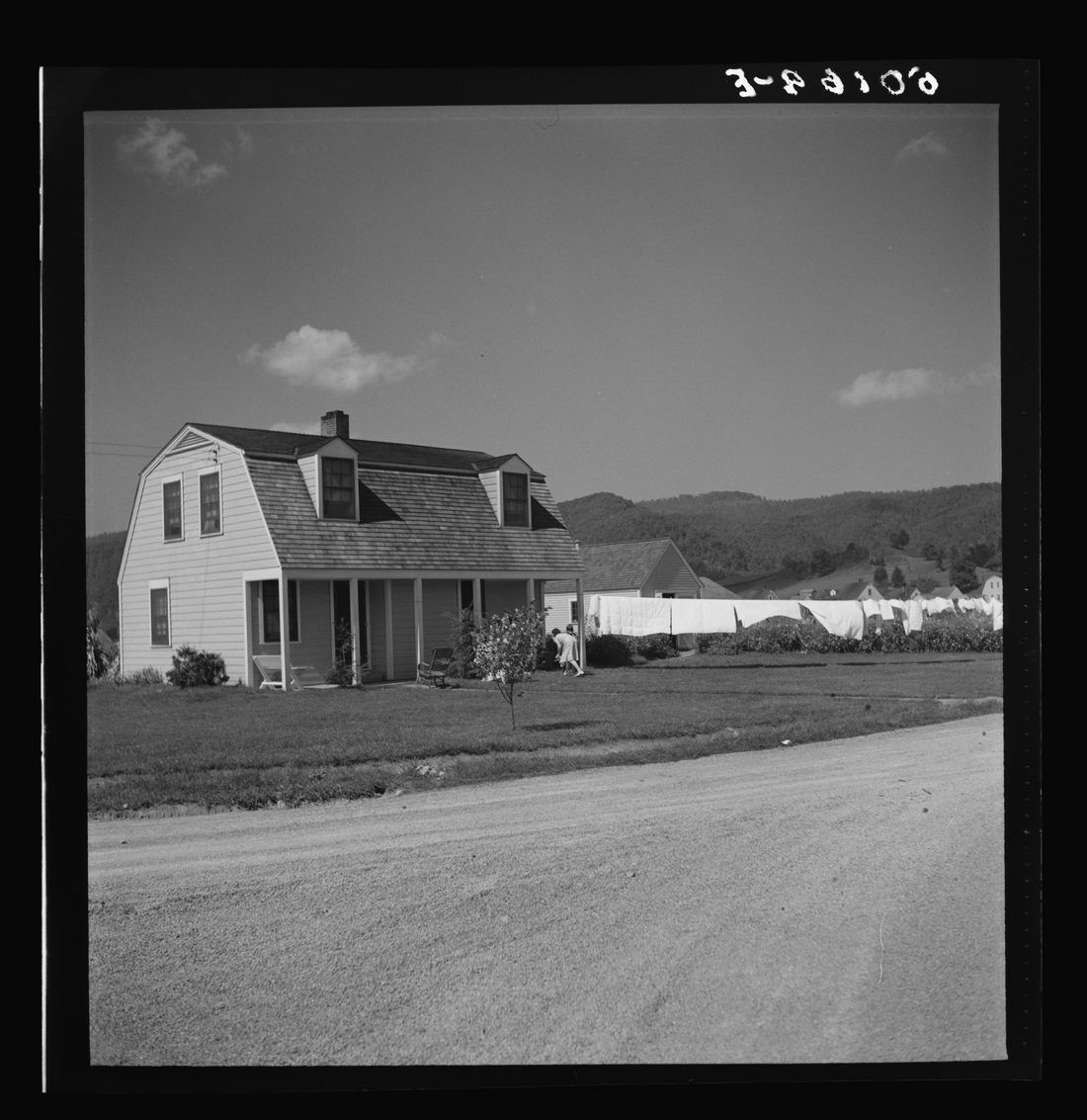
P77 One of homes in Tygart Valley homestead project. West Virginia
Marion Post Wolcott · September 1938 · Library of Congress · FSA/OWI. View the original.
Tie Gart Valley Homesteads. New houses, new road, ten miles from Elkins.
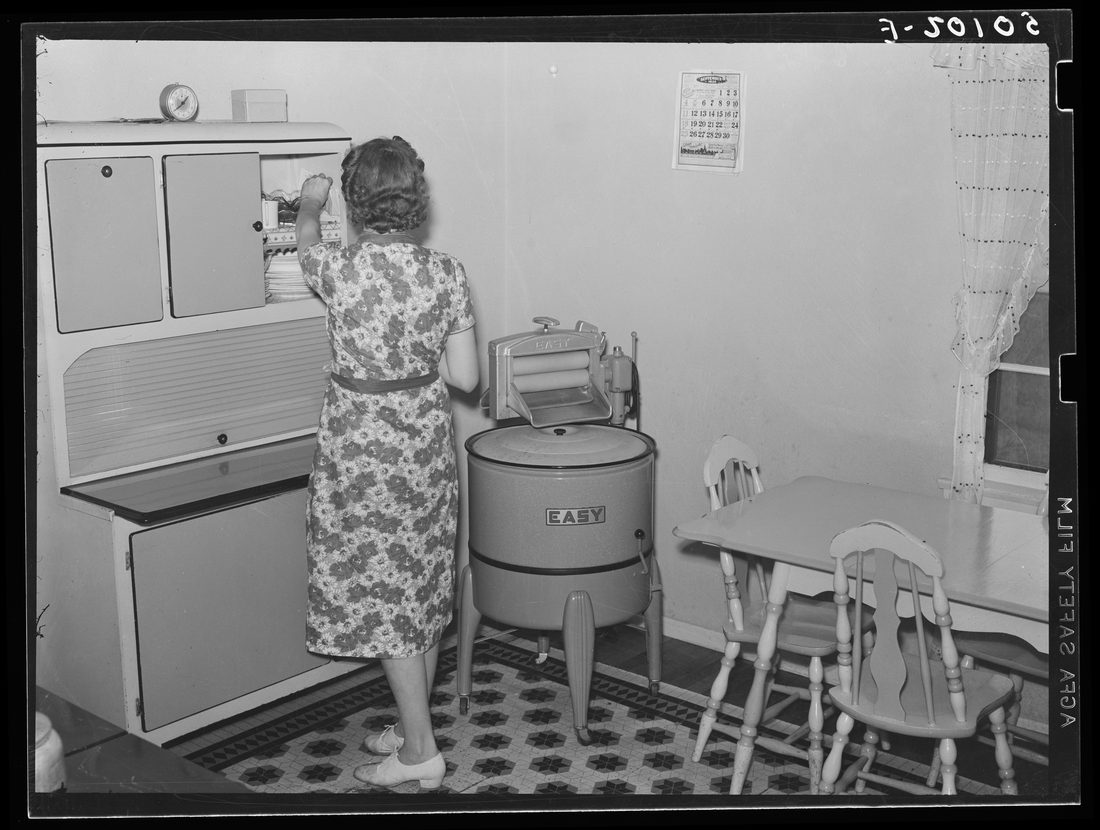
P78 Modern and convenient kitchen. Tygart Valley, West Virginia
Marion Post Wolcott · September 1938 · Library of Congress · FSA/OWI. View the original.
Her captions change here. Good roads and good land. Modern and convenient kitchen.
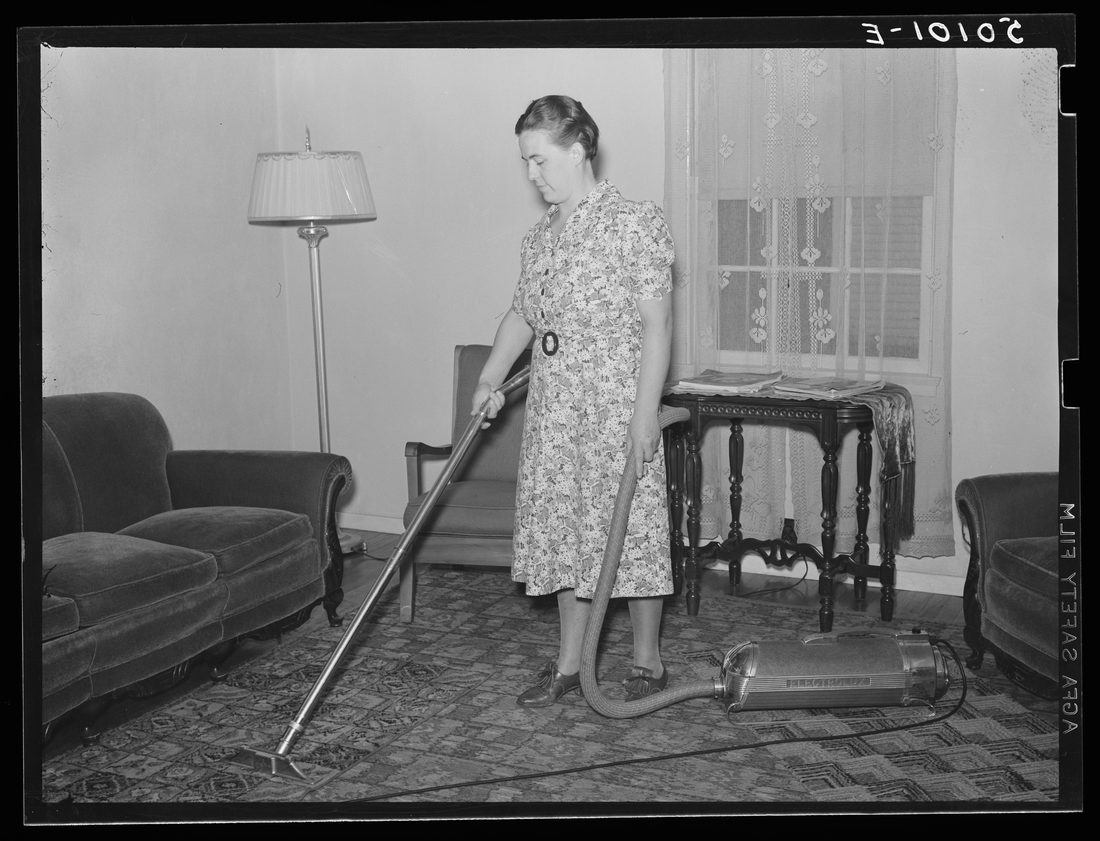
P79 Modern household equipment reduces household drudgery. Tygart Valley, West Virginia
Marion Post Wolcott · September 1938 · Library of Congress · FSA/OWI. View the original.
Modern household equipment reduces household drudgery.
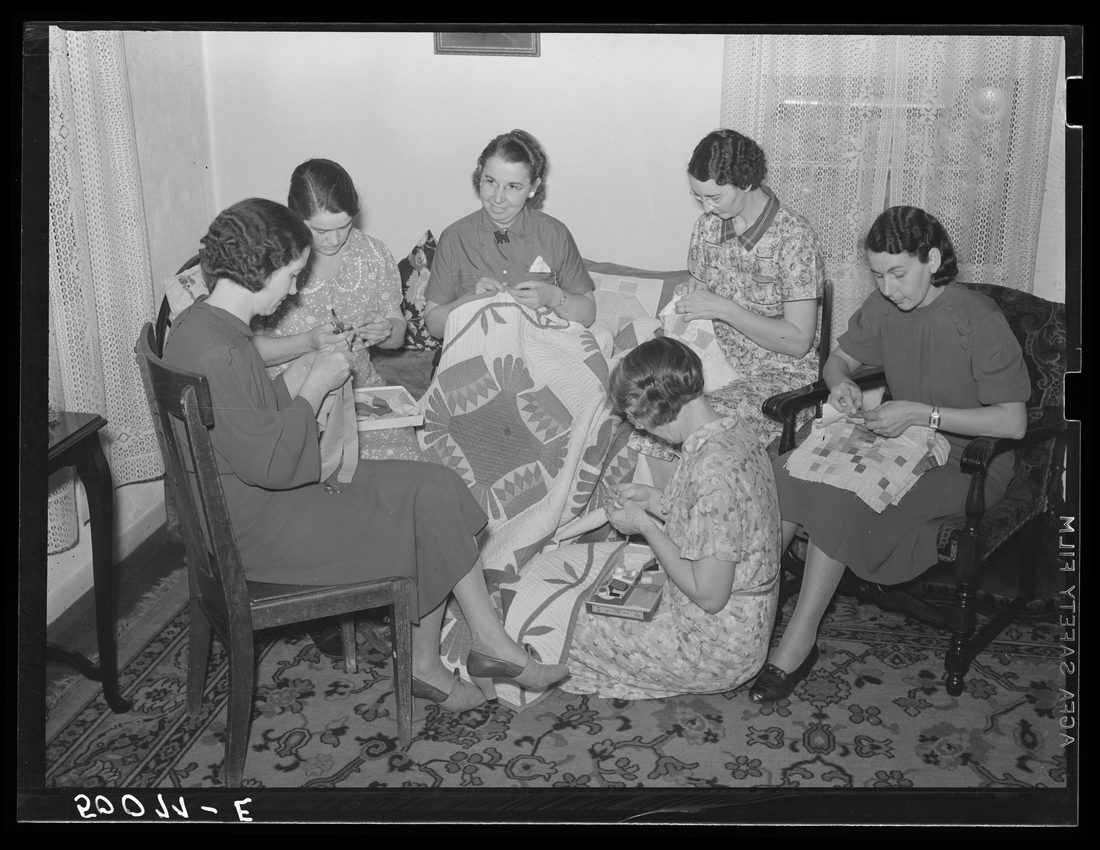
P81 Housewives in Tygart Valley, West Virginia, have weekly group meetings in home economics. Here they are quilting
Marion Post Wolcott · September 1938 · Library of Congress · FSA/OWI. View the original.
The women had weekly group meetings in home economics. Here they are quilting.
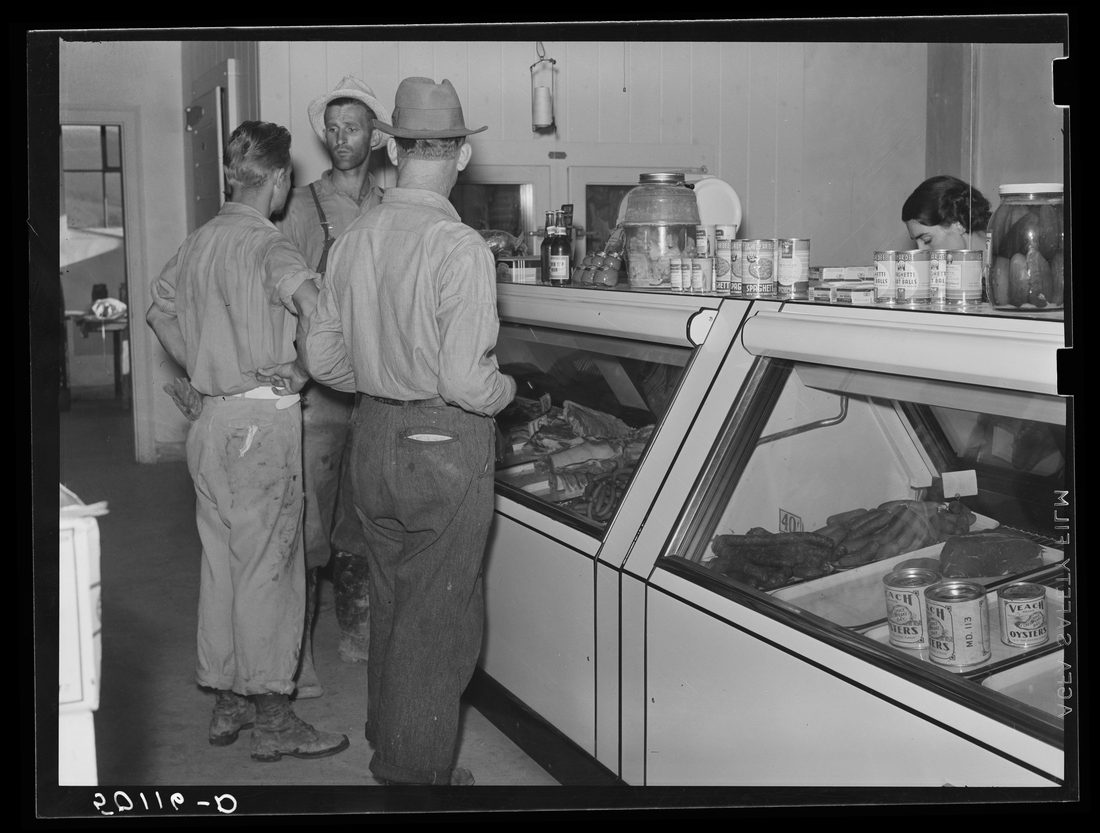
P83 Buying meats, community store. Tygart Valley homesteaders, West Virginia
Marion Post Wolcott · September 1938 · Library of Congress · FSA/OWI. View the original.
There was a community store, and you could buy meat in it.
Stranded
S1
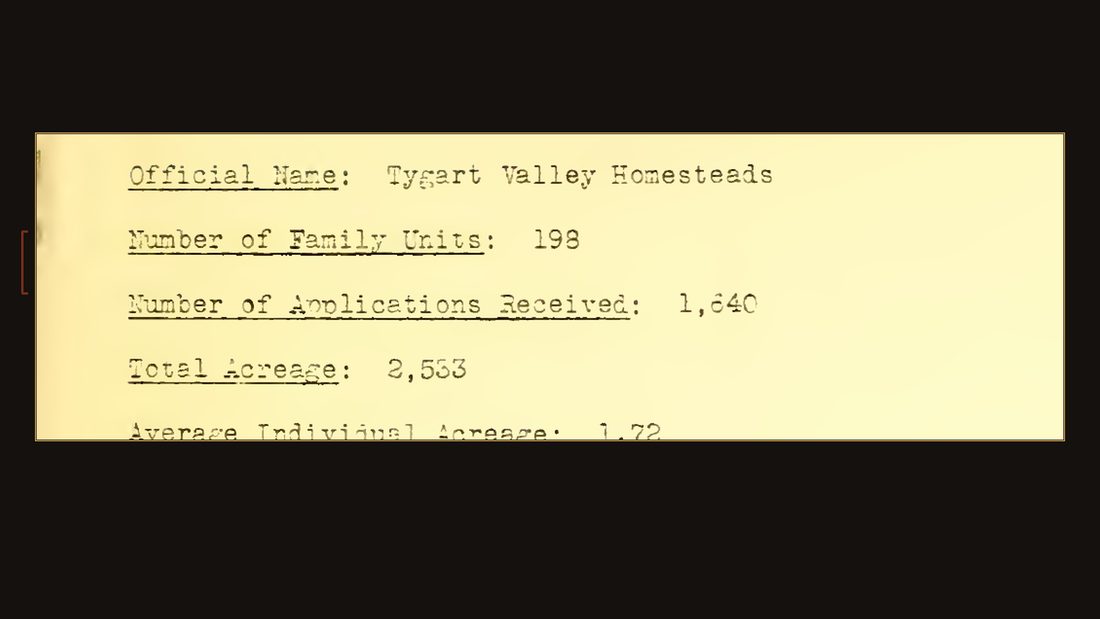
USDA · Facts About Tygart Valley Homesteads, 1938.
The government printed a fact sheet about this place. It is two pages long and it answers the episode.
Number of family units: one hundred and ninety-eight. Number of applications received: one thousand six hundred and forty.
More than eight families applied for every house that existed.
S2
USDA · Facts About Tygart Valley Homesteads, 1938.
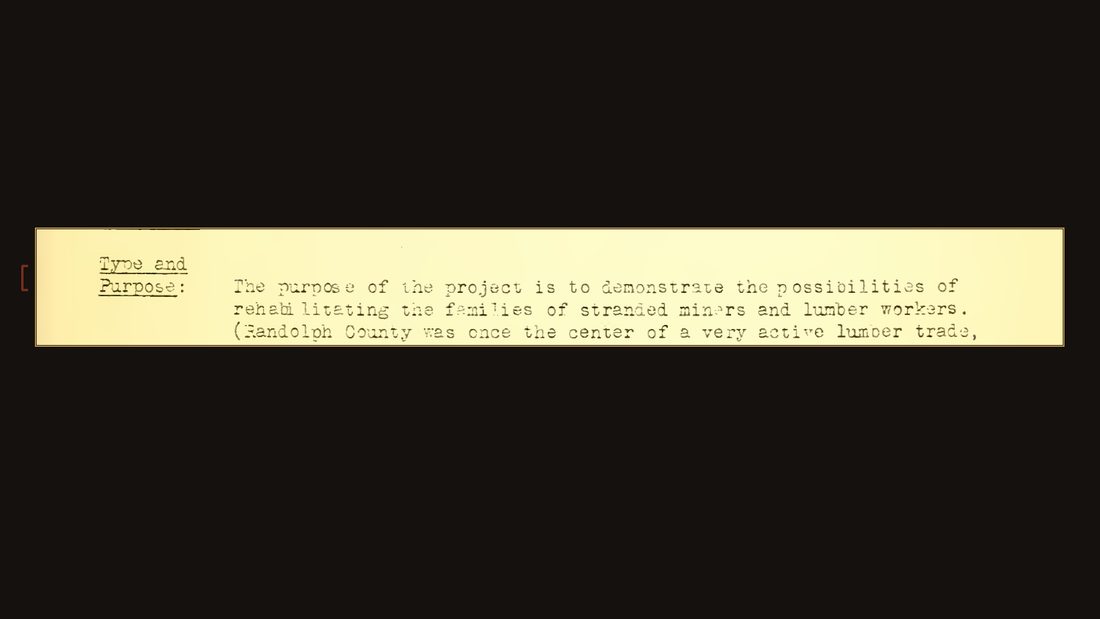
And here is the purpose, in the government's own words. To demonstrate the possibilities of rehabilitating the families of stranded miners and lumber workers.
Stranded. That is the federal word for everyone in the first three quarters of this film.
S3
USDA Farm Security Administration · Jan. 18, 1938.
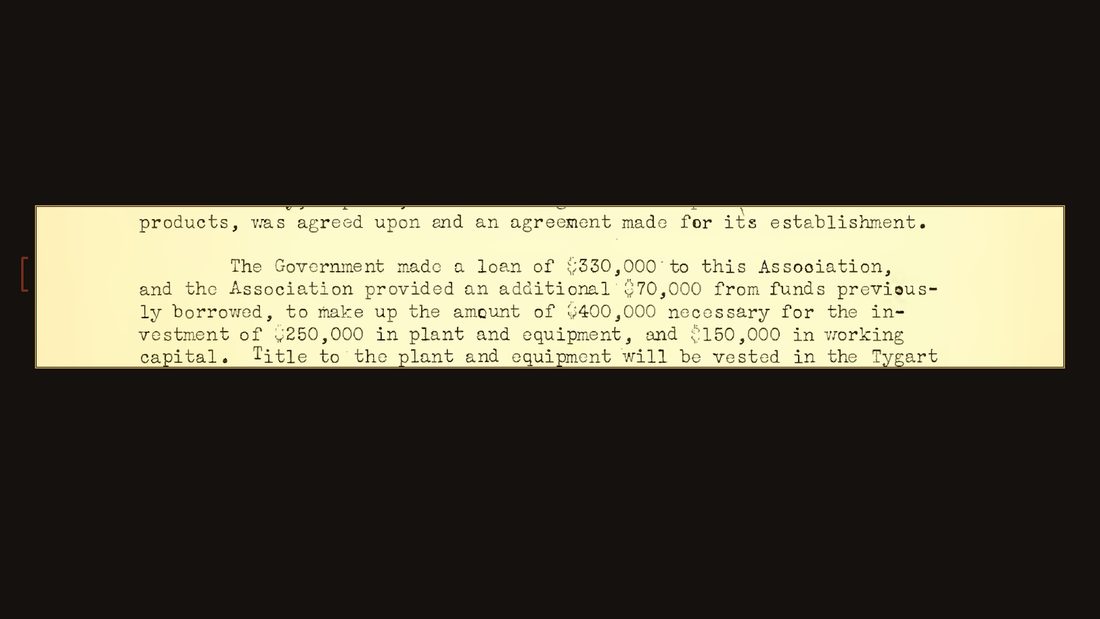
In January of that year the same agency had signed off on a factory for the homesteads. A government loan of three hundred and thirty thousand dollars, forty years, at three per cent.
S4
USDA Farm Security Administration · Jan. 18, 1938.
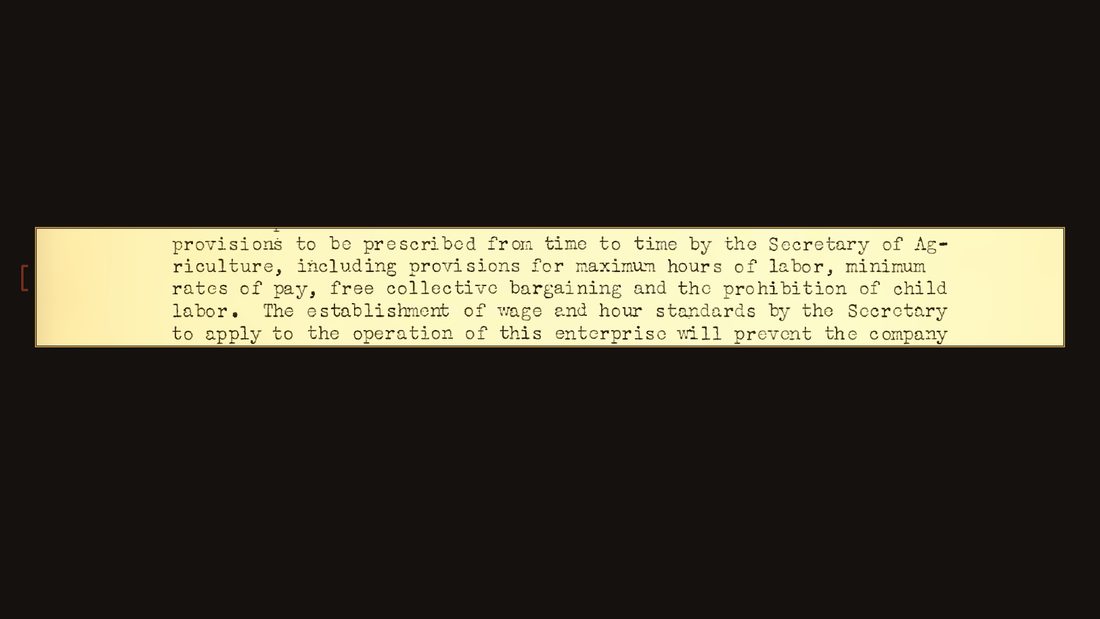
And it set the terms the plant had to work under. Maximum hours of labour. Minimum rates of pay. Free collective bargaining, and the prohibition of child labour.
Thirty-five cents an hour, guaranteed by the Secretary of Agriculture. In a state where a man could be fired for saying the standards were not being met, and a town could be closed for trying to organise.
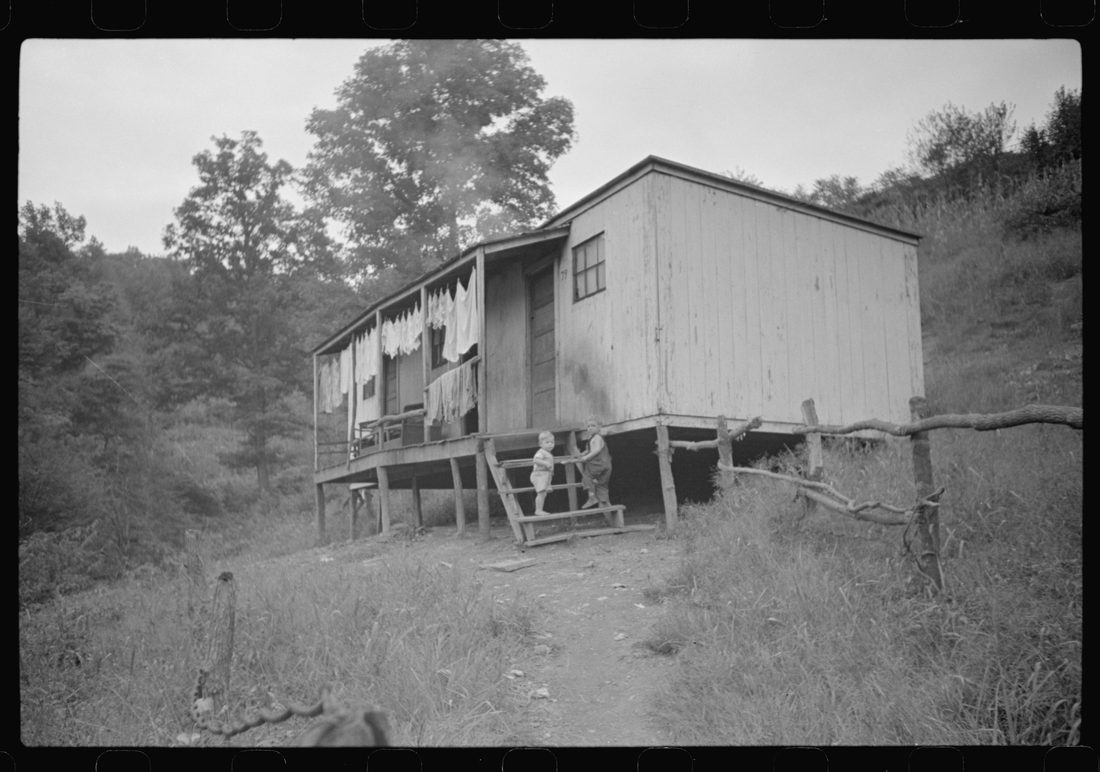
P84 Coal miner's shack, Pursglove, West Virginia
Marion Post Wolcott · September 1938 · Library of Congress · FSA/OWI. View the original.
Both of these places were photographed by the same woman, in the same month, for the same agency, and they are filed in the same drawer.
One hundred and ninety-eight families got the kitchen. The rest of them got the hill.
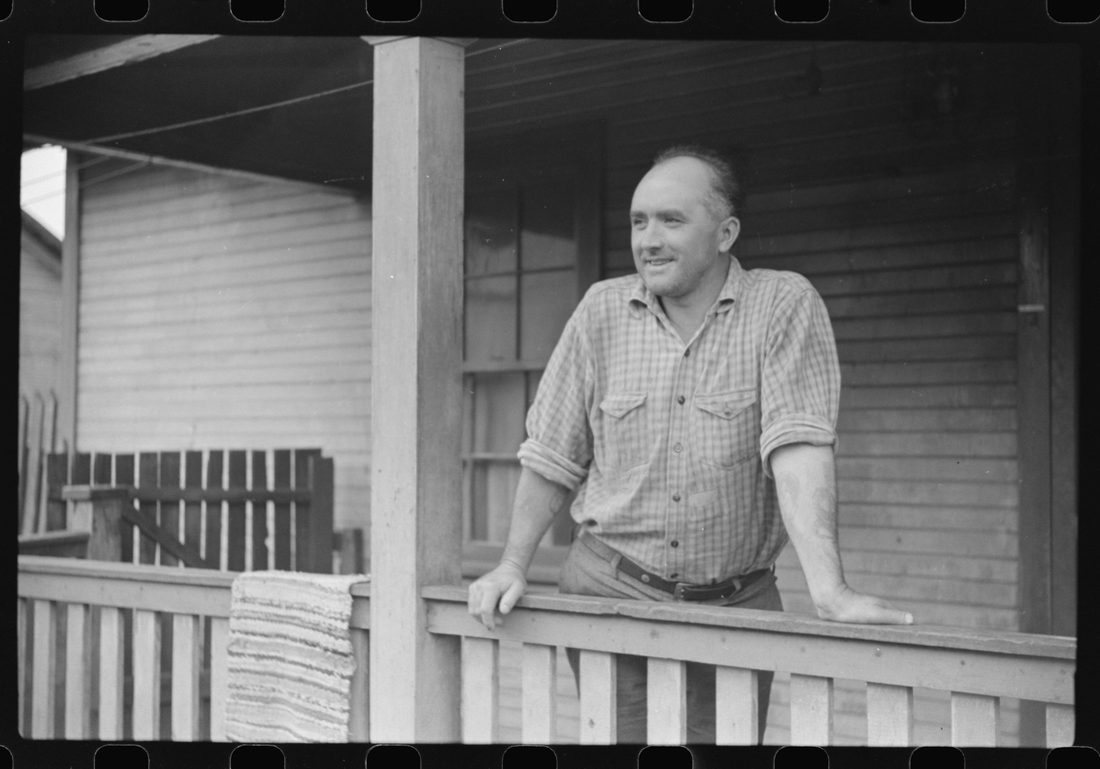
P85 Coal miner who has worked in mines since he was fourteen. Chaplin, Scotts Run, West Virginia
Marion Post Wolcott · September 1938 · Library of Congress · FSA/OWI. View the original.
This is the last frame. Her caption says he has worked in the mines since he was fourteen. It does not give his name.
Sources
- Marion Post Wolcott, West Virginia, September 1938 — FSA/OWI Black-and-White Negatives, Prints & Photographs Division, Library of Congress. Federal works, public domain. 85 negatives (P01–P85), each scanned from the original 4x5 negative and used without tonal adjustment. https://www.loc.gov/pictures/search/?q=Wolcott%20West%20Virginia&;fo=json
- Facts About Tygart Valley Homesteads — U.S. Department of Agriculture, 1938. https://archive.org/details/factsabouttygart00unit
- A statement on establishment of a woodworking plant at Tygart Valley Homesteads — USDA Farm Security Administration, Jan. 18, 1938. https://archive.org/details/statementonestab00unit
- Hawks Nest Tunnel — carried over from episode 005, which built it from the contemporary record (Washington Daily News and Evening Star, Jan. 1936, via Chronicling America). See `episodes/005-hawks-nest-1931/sources.md` for the per-page citations.
- Twin Branch and Ford. That Ford owned the town and closed it rather than let it unionise, and that around a thousand men worked there, is Wolcott's caption and nothing else. No federal record confirming it was found for this episode, and scene 72 says so on screen. The condition of the town in the frame is not in question.
- This is not a route. All 1,346 of her West Virginia frames are filed "1938 Sept." with no day. The order of her month is not recoverable; the episode is arranged by place and says so in scene 8.
- "About thirteen hundred negatives" (scene 4) is a search result, not a census: 1,346 records returned for her name plus this state, of which 705 are untitled frames filed as possibly related to a captioned one.
- The tunnel frame. P62 is not a photograph of the tunnel mouth. It is a view from above of a concrete intake works with a gate tower, with the riverbed below running thin over bare rock. The narration describes only that. It does not claim the low water is caused by the diversion; September is also low-water season.
- The chalkboard. A surname is legible in block capitals on the board at Capels (P53) but not legible *reliably*, so no name is spoken. The company name on the danger sign beside it reads New River & Pocahontas Consolidated Coal Company, which is consistent with the caption's location.
- The privy count, the volts, the two beds, the insurance terms, the $38.25 relief wage, the dollar-twenty water bill and every other figure attributed to a caption are hers. They are quoted as her contemporaneous notes, not verified independently.
- No newspapers and no AI images. All exhibits are federal photographs or federal documents.
- Pronunciation. Pursglove, Capels and Tygart are said the way local usage has them (and are spelled phonetically in the script so the voice gets them right — see `research/west-virginia-1938/patchcaps.py`). Jere is a guess. No pronunciation guide for it was consulted, and the reading in the narration should not be taken as authoritative.